For good reason, stainless steel is the go-to material for professional chefs and serious home cooks alike. You can think of it as the ultimate all-purpose tool in a kitchen workshop—it's reliable, incredibly versatile, and truly built to last a lifetime. Plus, its non-reactive surface means your food tastes exactly how you intended.
Now loading...
Why Chefs Trust Stainless Steel Cookware
Walk into just about any professional kitchen, and you'll see stacks of gleaming stainless steel pans. This isn't just a coincidence; it's a very deliberate choice rooted in performance, reliability, and sheer longevity. While other materials have their moments, stainless steel remains the undisputed workhorse because it can handle the intense, demanding environment of a busy kitchen.
Now loading...

Think about your kitchen as a workshop. You need tools that are not only precise but also tough enough to take a beating day in and day out. That's what stainless steel brings to the table. Its robust construction can handle the blistering heat needed for a perfect sear, stand up to metal utensils, and survive rigorous cleaning cycles without warping or breaking down.
Purity of Flavor and Performance
One of the biggest wins for stainless steel is that it’s non-reactive. Unlike materials like unseasoned cast iron or aluminum, it won't have a chemical conversation with acidic or alkaline ingredients. That means you can simmer a tomato sauce for hours or deglaze a pan with wine and never have to worry about a metallic tang ruining your dish.
The surface of a stainless steel pan is like a blank canvas. It guarantees that the flavors you carefully build in a recipe are the only ones that end up on the plate.

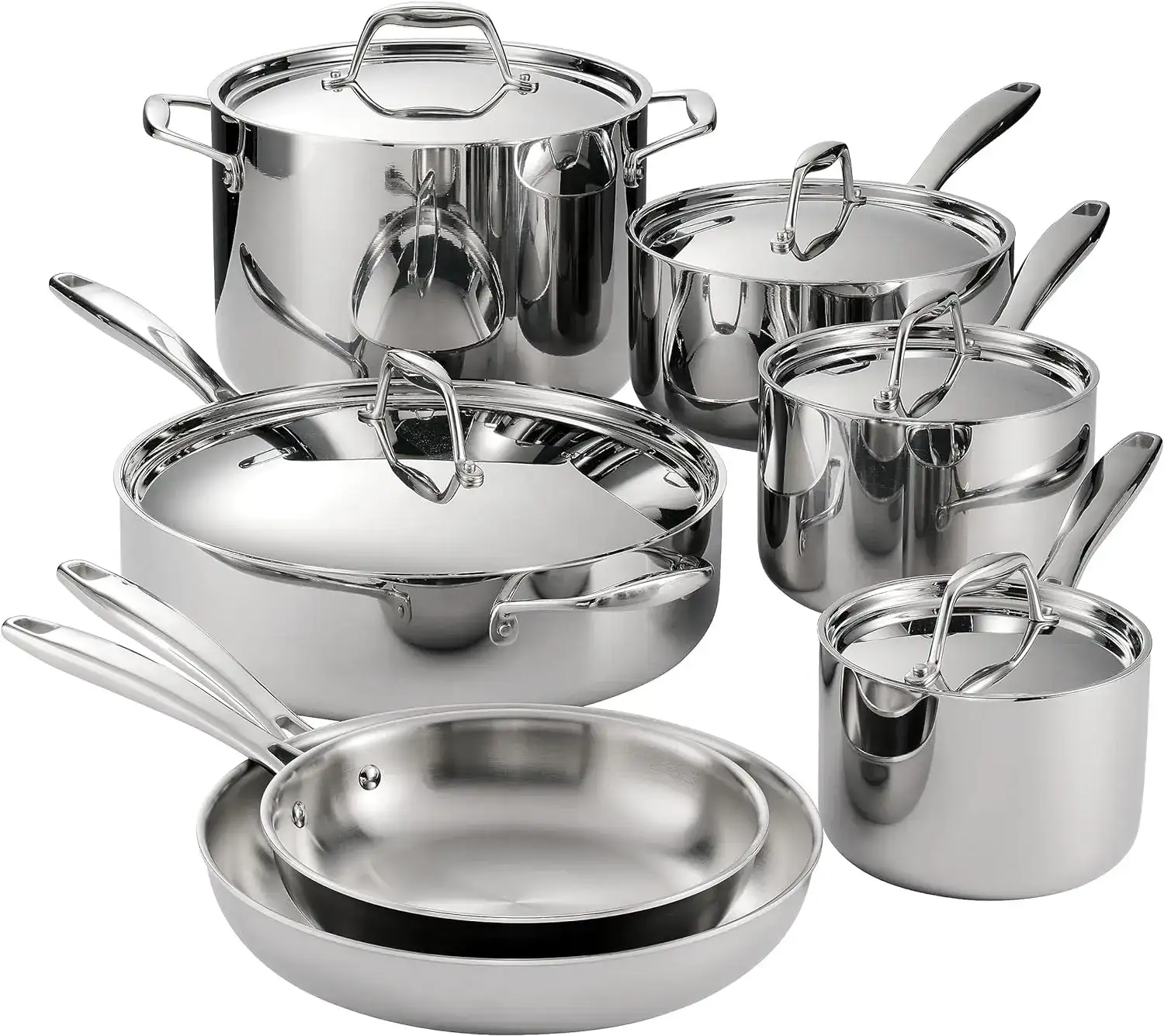
Tramontina 80116/249DS Gourmet Stainless Steel Induction-Ready Tri-Ply Clad 12-Piece Cookware Set, NSF-Certified, Made in Brazil
This inert quality is a major reason for its popularity among health-conscious cooks, too. The global market for stainless steel cookware, valued at around $12.98 billion in 2025 and projected to keep climbing, reflects this growing awareness. People understand that quality stainless steel doesn't leach chemicals, offering a safer alternative to some coated pans. You can discover more insights about the stainless steel cookware market growth and what's driving it.
Built for a Lifetime of Cooking
At the end of the day, chefs and home cooks invest in stainless steel because it's an investment in consistency and durability. A well-made pan delivers predictable results time and again, heats evenly (thanks to its core construction, which we'll get into next), and can honestly last for decades.
This guide will walk you through everything you need to know—from decoding grades and construction to mastering care techniques—so you can confidently choose cookware that will become a trusted partner in your kitchen.
Decoding Cookware Grades Like 18/10 and 18/8
Ever flipped over a stainless steel pan and spotted numbers like “18/10” or “18/8” stamped on the bottom? They're not just random codes. These numbers tell you a surprising amount about the quality and performance you can expect from your cookware. Learning to read them is the first step past marketing fluff and toward spotting a truly well-made pan.
Think of it like the fabric blend in your favorite t-shirt. Just as a cotton-poly blend offers different benefits than 100% cotton, the recipe for stainless steel matters. Those numbers refer to the percentage of two key ingredients mixed into the steel: chromium and nickel.
These two metals are what give stainless steel its famous kitchen-friendly properties. The first number, almost always 18, means the steel contains 18% chromium. This is the non-negotiable ingredient. Chromium is what makes stainless steel "stainless"—it creates an invisible protective layer that shields the metal from rust and corrosion.
What the Second Number Means
The second number in that ratio—the "10" in 18/10 or the "8" in 18/8—tells you the percentage of nickel. Nickel is the secret sauce that kicks the quality up a notch. It boosts durability, adds that brilliant shine we all love, and gives the steel extra armor against corrosion, especially from acidic foods like tomato sauce.
Simply put, a higher nickel content usually means higher quality. It makes the steel tougher against dents and dings while giving it that lustrous, almost silvery finish you see on high-end cookware.
18/10 Stainless Steel: This is what many chefs and serious home cooks consider the gold standard. With 18% chromium and 10% nickel, it offers top-tier rust resistance, a lasting polish, and fantastic durability. It's the go-to for premium pots and pans.
18/8 Stainless Steel: Also a very common and reliable choice. This grade contains 18% chromium and 8% nickel. It's still incredibly durable and corrosion-resistant, making it a workhorse for great everyday cookware. The main difference is a slightly lower luster compared to its 18/10 sibling.
18/0 Stainless Steel: Here, you've got 18% chromium but practically no nickel (less than 0.75%). The absence of nickel makes it less corrosion-resistant and not as shiny. But this has a key advantage: it's magnetic. That makes it a popular choice for the exterior base of induction-compatible cookware and for less expensive utensils.
Exploring the 300 Series and Beyond
These ratios are also part of a larger classification system known as SAE steel grades. For instance, both 18/10 and 18/8 steel fall under the 304 grade umbrella. 304 is the most common and versatile type of stainless steel you'll find in kitchens and food processing—for good reason.
When you see "304 Grade" or "18/10" on a pan, you're looking at a high-quality, food-safe material built for the long haul. It signals a commitment to performance that goes way beyond just looking good on the shelf.
For those who want the absolute peak of performance, some ultra-premium cookware lines step up to 316 grade stainless steel. This type is a close cousin to 304 but with an added ingredient: molybdenum. This element dramatically increases resistance to corrosion from salts and chlorides, which is why 316 steel is often called "marine grade." While it's exceptional stuff, for most home cooking, 304 grade (18/10 or 18/8) offers all the durability and safety you'll ever need.
To make things clearer, let's break down how these common grades stack up.
Stainless Steel Grades at a Glance
This table gives you a quick comparison of the most common stainless steel grades used in cookware, highlighting their composition and what they do best.
| Grade | Composition (Chromium/Nickel) | Key Benefit | Best For |
|---|---|---|---|
| 18/10 (304) | 18% / 10% | Superior shine and corrosion resistance | Premium, long-lasting pots and pans |
| 18/8 (304) | 18% / 8% | Excellent durability and rust resistance | Reliable, high-quality everyday cookware |
| 18/0 (430) | 18% / 0% | Magnetic for induction compatibility | Utensils, mixing bowls, and cookware bases |
| 316 | ~16% / 10% + Molybdenum | Maximum corrosion and salt resistance | Ultra-premium, specialized cookware |
Ultimately, knowing what these numbers mean puts you in the driver's seat. You can confidently pick out cookware that isn't just shiny in the store but is engineered from materials designed to perform reliably for years in your kitchen.
The Secret to Perfectly Even Heating
The real magic of a stainless steel pan has nothing to do with its shiny surface. It’s what’s hidden inside that counts. On its own, stainless steel is actually a terrible conductor of heat. If you’ve ever used a cheap, thin steel pan, you know the struggle: a raging hot spot right over the burner while the rest of the pan stays stubbornly cool.
This was the core problem cookware makers had to crack. How do you get the unmatched durability and non-reactive safety of steel to play nice with the need for fast, even heating? The answer is a brilliant process called cladding.
Think of a clad pan as a high-performance sandwich. The stainless steel is the "bread"—one layer for the cooking surface and another for the exterior. But the real star of the show is the "filling": a thick core made of a super-conductive metal, usually aluminum or copper.
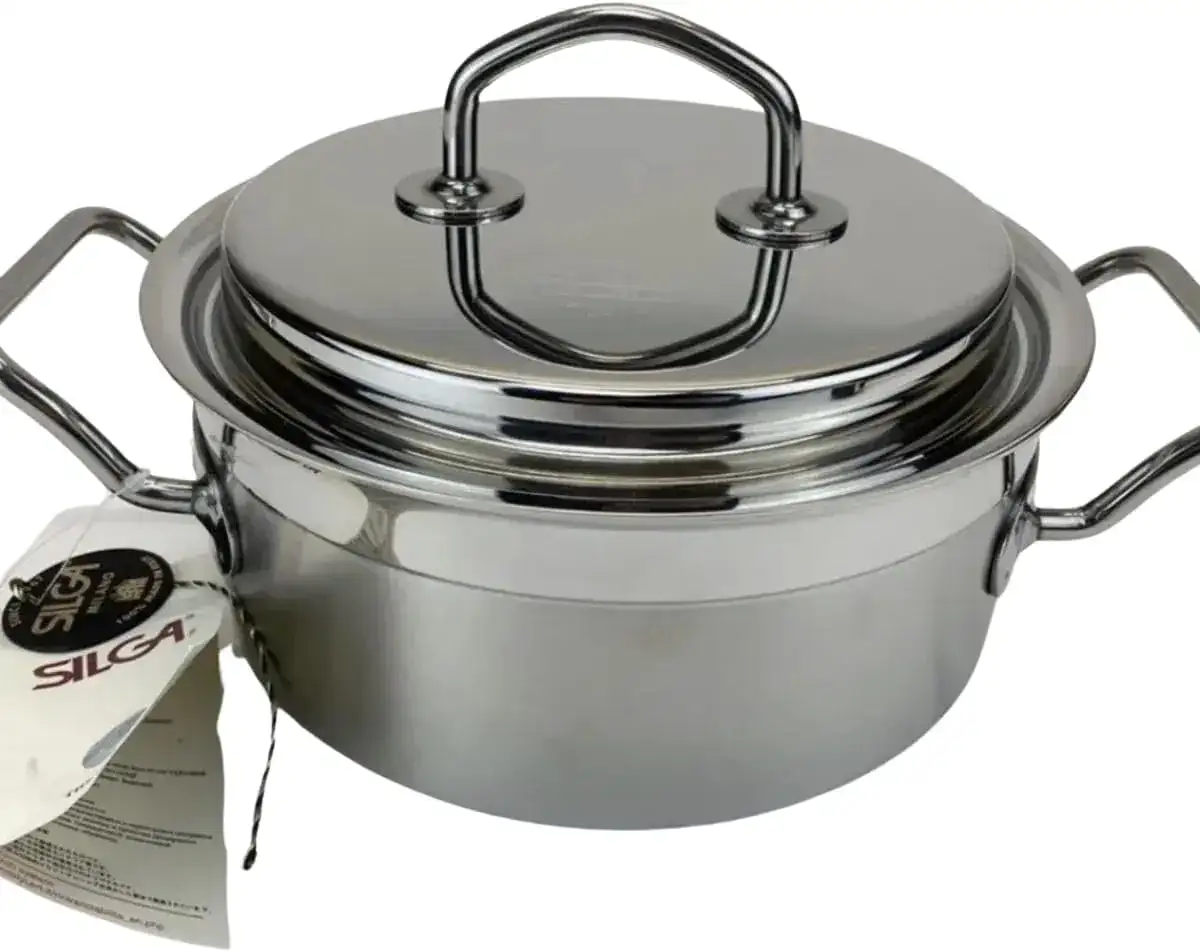 | 18/10 Stainless Steel Low Casserole Pot w/Lid 3Qt 13020 Made in ITALY, Compatible with SILGA MILANO TEKNIKO |
This core is what does all the heavy lifting for heat distribution. The steel on top, often 18/10 grade, is chosen for its purity and resistance to corrosion.

As you can see, the 18% chromium acts like a shield against rust and stains, while the 10% nickel gives the steel its bright finish and extra toughness. When you bond this premium steel to a conductive core, you truly get the best of both worlds.
How Cladding Transforms Your Cooking
Manufacturers take these different metal layers and fuse them together under incredible heat and pressure, creating a single, solid sheet of metal. This layered construction completely changes the pan's personality on the stove.
The aluminum or copper core acts like a sponge for heat. It grabs the energy from your burner and spreads it lightning-fast across the entire bottom of the pan and even up the sides. No more sad, pale chicken on one side and burnt bits on the other.
This construction is the secret weapon against hot spots. It gives you the control to get a perfect, edge-to-edge sear on a steak or gently simmer a delicate sauce without it scorching in the middle. Cladding is what delivers the responsive, predictable temperature control every great cook needs.
Understanding Ply Count From 3-Ply to 5-Ply
When you're shopping for pans, you’ll run into terms like "tri-ply" (or 3-ply) and "5-ply." This number just tells you how many layers of metal are bonded together. It's easy to think more is better, but it's a bit more nuanced than that.
3-Ply Construction: This is the tried-and-true classic. You get a stainless steel interior, a thick aluminum core, and a stainless steel exterior. This setup provides an excellent balance of even heating, quick responsiveness, and value. It’s the gold standard for a reason.
5-Ply Construction: These pans add extra layers into the mix, often sandwiching more aluminum or even a thin layer of copper inside the core. The idea is to fine-tune heat distribution even further and improve heat retention, which means the pan doesn’t lose as much heat when you drop a cold steak into it.
So, what's right for you? A well-made 3-ply pan is more than enough for the vast majority of home cooks, offering professional-grade performance for searing, frying, and simmering. A 5-ply pan can offer a slight edge in performance, especially with heat retention, but it comes at a higher price. If you want to dive deeper, our ultimate guide to 5-ply stainless steel cookware can help you decide if it’s a worthy upgrade for your kitchen.
Ultimately, the quality and thickness of the materials matter far more than the sheer number of layers. A high-quality 3-ply pan with a hefty aluminum core will run circles around a cheap 5-ply pan made with paper-thin layers. That hidden core is the engine of your cookware—and it’s what you’re really paying for.
Is Stainless Steel Cookware Safe? Reactivity Explained
When you get serious about cooking, you start thinking about more than just the ingredients. You start thinking about your tools. And a big question that comes up is, "Is this pan safe?" When it comes to stainless steel, the answer is a resounding yes. It's widely considered one of the safest, most stable materials you can cook with, giving you some serious peace of mind.
The magic of stainless steel lies in one key trait: it's non-reactive.
Think of it like a glass bowl. You wouldn't think twice about mixing up a sharp vinaigrette or marinating chicken in a glass dish, right? You know the glass isn't going to leach into your food or mess with the flavor. Stainless steel works the same way. It provides a clean, neutral surface that won't get into a chemical argument with your ingredients.
This is a game-changer when you're cooking with anything acidic. Tomatoes, wine, lemon juice—these can all taste a little "off" or metallic when cooked in reactive pans like pure aluminum or unseasoned carbon steel. With stainless steel, your tomato sauce tastes like bright, vibrant tomatoes, not like the pan you cooked it in.
A Solid Investment in a Healthy Kitchen
The safety of stainless steel goes beyond just preserving flavor. It’s about building a healthy kitchen from the ground up. Unlike pans with synthetic coatings that can break down or release compounds at high heat, stainless steel is solid metal all the way through. There are no coatings to chip, peel, or flake into your food over time.
A well-made stainless steel pan isn't just a purchase; it's a long-term investment in your kitchen's health. Its tough, non-porous surface delivers a clean and reliable cooking experience for years—even decades—without you ever having to worry about the surface degrading.
This rock-solid reliability is why chefs trust it for everything. You can crank up the heat for a hard sear on a steak or gently simmer a delicate cream sauce, all without a second thought about what's happening between the pan and your food.
What About Nickel Allergies?
One question that pops up occasionally is about the nickel in common stainless steel grades like 18/10 and 18/8. It's a fair question, especially for those with known nickel sensitivities.
Here's the deal: for the overwhelming majority of people, cooking with high-quality stainless steel poses zero risk. The nickel is tightly locked into the steel's alloy structure, making it incredibly stable. It would take some serious abuse—like storing highly acidic food in the pan for days on end, or scrubbing it so hard you gouge the surface—for any significant amount to leach out. And frankly, those are bad practices for any kind of cookware.
- For most home cooks: Food safety experts consider the risk to be practically non-existent.
- For those with severe nickel allergies: If you have a serious, diagnosed allergy, you might want to look into nickel-free cookware options. But this is a concern for a very small slice of the population.
When you weigh all the factors, the conclusion is pretty clear. Stainless steel for cookware is a remarkably safe, durable, and trustworthy choice. It protects the integrity and flavor of your food, making it an essential workhorse in any healthy, high-performing kitchen.
How to Choose the "Right" Stainless Steel Pans
 | Cuisinart 16-Inch Roaster, Chef's Classic Rectangular Roaster with Rack, Stainless Steel, 7117-16URP1 |
Okay, you've got the theory down on grades and cladding. Now it’s time to take that knowledge from the screen to the shopping aisle. Choosing the right stainless steel pan isn’t just about picking the shiniest one; it's about finding a true kitchen partner.
The best pans feel like a natural extension of your hands, built to handle years of culinary adventures. Think of this as your pre-purchase checklist for making a smart, lasting investment in cookware that will become a trusted workhorse.
Feel the Weight and Balance
The very first thing you should do in the store is pick up the pan. A quality stainless steel pan will have some real heft to it, especially in the base. That weight is a great sign—it points to a thick, conductive core that’s essential for even heating and preventing annoying hot spots.
A flimsy, lightweight pan is a major red flag. It’ll probably heat unevenly and is much more likely to warp over time. On the other hand, it shouldn’t be so heavy that it feels like you're lifting weights. Check the balance. The pan should feel comfortable and controllable, not awkward or like it's about to tip over.
Inspect the Handles and Lids
Handles are a critical, and often overlooked, part of a pan’s design. Look for handles that are securely attached, preferably with sturdy rivets. Welded handles can sometimes break off after years of use and all those temperature swings from hot to cold.
Think about the handle’s material and shape, too:
- Stainless Steel Handles: These are incredibly durable and can go from stovetop to oven without a second thought. The best ones have a design that helps them stay cool, often with a V-shaped split near the pan to let heat escape.
- Silicone-Wrapped Handles: These offer a comfy, non-slip grip, but they usually have a lower maximum oven-safe temperature. Always check the manufacturer's limit before you buy.
Lids should fit snugly on the pot or pan. A tight-fitting lid is crucial for trapping heat and moisture, which you absolutely need for simmering sauces, steaming veggies, or braising meats. A loose, rattling lid just lets valuable energy and flavor escape.
Check for Induction Compatibility
If you have an induction cooktop—or even think you might get one down the road—this step is a must. For a pan to work with induction, its exterior layer has to be magnetic. Luckily, this is super easy to test right in the store.
Just bring a small magnet with you. Even a cheap refrigerator magnet will do the trick. If it sticks firmly to the bottom of the pan, you've confirmed it's induction-compatible.
This quick test can save you the headache of getting beautiful new cookware home only to find out it won't work on your stove.
Building Your Ideal Stainless Steel Set
You really don't need a massive 15-piece set to get started. In fact, it's often smarter to begin with a few high-quality, versatile pieces and then add more as you figure out what you truly need.
A great starter set usually includes these essentials:
- A 10- or 12-inch Skillet: This is your do-it-all workhorse for searing, frying, and sautéing.
- A 3- or 4-quart Saucepan: Perfect for making sauces, cooking grains, and reheating soups.
- A Large Stockpot (8-quart or larger): Absolutely essential for boiling pasta, making big batches of stock, and cooking for a crowd.
Product innovation is always pushing the cookware industry forward, leading to more advanced multi-layer designs. This constant improvement helps stainless steel hold 34.56% of the cookware market share, keeping it in a dominant spot even as other materials gain traction.
Ultimately, finding the right pan is a personal choice, but this checklist will make sure you're evaluating all the important stuff. If you're curious about how stainless steel stacks up against other options, you can explore different cookware materials to see how they compare. And if you're stuck between the two most popular choices, our deep dive on stainless steel vs. nonstick cookware can help you make a final decision.
Getting the Most Out of Your Stainless Steel Cookware
Let's be honest, there's a small learning curve with stainless steel. But once you get the hang of a couple of key techniques, you’ll unlock its full potential. Forget what you’ve heard about food sticking—that’s easily avoided. With the right approach, you can create a flawless, naturally non-stick surface and keep your pans looking incredible for a lifetime.

The number one complaint from people new to stainless steel is food sticking. This almost always boils down to one thing: improper temperature control. Unlike those coated pans you just toss food into, stainless steel needs a moment to prepare itself. But trust me, the sear you get in return is more than worth it.
The Secret to a Perfect, Stick-Free Sear
The trick to preventing food from grabbing onto the pan is all about preheating. You need to get the pan hot before a drop of oil or a piece of food ever touches it. This triggers something called the Leidenfrost effect, which creates a temporary vapor barrier between the pan's surface and your ingredients.
Here’s how you nail it every single time:
- Preheat the Pan Dry: Put your empty pan on the stove over medium heat. Just let it sit there for about two to three minutes.
- Do the Water Test: Flick a single drop of water into the hot pan. If it just sizzles and evaporates right away, the pan isn't hot enough yet. You're looking for it to form a single, shimmering ball that glides around like a mercury bead. That’s the sweet spot.
- Add Your Fat: Once you see that water ball dance, add your oil or butter. Give it just a few seconds to heat up until it shimmers, and then you can add your food.
When you're searing proteins like a chicken breast or a steak, fight the urge to move it around right away. The food will release itself from the pan naturally once a beautiful crust has formed. If you give it a little nudge and feel resistance, it’s not ready. Just give it another minute.
Everyday Cleaning and Tackling Tough Stains
Keeping your stainless steel for cookware looking brand new is way easier than it seems. For daily cleaning, just let the pan cool down a bit (not all the way) and wash it with warm, soapy water and a regular sponge. Just be sure to avoid steel wool or super abrasive scrubbers that can scratch the finish.
Crucial Tip: Never, ever plunge a screaming hot pan into cold water. This sudden temperature change, known as thermal shock, can cause the metal to warp permanently. A warped pan won't sit flat on your burner, and it's game over.
For those times when things get a little more stubborn, you have some simple, effective tricks up your sleeve.
- For Stuck-On Food: A simple paste made from baking soda and water works like a charm. It’s a gentle abrasive that will lift off residue without scratching.
- For Heat Tint: That bluish, rainbow-like discoloration that sometimes appears is just a harmless "heat tint." A quick wipe with a splash of white vinegar on a paper towel will make it disappear and restore that brilliant shine.
Learning these simple maintenance habits is key to protecting your investment. And it is an investment—the North American market is huge, with the U.S. alone projected to be worth around $180.86 million by 2025. If you need a more in-depth guide, check out our guide on how to clean stainless steel pots and pans for a detailed breakdown of every technique.
Common Questions About Stainless Steel Cookware
Even after you've got the basics down—the grades, the cladding, all of it—the real questions pop up the second you get a new pan on the stove. This is where the rubber meets the road. Let’s tackle the most common questions I hear, giving you the straightforward answers you need to cook with confidence and really get the most out of your stainless steel.
Why Does My Food Stick to the Pan?
This is the number one question, hands down. If your food is sticking, the answer is almost always about improper temperature control. Unlike a coated pan you can just throw food into, stainless steel needs a moment to prepare itself to create a naturally non-stick surface.
The secret is what cooks call the "water test" or "mercury ball test." Heat your empty pan over medium heat for a couple of minutes, then flick a drop of water onto the surface. If it immediately sizzles and evaporates, it's not hot enough. If it breaks into a bunch of tiny dancing droplets, it's too hot. But if it forms a single, silvery ball that glides around like a bead of mercury? That's the sweet spot. Now you can add your oil, let it shimmer for a second, and then add your food.
Is All Stainless Steel Induction Compatible?
Not always, and this is a big one to watch out for. For a pan to work on an induction cooktop, its base has to be magnetic. Most modern clad cookware is built with a magnetic outer layer (usually 18/0 steel) specifically for this reason, but it's never a given, especially with older or budget-friendly pans.
Gourmia Air Fryer Oven Digital Display 8 Quart Large AirFryer Cooker 12 Touch Cooking Presets, XL Air Fryer Basket 1700w Power Multifunction GAF856 Black and Stainless stainless steel air fryer
The Magnet Test: This is the simplest, most foolproof way to know for sure. Grab any magnet from your fridge and touch it to the bottom of the pan. If it clamps on tight, you're good to go—that pan is induction-ready. Always do this before you buy if you have an induction stove.

Can I Use Metal Utensils?
Absolutely! This is one of the greatest joys of cooking with stainless steel, especially after babying delicate non-stick pans for years. Stainless steel is incredibly tough and scratch-resistant. Go ahead and use your metal spatulas, whisks, and tongs without a second thought. You aren’t going to damage the cooking surface or risk toxic flakes ending up in your dinner.
You might notice some faint surface scuffs after years of heavy use, but these are purely cosmetic. They have zero impact on the pan's performance or safety.
How Do I Clean Stubborn Stains or Discoloration?
Keeping your pans looking brand new is way easier than it seems.
For that really stubborn, stuck-on gunk, just pour a little water into the pan and let it simmer on the stove for a few minutes. This usually loosens everything right up. If that's not quite enough, a simple paste made from baking soda and water works wonders as a gentle, effective abrasive.
Ever see that bluish, rainbow-like tint that can appear after overheating? Don't panic. Just put a splash of plain white vinegar on a paper towel and wipe it away. It's like a magic eraser that instantly restores the pan’s brilliant shine. A little care like this ensures your cookware will perform beautifully and look great for decades.
Ready to find the perfect pans for your kitchen? The experts at Cookware Review Hub provide top-rated reviews, comparisons, and practical guides to help you make a smart investment. Explore our comprehensive cookware guides today!