If you've ever found yourself staring at a wall of shiny, expensive cookware and thinking, "I just need something that works," then you've landed in the right place. This review is all about Parini, a brand that's carved out a niche for itself by offering affordable, nonstick cookware for the everyday home cook.
Now loading...
Let's be clear from the start: this isn't premium, heirloom-quality stuff. The real value here is getting functional, accessible kitchen tools, especially if you're on a tight budget or just setting up your first kitchen.
Now loading...
What Exactly Is Parini Cookware?
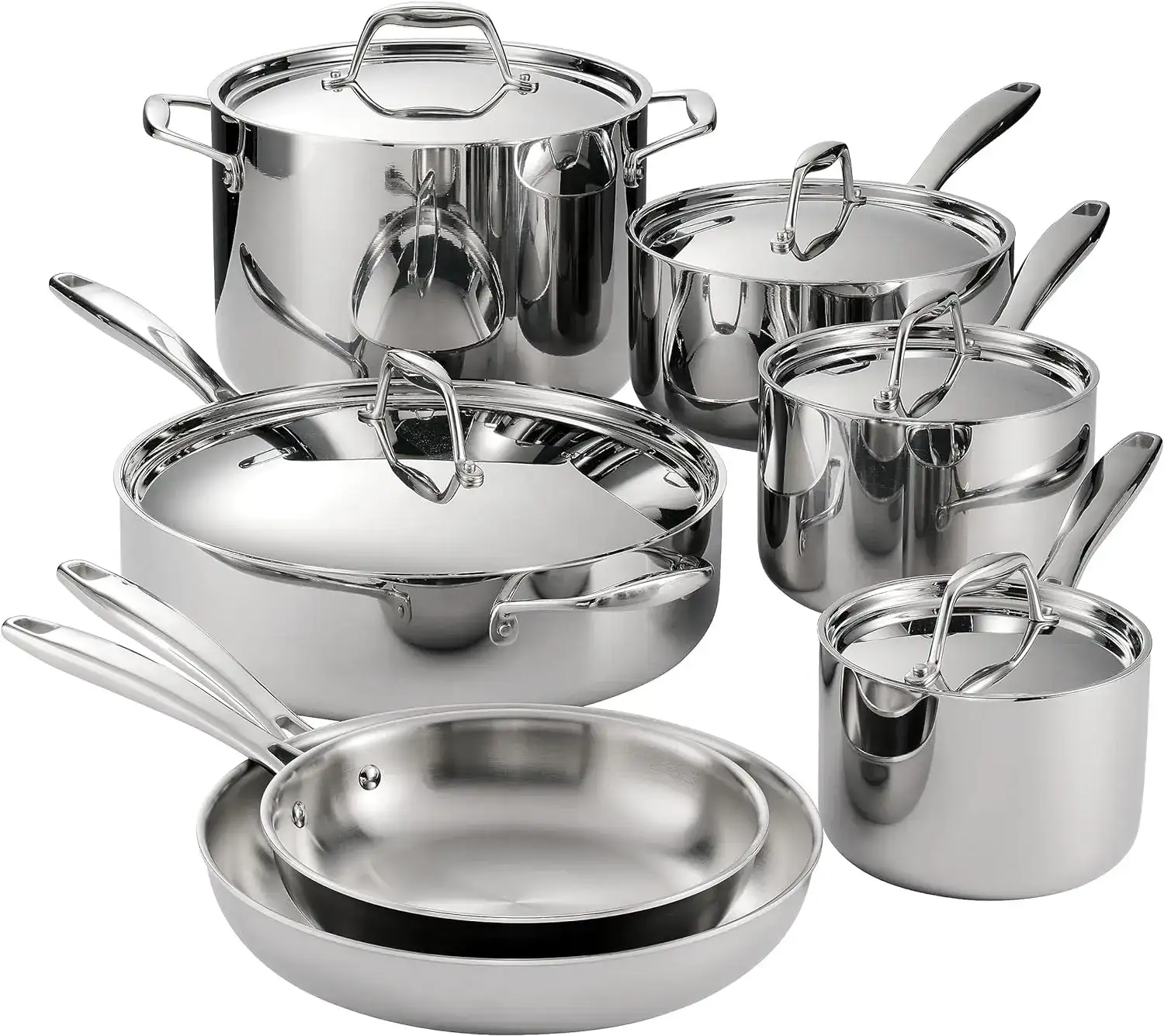 | Tramontina 80116/249DS Gourmet Stainless Steel Induction-Ready Tri-Ply Clad 12-Piece Cookware Set, NSF-Certified, Made in Brazil |
Navigating the world of kitchen gear can feel overwhelming. You've got brands at every price point imaginable, all vying for your attention. Parini cuts through the noise by positioning itself as a practical, no-frills choice. It aims to strike that sweet spot between a low price tag and dependable daily performance.
Think of it this way: Parini isn't designed for a professional chef crafting a delicate sauce. It’s for the home cook who needs a reliable pan for scrambling eggs on a Tuesday morning or sautéing some veggies for dinner, all without dropping a ton of cash.

This focus on the budget-conscious consumer is a core part of its identity. Parini isn't trying to go head-to-head with high-end, multi-clad stainless steel or heavy-duty cast iron. Instead, it serves a specific—and very important—part of the market.
The Brand at a Glance
Parini keeps its product lineup pretty straightforward, focusing almost entirely on nonstick aluminum cookware. This is a very deliberate choice. Aluminum is lightweight and heats up quickly, making it incredibly user-friendly for whipping up fast meals.
Their collections usually include:
- Individual frying pans: You'll find them in all the common sizes, like 8-inch, 10-inch, and 12-inch skillets.
- Complete cookware sets: These are the real value play. They often come bundled with a few saucepans, a stockpot, and matching lids, giving you a full starter kit for your kitchen.
- Specialty items: Every now and then, you might stumble upon a griddle or other specific pans in their collection.
At its core, the brand’s mission is simple: get functional tools into kitchens that get the job done without breaking the bank. It's all about providing the essentials for daily cooking, from breakfast right through to dinner.
From Local Roots to Global Kitchens
What started as a local Italian brand has since found its way into kitchens all over the world. Parini has grown by adapting its offerings to different culinary cultures, building a solid footprint in key markets across North America, Europe, and Asia.
This global reach is reflected in its estimated annual revenues of USD 5 to 10 million. A huge chunk of that—a substantial 40% of sales—comes from North America alone. You can learn more about the brand's global journey on myparini.com.
This background really sets the stage for our hands-on review. Now, let's dig in and see if the performance truly lives up to its value-oriented promise.
A Look Inside Materials and Build Quality
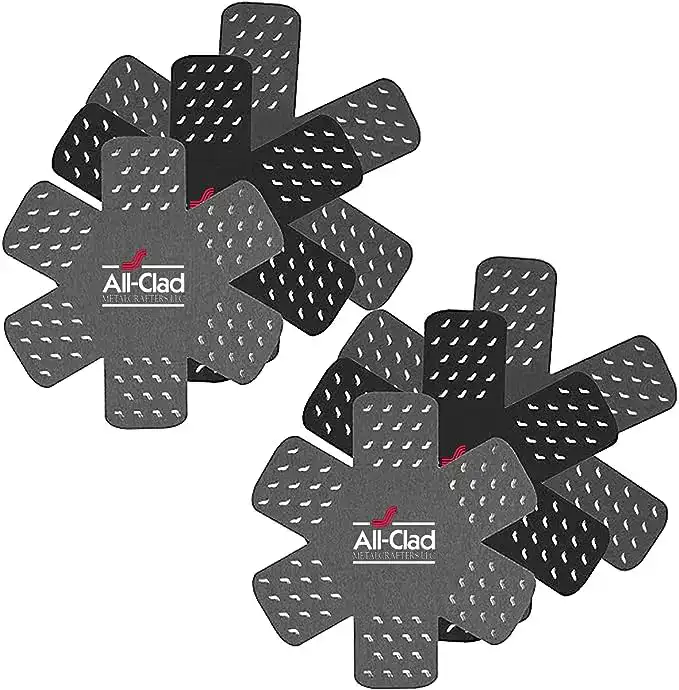 | All-Clad Premium 6-Piece Set Cookware Protectors, Polyester Pot and Pan Protectors for Stacking and Kitchen Organization, Black/Grey, 6 Count |
Great cookware starts with what's on the inside. To really understand Parini, we need to look past the shiny exterior and dig into the materials that dictate how it cooks, heats, and holds up over time.

Parini builds most of its pots and pans with an aluminum body. This isn't surprising for budget-friendly cookware, and it's a smart choice. Aluminum is a fantastic heat conductor, meaning it gets hot fast and distributes that heat evenly across the pan's surface. No long waits for your pan to preheat.
But there's a catch. Aluminum is also very lightweight. If a pan is too thin and flimsy, it's a prime candidate for warping, especially when you make a common mistake like moving a searing hot pan to a cold sink. That sudden temperature shock can create an uneven, buckled cooking surface where oil pools in the low spots and food burns on the high ones.
The Foundation: The Pan's Base
This brings us to one of the most critical parts of any pan: the thickness of its base. A beefier base gives the pan stability and does a much better job of spreading heat evenly, which is your best defense against those dreaded hot spots that scorch one part of your food while leaving another undercooked.
After getting my hands on a few Parini pieces, I'd say the base is moderately thick for this price range. It's not going to feel as substantial as a high-end pan, but it’s got enough heft to prevent instant warping under normal, everyday cooking conditions. It's a clear trade-off, balancing cost against functional durability.
The real test of any cookware isn't just the primary material, but how all the components—base, handle, and coating—come together to create a reliable kitchen tool.
Coatings and Handles
Of course, the nonstick coating is another huge piece of the puzzle. Parini uses a pretty standard nonstick layer that gets the job done for low-to-medium heat cooking. Think eggs, pancakes, and delicate fish—it handles those perfectly. This coating is also typically PFOA-free, which is the modern safety standard.
Looking at the handles, you'll see they are generally riveted on. This is a good sign. Rivets create a much stronger, more permanent bond than screws, which have a nasty habit of loosening over time. The handle materials are usually plastic or silicone designed to stay cool on the stovetop, but they also determine the pan's oven-safe temperature limits.
Understanding these material choices is key to setting the right expectations. For a deeper dive, our comprehensive guide to different cookware materials and their benefits offers more detailed comparisons. Ultimately, Parini's build quality reflects its mission: providing functional, accessible tools for everyday cooking without the premium price tag.
How Parini Performs in a Real Kitchen
Specs on a box are one thing, but the true test of any cookware is how it actually handles the chaos of a real kitchen. To get a feel for what Parini is all about, we took a standard nonstick skillet and put it through its paces with a few everyday cooking tasks. We wanted to see if its performance could live up to its budget-friendly price tag.

We kicked things off with a classic test for any pan: searing a chicken breast. This is a quick way to find any issues with heat distribution. Just as you’d expect from an aluminum core, the pan got hot fast—less than a minute on medium heat. But we did find a noticeable hot spot right in the middle, causing the chicken to brown much faster there than around the edges.
This meant we had to keep moving the chicken around to get that even, golden-brown crust we were looking for. It’s not a complete deal-breaker, but it’s something you'll need to watch, especially if you're cooking bigger batches or need super precise temperature control. Frankly, it’s a common quirk you see in thinner, more affordable pans.
The Nonstick Promise Put to the Test
Next up, we zeroed in on the nonstick surface, which is the main reason most people buy a pan like this. We challenged it with two of the stickiest foods we could think of: a fried egg and a pancake. This is where the Parini pan really came through.
With just a tiny pat of butter, the fried egg glided across the pan like a puck on an air hockey table. Flipping was a piece of cake, and it slid right out, leaving no residue behind. The pancake was much the same story, cooking to a perfect golden-brown and releasing without a fight. That kind of easy food release is a huge win for anyone who hates scrubbing pans after breakfast.
For delicate, low-to-medium heat cooking—think eggs, pancakes, or just warming up leftovers—the nonstick performance is seriously impressive for the price. It does exactly what you need it to do, making daily cooking simple and cleanup a non-issue.
Of course, getting great results also comes down to using the right pan for your stove. A good match between your cookware and cooktop makes a world of difference in heating efficiency and how your food turns out.
Parini Cookware Performance Snapshot
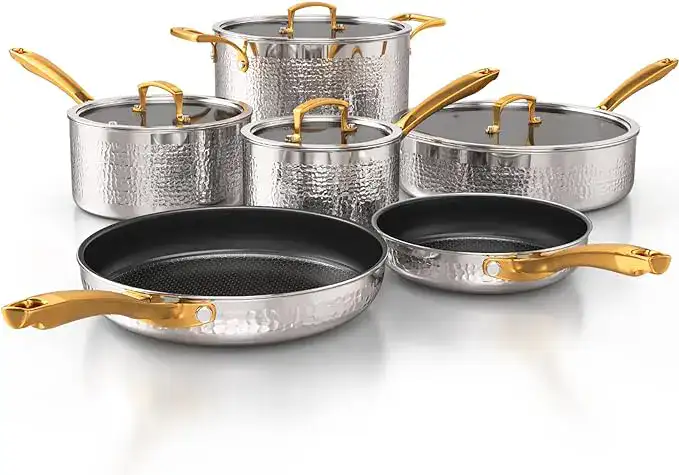 | Homaz life Stainless Steel Pots and Pans Set, Tri-Ply Hammered Kitchen Cookware with Glass Lids, Induction Compatible, Non-Toxic, 10-Piece |
To give you a clearer picture, we've broken down our test results into a simple table. This snapshot covers the key performance metrics you'll care about for day-to-day cooking.
| Performance Metric | Rating (Out of 5) | Observations |
|---|---|---|
| Heat Distribution | 3/5 | Heats up quickly but has a distinct central hot spot, requiring food to be moved for even cooking. |
| Nonstick Release | 5/5 | Excellent. Eggs, pancakes, and other sticky foods slide off effortlessly with minimal oil. |
| Searing Power | 3/5 | Can achieve a decent sear, but the uneven heating makes getting a consistent crust tricky. |
| Handling/Balance | 4/5 | Lightweight and easy to maneuver. The handle stays cool on the stovetop. |
| Ease of Cleanup | 5/5 | A simple wipe or quick rinse is usually all that's needed, thanks to the effective nonstick surface. |
| Overall Value | 4/5 | For the price, the performance in key nonstick tasks is hard to beat, despite some heating imperfections. |
As you can see, Parini really excels in the areas that matter most for everyday nonstick cooking, even if it has some of the typical drawbacks of a budget pan.
Real-World Cooking Scenarios
To wrap up our testing, we sautéed a mix of chopped onions, bell peppers, and zucchini. The pan did the job just fine, although that central hot spot meant we had to stir constantly to keep the onions from getting too dark too fast.
Here’s a quick rundown of how it stacked up across different jobs:
- Searing: Fair. It gets the job done, but you have to actively manage the cooking to work around the hot spot.
- Sautéing: Good. Great for veggies since it heats up fast. Just be prepared to stir often to compensate for the uneven heat.
- Delicate Foods: Excellent. This is where the nonstick surface truly shines. For eggs, fish, and pancakes, you get flawless release and a super easy cleanup.
This performance profile really tells you who Parini is for. It might not be the top choice for a seasoned chef who needs perfect heat control, but it absolutely nails the daily tasks most of us face in the kitchen. If you're looking for other options, feel free to check out our detailed guide to the best nonstick cookware sets on the market. In the end, Parini delivers reliable performance right where its target audience needs it most.
Digging into Design and Daily Use
Beyond how a pan cooks, it's the little design details that decide if it becomes a go-to tool or just another pot collecting dust. This is where we shift gears in this Parini cookware review—moving from raw performance to what it’s actually like to handle and live with these pans day-to-day.
Let's be honest, aesthetics are personal, but Parini plays it safe with a simple, functional look. You're not going to find wild colors or trendy shapes here. The design is clean and straightforward, easily blending into most kitchens without shouting for attention. It's a no-frills approach that puts utility first, which is right in line with the brand's budget-friendly mission.
Handling and Ergonomics
The real test is how a pan feels in your hand when you're in the middle of cooking. Parini's handles are usually made from heat-resistant plastic or silicone, and they do a solid job of staying cool on the stovetop. They feel comfortable enough for simple jobs, like flipping a few eggs or giving some veggies a quick toss.
Where they stumble a bit is balance. The lightweight aluminum body paired with a fairly substantial handle can make the smaller pans feel a little back-heavy when they’re empty. It’s not a dealbreaker once you have food in it, but you'll notice the difference if you're used to more high-end, perfectly balanced cookware.
The true measure of good design is when you don't have to think about it. A great pan feels like an extension of your arm, not some awkward tool you're fighting with. For everyday tasks, Parini gets this mostly right.
Lids and Other Practical Touches
 | JEETEE 11 Inch Nonstick Frying Pan, Stone Coating Cookware, Nonstick Omelette Pan with Heat-Resistant Handle, Induction Skillet for Eggs (Grey) |
There’s nothing more annoying than a lid that doesn't fit right, letting all your precious steam escape. I was pleasantly surprised here. Parini’s lids, typically made of tempered glass, create a nice, snug seal. They do a great job trapping heat and moisture, which is exactly what you want for simmering a sauce or steaming vegetables. The glass is also a huge plus for checking on your food without lifting the lid and losing heat.
Another huge factor in day-to-day use is weight. Thanks to their aluminum construction, these pans are incredibly light and easy to manage.
- Lifting is a breeze: Moving a full pan from the stove to the sink for draining is no sweat.
- Quick on the wrist: Tossing ingredients while sautéing feels nimble and doesn't require a lot of effort.
- Great for everyone: This lightweight nature makes them a fantastic choice for anyone who struggles with heavier cookware like cast iron.
When you boil it all down, Parini cookware is designed with pure practicality in mind. It won't win any beauty contests, but its features are more than capable for the daily grind. The handles are comfy, the lids fit well, and the lightweight body makes cooking and cleanup easy for just about any home cook.
Keeping Your Cookware in Top Shape
To get the most out of any cookware, you have to know how to treat it right. This goes way beyond just cleaning; it's about understanding what your pans can and can't handle. If you want your Parini pieces to perform well and stick around for years, proper maintenance is everything.

First things first, you need to know your equipment's limits. Most Parini cookware is built for your standard gas and electric stovetops. But induction? That's not always a given. You'll want to check the product details for that "induction-ready" symbol, because many Parini lines don't have the magnetic base needed for it.
When it comes to the oven, Parini cookware has a pretty firm boundary. Those heat-resistant handles are typically only oven-safe up to around 350°F (175°C). Pushing it past that point can wreck the handles and kiss your warranty goodbye, so always double-check the rating for your specific set.
Extending the Lifespan of Your Parini
Protecting that nonstick coating is your number one job. Even if a brand says a pan is "dishwasher safe," trust me when I say hand washing is always the better choice for nonstick cookware. The intense heat and harsh detergents inside a dishwasher will slowly eat away at the coating, dramatically shortening the pan's useful life.
Using the right tools makes a huge difference, especially when it comes to caring for non-stick surfaces. A gentle, non-abrasive sponge is going to be your pan's best friend.
Just follow these simple rules to keep that surface pristine:
- Avoid Metal Utensils: This one isn't a suggestion; it's a rule. Metal spoons, forks, and spatulas will absolutely scratch and chip the nonstick coating. Stick to silicone, wood, or nylon tools exclusively.
- Use Low to Medium Heat: High heat is the sworn enemy of nonstick coatings. It can cause the surface to break down, making it less effective at releasing food. Let the aluminum core do its job—it heats up fast without needing to crank the burner to max.
- Allow Pans to Cool: Never, ever plunge a hot pan into cold water. That sudden temperature change, called thermal shock, can cause the metal to warp and create a wobbly, uneven cooking surface.
Proper care is less about intense scrubbing and more about forming gentle habits. Think of the nonstick surface as a delicate layer that needs protection, not a rugged material that can withstand anything.
Smart Storage and Cleaning
How you store your pans is just as important as how you clean them. Stacking nonstick pans one on top of the other is a recipe for scratches and scuffs. To avoid that, just place a paper towel, a soft cloth, or a dedicated pan protector between each piece.
For stubborn, stuck-on messes, resist the temptation to grab the steel wool or a harsh scouring pad. Instead, fill the pan with some warm, soapy water and let it soak for a while. A little patience will go a long way.
While this Parini cookware review is focused on nonstick care, many of these habits are good for other materials, too. You can find more advice in our guide on how to clean stainless steel pots, which has some great tips for general cookware maintenance. If you follow these straightforward practices, you'll keep your Parini cookware cooking reliably for countless meals to come.
The Final Verdict: Is Parini Cookware a Smart Buy?
After putting these pans through their paces, my final take on Parini cookware is refreshingly simple. This brand knows exactly what it is and who it's for. It’s not trying to go toe-to-toe with premium, multi-clad cookware, and honestly, it doesn't need to.
Parini's main game is delivering reliable, everyday nonstick performance at a price that’s hard to beat. The lightweight aluminum body and solid nonstick coating make it a breeze to use for daily jobs like scrambling eggs, flipping pancakes, or sautéing some veggies.
If you’re a new homeowner, a college student, or just watching your budget, a Parini set is a fantastic starting point. It covers all the essentials without making your wallet cry.
But let's be real about its limits. While the construction is perfectly fine for most tasks, it’s not built for high-heat searing or the kind of heavy-duty use that a seasoned home chef would throw at it. If you demand pinpoint heat control and heirloom-level durability, you'll probably want to look elsewhere.
Who Is Parini Cookware Really For?
 | ESLITE LIFE Nonstick Cookware Sets, 12 Pcs Granite Coating Pots and Pans Set Kitchen Cooking Set, Compatible with All Stovetops (Gas, Electric & Induction), PFOA Free |
So, who's the ideal customer? This Parini cookware review finds it’s a no-brainer for a few specific people:
- First-Time Kitchen Outfitters: Setting up your first apartment or home? Parini gets you all the essential pots and pans you need to start cooking immediately, without the hefty price tag.
- The Budget-Conscious Cook: For anyone needing functional cookware that won’t break the bank, Parini offers tremendous value.
- The Casual User: If you cook a few times a week and your go-to recipes stick to low-to-medium heat, these pans will serve you well for a long time.
Think of Parini cookware as the dependable commuter car of the kitchen. It’s not a luxury sports car, but it gets you where you need to go reliably, day in and day out. For the right person, it's a strategic purchase.
At the end of the day, Parini fills a huge need in the market. The global cookware industry is a giant, with the residential sector accounting for over 68% of sales in 2023. That reflects a massive trend of people cooking at home, and you can dive into more cookware market trends on GrandViewResearch.com.
Brands like Parini succeed by offering a practical, affordable solution to this enormous audience. If your needs line up with its strengths—great value and solid nonstick performance for everyday meals—then yes, it is absolutely a smart buy.
Common Questions About Parini Cookware
To wrap things up, let's dive into some of the questions I hear all the time from home cooks about Parini. Getting these common curiosities cleared up should give you the final bit of confidence you need.
First up, the big one: is Parini cookware safe? The short answer is yes. Today's Parini pans are made with PFOA-free nonstick coatings, which is a huge step up from the questionable materials used in older nonstick pans.
Of course, you still need to use it right. The key is sticking to low or medium heat and always reaching for wood or silicone utensils. This simple habit keeps the nonstick surface from getting scratched up and ensures it stays intact.
Durability and Compatibility
 | Country Kitchen Nonstick Induction Cookware Sets - 11 Piece Cast Aluminum Pots and Pans with BAKELITE Handles and Glass Lids -Cream |
Another question I get constantly is about how long the nonstick surface will actually last. With the right care, you can realistically expect a Parini pan to give you 2 to 5 years of solid performance.
Honestly, how you treat your pan matters more than the brand name. Gentle hand washing, staying away from high heat, and using the right tools will make even a budget pan last.
This really puts the lifespan in your hands. Blasting it on high heat or running it through the dishwasher with harsh detergents is the quickest way to ruin that nonstick coating.
And finally, what's the deal with induction stoves? This is a classic "it depends" situation. While some of the newer Parini lines are built with a magnetic base for induction, a lot of their standard aluminum pans won't work.
You absolutely have to look for the "induction-ready" symbol on the box or the online product details. It's a super common mistake to assume a pan will work, so save yourself the headache and double-check before you buy.
For more deep-dive guides and no-nonsense reviews on everything from nonstick skillets to kitchen must-haves, check out all our resources at Cookware Review Hub. Find your next kitchen workhorse by visiting us at https://www.cookwarereviewhub.com.