To get that perfect non-stick surface on a new carbon steel wok, you first need to scrub off the protective factory coating. Once it's clean and dry, heat the wok until the metal starts to turn a blueish color. From there, it's all about applying an incredibly thin layer of high-smoke-point oil and heating it on the stovetop until the smoke clears. You'll want to repeat this process 3-5 times to build up a durable, slick patina.
Now loading...
Why Seasoning Your Wok Is a Game Changer
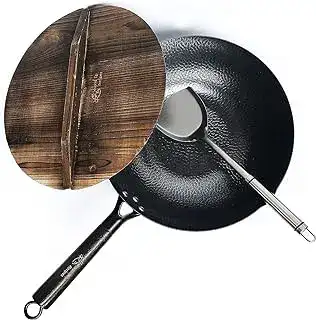 | Souped Up Recipes Carbon Steel Wok For Electric, Induction and Gas Stoves (Lid, Spatula and User Guide Video Included) Now loading... |
That shiny new carbon steel wok sitting on your counter is full of promise, but it's not ready for your first stir-fry just yet. Before it can deliver that legendary, smoky wok hei flavor, you have to season it. This isn't just a suggestion; it's the essential first step that transforms a piece of raw, porous metal into a slick, naturally non-stick cooking machine.
Think of an unseasoned wok like a blank canvas. The seasoning process is how you paint the masterpiece. It’s a technique that’s been honed over centuries, dating back to ancient China where woks were first forged. Early cooks quickly figured out that burning thin layers of fat onto the steel created a protective, rust-proof surface. What they knew from experience, modern science now calls polymerization.
For anyone just starting their wok journey, getting a handle on the seasoning process can seem a bit intimidating. To simplify things, here's a quick rundown of what you'll be doing.
Quick Guide to Wok Seasoning at a Glance
| Stage | Action Required | Key Tip |
|---|---|---|
| Preparation | Scrub off the factory coating with soap and a scouring pad. | This initial scrub is the only time you should use soap on your wok. |
| Bluing | Heat the clean, dry wok over high heat until it turns a blue-black color. | This opens the pores of the metal, preparing it for the oil. |
| First Layer | Apply a micro-thin layer of high-smoke-point oil with a paper towel. | Less is more! A thick layer will result in a sticky, uneven surface. |
| Polymerization | Heat the oiled wok until it stops smoking, then let it cool slightly. | This is the chemical reaction that creates the non-stick patina. |
| Building Layers | Repeat the oiling and heating process 3-5 times. | Each layer adds to the durability and slickness of your wok's surface. |
This table covers the basics, but understanding the why behind each step makes all the difference in getting it right.
The Science Behind the Perfect Patina
So, what's actually going on when you season a wok? When you apply that super-thin layer of oil and crank up the heat past its smoke point, you're causing a chemical reaction. The fat molecules break down and rearrange themselves into a new, complex polymer matrix that bonds directly to the metal surface. Every time you repeat this, you're adding another microscopic layer, slowly building up what's known as a patina.
This dark, slick coating is your wok's secret weapon, and it serves a few critical functions:
- Creates a Natural Non-Stick Surface: Forget about chemical coatings. A properly seasoned wok lets eggs and noodles slide around effortlessly.
- Prevents Rust: Carbon steel is an amazing material, but it's also highly reactive. If left exposed to moisture, it will rust in a heartbeat. The polymerized oil creates a barrier that seals the metal off from the elements.
- Enhances Flavor: Over time, that patina absorbs the savory essence of everything you cook, contributing to that sought-after, smoky aroma known as wok hei.
The goal isn't to slather on a thick, greasy layer of oil. True seasoning is built from multiple, paper-thin, hardened layers of polymerized oil. That's why using a tiny amount of oil and repeating the process is so much more effective than one heavy-handed application.
This process is fundamental for both carbon steel and cast iron, although the materials themselves behave a bit differently. For a deeper look at how they stack up, check out our detailed comparison of cast iron woks vs carbon steel. You'll find that the seasoning on carbon steel tends to build faster and feel smoother because the metal is less porous.
Nailing this initial seasoning sets the foundation for a lifetime of incredible meals, turning your wok from just another pan into an indispensable part of your kitchen.
Your First Step: Prepping a Brand New Wok

Before you can even dream of building that beautiful, slick patina, your new carbon steel wok needs a serious bath. It arrives straight from the factory with a protective coating designed to prevent rust on its long journey to your kitchen. This thin, often invisible layer has to go.
Don't be tempted to skip this part. If you try to season over this coating, you'll end up with a weak, flaky, and useless surface that stops the oil from actually bonding to the steel. The good news? Getting it off is straightforward.
This initial scrub is the one and only time you should ever let soap and an abrasive scrubber touch your wok. You'll need hot water, dish soap, and a stainless steel scouring pad or the rough side of a sponge. Give it a really vigorous scrub, inside and out, then rinse it clean and dry it completely with a towel.
Why This First Scrub is Non-Negotiable
It's a common myth that all carbon steel arrives ready for seasoning. In reality, the vast majority require you to do the prep work. Less than 5% of carbon steel woks are sold pre-seasoned, which is a huge difference from cast iron, where over 80% of skillets come ready to use.
That's why removing the anti-rust coating with warm, soapy water is the universal first step for anyone learning how to season a carbon steel wok. If you want to dive deeper into these wok fundamentals, Restaurantware.com has some great insights.
Once your wok is squeaky clean and bone-dry, the real magic begins. The next crucial step is called blueing the steel.
The Art of Blueing Your Wok
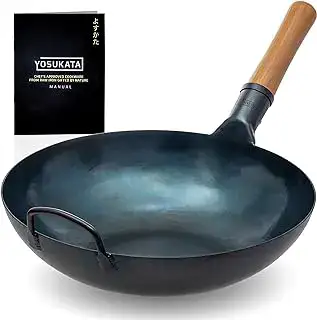 | YOSUKATA Flat Bottom Wok Pan - 13.5" Blue Carbon Steel Wok - Preseasoned Carbon Steel Skillet - Traditional Japanese Cookware - Carbon Steel Pan for Electric Induction Cooktops Woks and Stir Fry Pans |
Blueing is a technique the pros use to get the metal ready for its first layer of oil. It's exactly what it sounds like: heating the clean, empty wok over a very high flame until the metal itself changes color. This accomplishes two critical things.
- Burns Off Any Residue: It incinerates any microscopic bits of factory coating that the initial scrubbing might have missed.
- Opens the Metal's Pores: The intense heat makes the steel expand just a bit, opening up its pores. This creates a much more receptive surface for the seasoning oil to seep into and form a strong bond.
To blue your wok, set it on your most powerful burner and crank the heat to the absolute maximum. If you've got a wok ring, now's the time to use it for stability. You'll want to slowly and constantly move the wok over the flame, tilting and rotating it to make sure every single inch of the interior gets blasted with heat.
You'll see the silver steel start to transform, shifting through shades of yellow and gold before finally hitting a distinct, dark blue-black color. That's the visual cue you're looking for. Depending on your stove's power, this can take anywhere from 10 to 20 minutes. Just be patient and aim for an even, consistent color change across the entire cooking surface.
Safety First: This process kicks off a lot of heat and some light smoke as the last of the coating burns away. Make sure your kitchen is well-ventilated—open a window and turn on your exhaust fan. The wok and its handle will get extremely hot, so always use an oven mitt or a thick towel to hold it.
Once the wok is beautifully blued, take it off the heat and let it cool down just enough so you can handle it safely. It's now the perfect blank slate, fully prepped and ready to accept its very first layer of seasoning oil. This prep work is the foundation for the incredible non-stick surface you're about to build.
Choosing the Right Oil for a Flawless Finish

The oil you choose for seasoning is more than just a slick coating; it’s the very foundation of your wok’s non-stick surface. Through a process called polymerization, this liquid oil transforms into a hard, glass-like layer that bonds directly to the steel. The single most important factor in making this magic happen? The oil’s smoke point.
You need an oil that can handle some serious heat without immediately burning into a cloud of bitter smoke. The goal is to push the oil past its smoke point, which allows it to break down and polymerize. Starting with a high smoke point gives you the control you need to manage this process without turning your kitchen into a disaster zone.
That's why high-smoke-point oils are the undisputed champs for wok seasoning. Think of them as the reliable workhorses that won't buckle under the intense heat required to build a durable, neutral-flavored patina.
Comparison of Top Oils for Seasoning a Carbon Steel Wok
Navigating the cooking oil aisle can be overwhelming. To simplify things, I've put together a quick comparison of the most common and effective oils for getting a perfect wok season. This table breaks down their smoke points and suitability so you can choose with confidence.
| Oil Type | Smoke Point (°F/°C) | Seasoning Suitability | Notes |
|---|---|---|---|
| Grapeseed Oil | 420°F (216°C) | Excellent | A fantastic neutral choice. It creates a very hard, durable, and slick finish without imparting any flavor. My personal go-to. |
| Canola Oil | 400°F (204°C) | Very Good | Inexpensive and widely available. It polymerizes cleanly and is a popular, effective option for building up seasoning layers. |
| Sunflower Oil | 450°F (232°C) | Very Good | Boasts a high smoke point and a neutral flavor profile, similar to canola. It's a reliable choice for a clean polymerization. |
| Peanut Oil | 450°F (232°C) | Good | A traditional favorite, especially in Chinese cooking. Works well, but can impart a slight nutty flavor. |
| Lard/Bacon Fat | 370°F (188°C) | Good (Traditional) | The classic choice. Creates a great non-stick surface but has a lower smoke point and adds a distinct flavor. |
| Flaxseed Oil | 225°F (107°C) | Poor (Controversial) | Creates a very hard, beautiful finish but is notoriously brittle and prone to flaking. Not recommended for woks. |
| Olive Oil (EVOO) | 325°F (163°C) | Avoid | The smoke point is far too low. It will burn, smoke excessively, and leave a sticky, bitter residue. Save it for salads. |
Ultimately, oils like grapeseed, canola, and sunflower are your safest bets. They strike the perfect balance of a high smoke point, neutral flavor, and the ability to create a resilient, long-lasting non-stick surface on your carbon steel wok.
Top Contenders for Wok Seasoning
When I’m helping someone season their first wok, I always point them toward a few tried-and-true options. These oils are easy to find, affordable, and have the right chemical properties to get the job done right.
- Grapeseed Oil: With a smoke point around 420°F (216°C), it's a fantastic, neutral-flavored choice that creates a hard, durable finish.
- Canola Oil: You can't beat the price and accessibility. Canola's smoke point of about 400°F (204°C) makes it a very popular and effective option for building seasoning layers.
- Sunflower Oil: Very similar to canola, sunflower oil boasts a high smoke point and neutral flavor, polymerizing cleanly without leaving any weird aftertaste.
The Flaxseed Oil Controversy
Do a quick search online, and you'll inevitably see flaxseed oil hailed as the "king" of seasoning oils. On paper, it makes sense. It's packed with omega-3 ALA fatty acids, which helps it form one of the hardest, slickest polymerized surfaces you'll ever see.
But here’s the reality: that hardness is also its biggest weakness. The seasoning layer it creates is incredibly brittle. I’ve been down this road myself—and heard from countless others—only to watch a beautiful, glossy flaxseed patina flake and chip off after just a few uses. It’s incredibly frustrating to have to strip your wok and start all over.
My personal take? Skip the flaxseed. While the initial result looks amazing, its lack of durability isn't worth the headache. Stick with a more forgiving and resilient oil like grapeseed or canola for a finish that actually lasts.
What Oils to Avoid for Seasoning
 | Todlabe Nonstick Wok, 13-Inch Carbon Steel Wok Pan with Lid Woks & Stir-Fry Pans No Chemical Coated Wok with Spatula Flat Bottom Cookware Chinese Wok for Induction, Electric, Gas, Halogen, All Stoves |
Knowing what not to use is just as critical as knowing what works. Some oils just can't handle the heat of the seasoning process.
Low-smoke-point oils, especially extra virgin olive oil, are a definite no-go. They will start to burn and turn acrid long before they can polymerize properly, leaving you with a sticky, stinky mess instead of a slick cooking surface. Understanding the guidelines for using olive oil for high-heat cooking makes it clear why certain types are best saved for drizzling over a finished dish, not for forging a new pan surface.
The goal here is a stable, neutral base. For a deeper dive, our complete guide on the best oils for seasoning a wok offers even more detailed comparisons to help you make the perfect choice for your kitchen.
Stovetop and Oven Seasoning: Getting It Right
Alright, with your wok prepped and your oil picked out, it's time for the main event: seasoning. This is the alchemy that turns that raw, blue steel into a slick, non-stick powerhouse. The two best ways to get this done are the old-school stovetop method and the more modern oven method. Which one you choose really just comes down to what kind of stove you have.
The stovetop approach is classic for a reason, especially if you have a powerful gas burner that can send flames licking up the sides of the wok. It’s a very hands-on process, and you get the satisfaction of watching the patina build right before your eyes. On the other hand, the oven method is a fantastic "set it and forget it" option for anyone with an electric or induction cooktop. It provides a gentle, all-encompassing heat that creates an incredibly even first coat. Both paths lead to the same non-stick destination.
No matter which technique you use, there's one golden rule: less oil is more. You are not frying your wok. Think of it like applying a thin coat of varnish, not slapping on a thick layer of paint. You’re building a microscopic layer of polymerized oil that will harden into a durable, slick surface. A thick coat will just get sticky, weak, and flake off. Multiple, paper-thin coats are what build a resilient finish that actually lasts.
The Classic Stovetop Method
This is the quintessential way to season a carbon steel wok, and it's my go-to if you've got a gas range. The direct flame gives you total control and makes it easy to season those high, sloping sides.
First things first, get your clean, blued wok on your most powerful burner over medium-high heat. Let it get nice and hot for about a minute. Now, pour in about one teaspoon of your high-smoke-point oil. Don't just eyeball this—using too much oil is the number one mistake people make, and it always leads to a sticky, splotchy mess.
Grab a wad of paper towels with a pair of tongs (safety first!) and wipe that teaspoon of oil over the entire inside surface. Your goal is to leave behind a barely-there, glossy sheen. Seriously, it should look almost dry.
Now, crank the heat to high. Keep the wok on the burner, tilting and rotating it so every square inch of the interior gets hit with direct heat. Before long, you'll see smoke. This is good! It's the sign that the oil is polymerizing and bonding to the steel. Keep heating until the smoke dies down, which usually takes a few minutes. You'll literally watch the wok's color transform from blue to a rich bronze, and eventually toward a deep, beautiful black.
Let the wok cool for just a minute or two—enough that you can handle it safely—and then do it all over again. Another micro-thin layer of oil, wipe it out, and heat it until the smoke clears.
- How Many Coats? For your initial seasoning, aim for 3 to 5 layers.
- What to Look For: The wok should get progressively darker and more uniform with each round.
- The Payoff: A slick, semi-glossy surface that's ready for its first stir-fry.
A common question I get is, "What about the outside?" With the stovetop method, the exterior pretty much seasons itself over time from oil drips and ambient heat. For now, focus all your energy on the interior cooking surface. That's where the non-stick magic happens.
The Reliable Oven Method
If you're working with an electric coil, glass top, or induction stove, the oven method will be your best friend. Those cooktops are great, but they really struggle to heat the sloped sides of a wok evenly, which can leave you with a patchy seasoning job. The oven solves that problem by surrounding the entire wok in consistent, ambient heat. It's practically foolproof for a perfect first coat.
To start, preheat your oven to a temperature just a bit higher than your oil's smoke point. For something like grapeseed or canola oil, 450-475°F (230-245°C) is the sweet spot. While the oven is heating up, put about a teaspoon of oil into your cool wok.
Using a clean paper towel, meticulously wipe the oil over the entire wok—inside and out. This is a key difference from the stovetop method. Since the whole pan is going into the oven, you want to protect the outside from rust, too.
Now for the most important part. Grab a new, clean paper towel and wipe out all the oil you just applied. I mean all of it. You want the wok to look like there's no oil left on it at all. This is the secret to avoiding a sticky, gummy finish. Trust me, the invisible, microscopic layer that remains is all you need.
Place the wok upside down on the middle rack of your preheated oven. Putting it upside down is crucial because it prevents any rogue oil droplets from pooling in the bottom. Let it bake for one full hour. Then, just turn the oven off and let the wok cool down completely inside the oven. That slow cool-down helps the new seasoning cure properly.
When you pull it out, the wok will have a beautiful, even, bronze-colored patina. For a truly bulletproof surface, I highly recommend repeating this whole process at least two more times. The result is a rock-hard, perfectly even base layer that will serve you well for years to come.
How to Fix Common Wok Seasoning Problems
Even when you follow all the steps for seasoning a carbon steel wok, things can still go a little sideways. It happens. You might end up with a sticky surface, some patchy spots, or even a bit of rust. Don't sweat it—these issues are super common and almost always fixable. It's just part of the learning curve.
Think of your wok’s seasoning as a living thing. It evolves and changes the more you cook with it, and sometimes it just needs a small course correction. The trick is figuring out what went wrong, why it happened, and how to get it back on track.
Your Wok Feels Sticky or Tacky
| | YOSUKATA Flat Bottom Wok Pan - 13.5" Blue Carbon Steel Wok - Preseasoned Carbon Steel Skillet - Traditional Japanese Cookware - Carbon Steel Pan for Electric Induction Cooktops Woks and Stir Fry Pans |
This is, by far, the most common hiccup people run into, and the culprit is always the same: too much oil. When you leave a thick layer of oil on the wok, the heat can't fully polymerize it. Instead of baking into a hard, slick coating, that excess oil just sort of half-cooks into a gummy, sticky resin.
Thankfully, the fix is pretty straightforward.
- The Fix: Grab some hot water and a non-abrasive scrubber, like a chainmail scrubber or a stiff brush. Give those sticky spots a good scrub to lift off that gummy residue. No need to strip the whole wok, just zero in on the problem areas.
- The Prevention: After scrubbing, pop the wok back on the stove to dry it completely. Then, apply a new, extremely thin layer of oil for maintenance and heat it until you see the first wisps of smoke. Moving forward, just remember the golden rule: wipe the oil on, then wipe it all back off like you made a mistake. It should look almost dry.
This infographic breaks down the visual difference between the two main seasoning methods, stovetop and oven.

You can see how the oven method gives you that even, all-over heat, while the stovetop approach requires a bit more hands-on work to get the heat up the wok's sides.
The Seasoning Looks Uneven or Patchy
Seeing splotches or an uneven finish is another rite of passage, especially after your first go. This tends to happen on electric or induction cooktops, which can create hotspots and struggle to heat the sloped sides as evenly as a gas flame. It can also happen if the wok wasn't thoroughly "blued" during the initial prep.
For the most part, this is just a cosmetic issue, and it will sort itself out over time.
Key Insight: Don't chase a perfectly uniform, jet-black patina right out of the gate. The best seasoning is built by cooking, not just by repeated seasoning sessions. Those bulletproof, even surfaces develop from consistent use over weeks and months of stir-frying.
Honestly, the best thing you can do is to just keep cooking. Every time you stir-fry with oil, you're naturally filling in those lighter patches. Your wok's surface will get more and more uniform with every meal. If the patchiness is really bugging you, you can run through another stovetop seasoning cycle or two, focusing the heat on the lighter areas to help them darken and catch up.
You Found Rust on Your Wok
Spotting orange on your prized wok can feel like a disaster, but it’s an easy fix. Carbon steel is reactive, which means it will rust if it hangs out with moisture for too long. This usually happens when a wok is put away while still a tiny bit damp or stored in a really humid spot.
- Scrub the Rust Away: Get some fine steel wool or the scrubby side of a sponge and a little water. Gently scrub the rust spots. It's only on the surface, so it should come right off without much effort.
- Rinse and Dry Immediately: After scrubbing, rinse the wok well. Then, put it on a burner over low heat for a few minutes until it is bone dry. Don’t skip this step!
- Apply a Maintenance Coat: While the wok is still warm from the burner, wipe on a super-thin layer of cooking oil. This puts that protective barrier back in place and helps stop rust from forming again.
Maintaining Your Wok for a Lifetime of Use

A well-seasoned wok isn’t a finished project; it’s an ongoing relationship you nurture every single time you cook. That initial seasoning process lays down the foundation, but the real magic happens through daily care and consistent use. This is how you transform a good cooking surface into an incredible one that only gets better with every meal.
The most critical part of this relationship happens in the minutes right after you plate your food. Proper cleaning and maintenance are what protect your hard-earned patina and fend off the dreaded enemy of carbon steel: rust. You'll need to forget everything you know about cleaning other pans—this requires a totally different approach.
The Correct Post-Cooking Routine
The golden rule of wok maintenance is simple: no harsh soap and never the dishwasher. The detergents in soap are designed to strip away grease and oil, which is exactly what your precious seasoning is made of. Using soap will actively undo the non-stick surface you've worked so hard to build.
Instead, get into this simple routine:
- Clean It While It's Warm: As soon as you've served your food, take the still-warm wok over to the sink.
- Use Hot Water Only: Run hot water into the wok and use a soft brush or a gentle bamboo wok brush to swirl away any food particles. The residual heat from the wok combined with hot water will lift most bits right off.
- Handle Stuck-On Food: If you have stubborn bits clinging on, just add a little water back into the wok, put it on the stove, and bring it to a boil. This will deglaze the pan and release anything that's stuck.
This method preserves the delicate layers of your patina, cleaning the wok without stripping it bare.
The practice of seasoning extends beyond woks to other heavy-duty cooking equipment, highlighting its importance for durability and non-stick properties. Professional kitchens often apply similar principles to maintain their gear, and you can learn more about this process by seeing how to season a charbroiler in a restaurant setting.
The Final and Most Crucial Step
Cleaning is only half the battle. This final step is absolutely non-negotiable if you want to protect your carbon steel from rust and reinforce its seasoning.
Once the wok is clean, you have to dry it completely. Just towel drying isn’t enough, as microscopic water droplets can remain and cause trouble. Place the wok back on the stove over low heat for a minute or two until every last trace of moisture has evaporated. You’ll know it’s bone-dry when you see a faint wisp of steam disappear.
With the wok still warm, kill the heat. Add about half a teaspoon of your seasoning oil and use a paper towel to wipe it over the entire interior surface. The goal here is to leave a micro-thin, protective layer of oil. This "maintenance coat" guards against humidity and corrosion while subtly adding to your patina over time. For more specific advice, our guide on Babish wok care details these essential long-term habits.
Common Questions About Wok Seasoning
Even with the best instructions, seasoning a new wok for the first time can feel a little mysterious. A few common questions always pop up, so let’s clear the air and get you on the path to building that perfect, slick patina.
Can I Season a Wok on an Electric or Induction Stove?
You sure can, but you'll need to adjust your technique. The classic stovetop method is really designed for a gas flame that can wrap around the wok's sloped sides, heating everything at once.
If you have an electric coil stove, you’ll have to constantly tilt and rotate the wok to get those sides screaming hot. For induction, you’re limited to a flat-bottomed wok, since a traditional round-bottom won't make contact with the magnetic element.
Frankly, because of these little hurdles, the oven method is often the superior choice for electric or induction cooktops. It surrounds the wok with consistent, even heat, giving you a flawless initial seasoning without all the manual gymnastics.
Why Is My Wok Seasoning Flaking Off?
Flaking is almost always a dead giveaway for one of two issues: using way too much oil or getting aggressive with harsh soaps and scrubbers during cleanup.
When you apply a thick coat of oil, it doesn't truly polymerize into a hard, bonded layer. Instead, it just bakes into a brittle, weak coating that chips off the first chance it gets. Likewise, detergents and abrasive pads can easily strip away your hard-earned patina, causing it to peel.
The fix is simple: grab a gentle scrubber to knock off any loose flakes. Then, put the wok back on the stovetop and apply a couple of new, ultra-thin layers of oil to the affected spots. This will reinforce the bond and smooth everything out again.
How Do I Know When My Wok Is Perfectly Seasoned?
| | Souped Up Recipes Carbon Steel Wok For Electric, Induction and Gas Stoves (Lid, Spatula and User Guide Video Included) |
There isn't a single "aha!" moment. A perfectly seasoned wok is something that develops and proves itself over time. At first, you're just looking for a deep, dark, semi-glossy black finish that covers the cooking surface. It’s going to look a little splotchy and imperfect to start, but that beautiful, uniform patina builds with every single stir-fry.
The real test, though, is in the cooking. The ultimate goal is to get to a point where you can fry an egg with just a tiny bit of oil and watch it slide around effortlessly. When you hit that milestone, you’ll know you’ve nailed it. That slick, non-stick surface is what it's all about, and it only gets better with age.
At Cookware Review Hub, we're dedicated to helping you master your kitchen tools. For more expert reviews and guides on everything from woks to espresso machines, visit us at https://www.cookwarereviewhub.com.
Article created using Outrank