
Choosing the right pan can completely change the way you cook, but let's be honest—the sheer number of options out there is overwhelming. This guide is designed to cut through that confusion. We're going to take a deep dive into the most common cookware materials, comparing how things like stainless steel, cast iron, and non-stick actually perform in a real home kitchen. Forget the generic lists; we're here to offer real advice for your specific needs.
Why Your Cookware Material Matters
Think of your pans like any other tool. You wouldn't use a hammer to drive a screw, and the same logic applies in the kitchen. The material of your pan directly impacts how your food cooks, tastes, and feels. It's a lot like choosing between different kitchen countertop materials—you have to weigh durability, performance, and aesthetics. This guide is all about finding that perfect balance between heat performance, toughness, and maintenance.
Now loading...
Our goal is simple: to arm you with the knowledge to match your cookware to your cooking style, your budget, and what you actually want to achieve in the kitchen. That way, every piece you buy becomes a trusted, long-lasting part of your culinary toolkit.
Comparing The Most Common Cookware Materials
Stepping into the world of pots and pans can feel overwhelming, but it really boils down to understanding the materials. Each one brings something unique to the table. You've got ultra-responsive copper that heats in a flash, and then there's rugged cast iron, the king of holding onto that heat.
Now loading...
In between, you have versatile workhorses like durable stainless steel and the easy-to-clean convenience of nonstick coatings. This is just a quick flyover, of course, meant to set the stage for a much deeper dive into how these materials stack up. For a head-to-head on two of the most popular options, check out our guide on stainless steel vs nonstick cookware.
I find it helps to think about the differences in terms of three key factors: how well it conducts heat (conductivity), how tough it is (durability), and how much effort it takes to keep it in good shape (maintenance).

As you can see, there's always a trade-off. A pan that's incredibly conductive might demand more careful upkeep, while one that's built like a tank might not heat as evenly. The trick is finding the right balance for the way you cook.
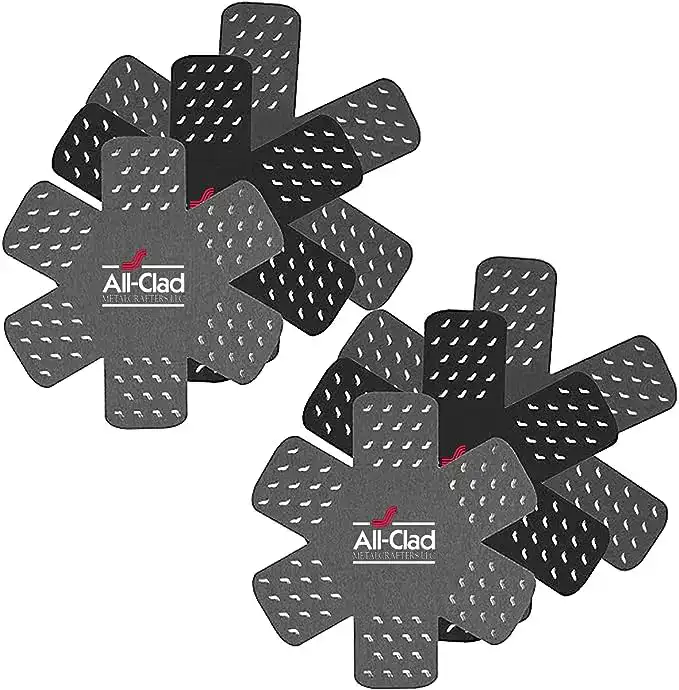 | All-Clad Premium 6-Piece Set Cookware Protectors, Polyester Pot and Pan Protectors for Stacking and Kitchen Organization, Black/Grey, 6 Count |
Cookware Material At-a-Glance Comparison
To give you a clearer picture right from the start, I've put together a quick comparison table. Think of this as your cheat sheet for understanding the core strengths and weaknesses of each material before we get into the nitty-gritty details.
| Material | Heat Conductivity | Heat Retention | Durability | Maintenance Level | Best For |
|---|---|---|---|---|---|
| Stainless Steel | Moderate | Moderate | Very High | Low | All-purpose searing, sautéing, boiling |
| Cast Iron | Low | Excellent | Extremely High | High (Seasoning) | Searing, frying, baking, slow-cooking |
| Carbon Steel | Moderate | Good | Very High | High (Seasoning) | High-heat searing, stir-frying, roasting |
| Hard-Anodized | Good | Good | High | Low | Everyday cooking, sauces, eggs |
| Nonstick (PTFE) | Varies (Core) | Varies (Core) | Low | Low | Delicate foods like eggs and fish, low-fat cooking |
| Ceramic | Varies (Core) | Varies (Core) | Low-Moderate | Low | Low-to-medium heat cooking, eggs, pancakes |
| Copper | Excellent | Poor | Moderate | Very High | Delicate sauces, candy making, precise tasks |
| Clad (Multi-Ply) | Excellent | Good | Very High | Low | Professional-level all-purpose cooking |
This table lays out the fundamental trade-offs you'll be making. A material like copper is a master of conductivity but requires a lot of care, whereas cast iron is a heat-hoarding beast that will last generations if you maintain its seasoning. Now, let's break down what these differences mean for you in the kitchen.
Getting Into the Nitty-Gritty: How Each Cookware Material Performs
Alright, let's roll up our sleeves and really dig into the practical side of things. Every material brings something different to the table—a unique mix of performance, toughness, and day-to-day usability. What works like a dream for one recipe might be a total dud for another. This is where we sort out all those nuances.

There’s a reason stainless steel is the undisputed king of the kitchen, making up more than 50% of all cookware sales globally. It's tough as nails, plays nice with every cooktop, and just plain works. If you're looking for that legendary durability but with even better heat control, you'll want to check out our guide to 5-ply stainless steel cookware.
Market reports confirm what most professional and home cooks already know: stainless steel's reliability and rust resistance make it the go-to choice.
Now, we'll shift gears and look at the specialists—the materials loved for one standout trait, like cast iron's incredible heat retention or copper's lightning-fast responsiveness.
Matching Cookware to Your Cooking Style
This is where the rubber meets the road. A theoretical comparison of cookware materials is interesting, but what really matters is how a pan’s specs connect to the food you actually cook day in and day out.
Think about your routine. For those hectic weeknight meals, you can’t beat the quick heating and effortless cleanup of nonstick or hard-anodized aluminum. They’re lifesavers when you just need to get dinner on the table.
But for the home cook chasing a perfect, crusty steak sear or that artisan loaf of bread? You need the intense, sustained heat that only cast iron or carbon steel can deliver. If you're more of a minimalist who just wants one durable, do-it-all pan, a high-quality stainless steel skillet offers incredible versatility.
It’s no surprise that aluminum's lightweight nature and excellent heat control have made it a kitchen staple, contributing to a global market valued at over USD 6 billion. You can dig into the numbers in this aluminum cookware market growth report from Fortune Business Insights.
For those truly precise tasks like making candy or delicate cream sauces, the incredibly responsive temperature control of copper is worth every penny. It gives you ultimate command over the cooking process.
How to Build Your Perfect Cookware Collection

Putting together a truly versatile kitchen arsenal isn’t about buying one of those massive, everything-but-the-kitchen-sink sets. It’s about being strategic. The real secret is to hand-pick a few core pieces that actually match how you cook and will serve you for years to come. That’s the whole point of comparing cookware materials—finding the right tool for the job.
For most home cooks, the perfect starting point is a workhorse stainless steel sauté pan for just about everything, and a heavy-duty cast iron skillet for searing and baking.
Just those two pans will cover an incredible amount of culinary ground. From there, you can build out your collection as you discover what you truly need.
We’re seeing a huge comeback for cast iron, in particular. People are tired of disposable tools and are looking for heritage-quality pieces that can be passed down. While stainless steel still dominates the market, cast iron sales are growing faster than any other material, all thanks to its incredible durability and naturally non-stick surface. If you want to dive deeper, you can see this trend reflected in the latest global cookware market reports.
Of course, getting the most out of cast iron means knowing how to treat it right. To protect your investment and keep it in prime condition, check out our complete guide on how to care for cast iron.
Your Top Cookware Questions, Answered
Even after breaking down all the materials, a few specific questions always seem to come up. Let's tackle the most common ones I hear, so you can clear up any lingering doubts and choose your next pan with total confidence.
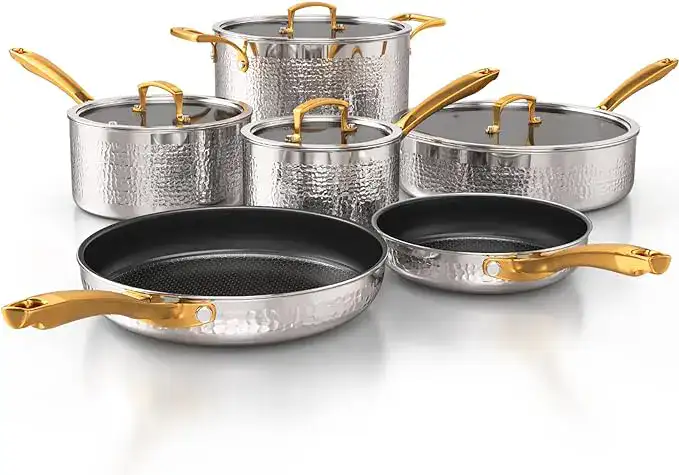 | Homaz life Stainless Steel Pots and Pans Set, Tri-Ply Hammered Kitchen Cookware with Glass Lids, Induction Compatible, Non-Toxic, 10-Piece |
What Is the Safest Cookware for My Health?
This is the big one, and thankfully, you have some fantastic, rock-solid options. If safety is your absolute top priority, materials like stainless steel, cast iron, glass, and ceramic are generally seen as the gold standard. They're incredibly stable and won't leach anything questionable into your food.
Stainless steel is especially prized for being almost completely non-reactive, meaning you can simmer acidic tomato sauces or lemon-butter concoctions for hours without a second thought. In the past, people worried about the chemicals in PTFE (Teflon) coatings at very high heat and the potential for older, plain aluminum to leach into food.
Today, things are different. Modern non-stick cookware is PFOA-free and perfectly safe for everyday cooking. The golden rules are simple: don't crank the heat to extreme levels (no preheating an empty non-stick pan!) and never, ever touch it with metal utensils. Likewise, hard-anodized aluminum has a sealed, non-reactive surface, so the aluminum itself never comes into contact with your ingredients.
Can I Really Use Metal Utensils on Any Pan?
Definitely not—and getting this wrong is a fast way to ruin good cookware. You have to be smart about which tools you pair with your pans.
Go ahead and use your favorite metal spatulas, whisks, and tongs on tough-as-nails surfaces like stainless steel, cast iron, and carbon steel. These workhorse materials are built to take a beating and won't be damaged by a little scraping.
However, metal is the sworn enemy of any non-stick surface, whether it's a traditional PTFE coating or a ceramic one. A metal utensil will inevitably scratch that finish, destroying its non-stick properties and potentially causing it to flake off into your food. For these pans, stick exclusively to wood, silicone, or nylon tools. No exceptions.
The rule of thumb couldn't be simpler: If it's designed not to stick, don't use metal on it. Protecting that delicate surface is the key to making sure it performs well for years to come.
Which Pans Work Best on an Induction Cooktop?
Induction cooking is a different beast entirely. It works by creating a magnetic field to generate heat directly within the cookware itself, so your pots and pans must be made of a ferromagnetic material.
 | JEETEE 11 Inch Nonstick Frying Pan, Stone Coating Cookware, Nonstick Omelette Pan with Heat-Resistant Handle, Induction Skillet for Eggs (Grey) |
Your best bets for induction are:
- Cast Iron: The high iron content makes it a natural partner for induction. It works flawlessly.
- Most Stainless Steel: The vast majority of stainless steel pans have enough iron in their composition to work perfectly.
- Carbon Steel: Just like its cast iron cousin, it's ferromagnetic and a fantastic performer on induction.
Not sure if a pan will work? There's a super simple test: grab a magnet and stick it to the bottom. If it clings on tightly, you're good to go. Pans made of pure aluminum, copper, or glass won't work on their own, but many manufacturers get around this by bonding a magnetic steel plate to the base. Just look for the little induction symbol (it looks like a coil of wire) on the box or the bottom of the pan.
At Cookware Review Hub, our whole goal is to give you the in-depth guides and honest reviews you need to build the perfect kitchen. Check out our expert advice and product shootouts to make your next purchase the right one. Find out more at the Cookware Review Hub website.


