When it comes to picking the best wok material, it often feels like a showdown between two heavyweights: carbon steel and cast iron. For that fast, high-heat stir-frying, carbon steel is the nimble champ, heating up in a flash and responding instantly to temperature changes. Honestly, for most home cooks chasing that authentic restaurant-style result, carbon steel is the best all-around choice.
Now loading...
Decoding the Best Wok Material for Your Kitchen
Choosing the right wok can feel like a huge decision, but it gets a lot simpler once you understand the core materials. Your best bet will really come down to your cooking style, the type of stove you have, and frankly, how much time you're willing to spend on upkeep. This guide will give you a detailed, side-by-side look at the most common options so you can see exactly how they stack up.
Now loading...
We’re going to move past simple pro-and-con lists and get into how each material actually performs when the heat is on. By the end, you'll get the nuances of heat control, maintenance, and durability, helping you pick a wok that lines up perfectly with what you want to cook. As you build out your kitchen, remember that the right tools, paired with thoughtful kitchen accessories and home decor, can completely change your cooking game.
Key Wok Materials at a Glance
Before we get into the nitty-gritty, let's get a feel for the personality of each material. The main players in the wok world each bring something different to the table.
- Carbon Steel: This is the pro's choice. It’s known for heating up incredibly fast, being light enough to toss food easily, and building up a slick, natural nonstick surface (a patina) over time.
- Cast Iron: The heavyweight champion of holding heat. It's the one you want for deep-frying or getting a hard sear where a steady, unwavering temperature is everything.
- Stainless Steel: The modern, no-fuss option. It’s tough, won't react with acidic ingredients, and is a breeze to clean, often built with an aluminum core to help it heat more evenly.
- Nonstick/Coated: Super convenient for beginners, but these just can't handle the high heat needed for real wok cooking. The coating will break down, and fast.
The biggest trade-off you'll face is between responsiveness and heat retention. Carbon steel changes temperature on a dime, while cast iron stubbornly holds onto heat like nothing else.
Here’s a quick table to show the basic differences between the top three materials. Think of this as the cheat sheet before we dive deeper into each one.
| Feature | Carbon Steel | Cast Iron | Stainless Steel |
|---|---|---|---|
| Primary Strength | Rapid Heating & Responsiveness | Superior Heat Retention | Durability & Low Maintenance |
| Best For | Stir-frying, achieving "wok hei" | Deep-frying, searing | Braising, steaming, acidic sauces |
| Seasoning | Required to build a nonstick patina | Required for traditional models | Not required |
| Weight | Lightweight and easy to handle | Very heavy, difficult to toss | Moderate weight |
| Sticking Risk | Low once properly seasoned | Low once properly seasoned | High without proper preheating/oil |
Why Carbon Steel Is the Professional Standard
Walk into just about any professional kitchen where things are getting stir-fried, and you'll almost certainly see a carbon steel wok over the flame. That's no accident. It's a deliberate choice based on pure, unadulterated performance. For anyone who's serious about getting that authentic stir-fry flavor at home, carbon steel is, hands down, the best material for the job.

Its biggest advantage comes down to its incredible thermal properties. Carbon steel heats up ridiculously fast, letting you go from a cold pan to a screaming-hot searing surface in moments. That rapid heat is the key to achieving wok hei—that elusive, smoky "breath of the wok" that defines a truly great stir-fry.
Just as important, it's exceptionally responsive. When you cut the heat, the pan cools down almost instantly. This gives you pinpoint control over your cooking, meaning you can sear beef at a roaring high temperature and then immediately drop the flame to gently sweat some garlic without a hint of burning.
The Perfect Balance of Weight and Strength
Another reason the pros love carbon steel is its blend of lightweight construction and serious durability. It’s a featherweight compared to its cast iron cousin, making it easy to lift, shake, and toss ingredients—the classic motions of stir-frying. Trying that with a hefty cast iron wok is a recipe for a sore wrist.
This combination of attributes has made it the undisputed king of the wok world. Carbon steel basically gives you the nimble feel of aluminum with the raw searing power of cast iron. The numbers back this up, too. A report from Allied Market Research showed that the carbon steel segment held over 40% of the global wok market share in 2021, blowing past all other materials. That popularity is all about its ability to build up a natural nonstick surface that's perfect for high-heat Asian cooking. You can check out the full wok market analysis for more details.
And despite being relatively thin, carbon steel is tough as nails. A good carbon steel wok isn't something you'll ever need to replace; it will probably outlive you, getting better and better with every meal.
Embracing the Seasoning Journey
The one thing about carbon steel that requires a bit of an upfront commitment is seasoning. A brand-new carbon steel wok is a blank slate, but after a few simple rounds of heating oil on its surface, it begins to transform.
This process, called polymerization, creates a hard, slick layer known as a patina.
Don't think of seasoning as a chore. It's an investment. Every meal you cook adds another microscopic layer to the wok’s patina, slowly building a perfectly natural, ultra-slick nonstick surface that synthetic coatings can only dream of replicating.
This patina is the secret sauce behind a carbon steel wok's legendary performance. The better the seasoning, the less oil you need and the less your food will stick. It’s a truly rewarding process that connects you directly to how your cookware performs. Our complete guide on how to season a carbon steel wok breaks down every step to make it foolproof.
Care and Maintenance: A Small Trade-Off
The only real catch with carbon steel is its tendency to rust if you neglect it. If you leave it wet or store it in a damp place, it will oxidize. But preventing rust is simple and quickly becomes second nature.
Your Post-Cooking Ritual:
- Wash Promptly: While the wok is still warm, wash it with hot water and a soft sponge or a bamboo brush. Try to avoid harsh soaps, as they can strip away your hard-earned seasoning.
- Dry Thoroughly: This is the most important step. Immediately dry the wok completely with a dish towel. No slacking here!
- Heat to Evaporate: Pop the dry wok back on the stove over low heat for a minute. This zaps away any sneaky, leftover moisture.
- Apply a Thin Oil Coat: Once it's cool enough to touch, wipe a super-thin layer of cooking oil over the entire interior with a paper towel.
This whole routine takes two minutes, tops. It protects your investment and ensures your wok is always ready to go. For any cook who values high-heat performance and authentic flavor, this tiny bit of upkeep is a small price to pay for the kind of professional results only carbon steel can deliver.
2. The Unmatched Heat Retention of Cast Iron Woks
If carbon steel is the nimble stir-fry specialist, cast iron is the undisputed heavyweight champion of heat. This material is all about absorbing massive amounts of thermal energy and holding onto it with incredible stubbornness. Think of it less like a responsive sports car and more like a freight train—it takes a while to get up to speed, but once it's moving, nothing stops it.

This exceptional heat retention is what makes cast iron king for specific, high-heat cooking jobs. When you’re deep-frying, for instance, the last thing you want is for the oil temperature to plummet the moment you add a batch of chicken wings. A cast iron wok’s thermal mass ensures the heat stays incredibly stable, giving you crispier, more consistent results every time.
Likewise, for searing big batches of meat or tofu, cast iron is unbeatable. It delivers a powerful, unwavering sear without cooling down, ensuring every piece gets that perfect golden-brown crust.
Traditional vs. Enameled Cast Iron
When you're shopping for a cast iron wok, you'll run into two main types, and knowing the difference is key to picking the right one for your kitchen.
- Traditional Cast Iron: This is the classic, bare-metal workhorse that requires seasoning. Just like carbon steel, it develops a natural, nonstick patina over time. It’s practically indestructible and is the top choice for anyone chasing that authentic seasoned-pan performance.
- Enameled Cast Iron: This version has a porcelain enamel coating, which means it’s non-reactive and you can skip the seasoning. It's easier to clean and handles acidic ingredients like tomatoes without a problem, but the coating can chip if you're not careful. It also won't develop that same slick patina as a traditional pan.
The core trade-off here is pretty clear: convenience versus performance. Enameled is lower maintenance, but a well-seasoned traditional cast iron wok offers a superior, renewable nonstick surface that only gets better with every use.
For cooks looking to master this material, checking out the available options is a great next step. Take a look at our detailed guide on the best cast iron wok models to see which one fits your needs.
The Powerhouse for Stable Cooking
The unique properties of cast iron make it a dominant force in the kitchen. Its reputation for durability and unmatched heat retention isn't just talk; it's backed by some serious market data. A detailed analysis from Data Bridge Market Research revealed that the cast iron woks segment commanded an impressive 42.18% market share, surpassing other materials largely due to its superior ability to maintain even heat. This makes it a trusted choice for cooks who prioritize consistent temperature control.
This thermal stability makes cast iron the go-to for specific cooking jobs where quick adjustments are less important than raw power.
Cast Iron's Ideal Use Cases:
- Deep-Frying: Keeps oil temperatures rock-steady for perfectly crispy results.
- Searing: Creates a powerful, even crust on meats and vegetables without cooling down.
- Braising and Stewing: Its ability to hold steady, low heat for hours makes it perfect for slow-cooked dishes.
- Blackening: Ideal for Cajun-style blackening that requires intense, sustained heat.
The Weight and Responsiveness Trade-Off
Of course, all that heat-retaining power comes at a cost: weight and responsiveness. A cast iron wok is a beast, significantly heavier than any other type, which makes the classic stir-fry "toss" nearly impossible for most people. This isn't a wok you’ll be deftly flipping with one hand.
It’s also slow to react to temperature changes. If your wok gets too hot, turning down the burner won't have an immediate effect. This requires a different style of cooking—one that's more about planning ahead and less about rapid-fire reactions.
Ultimately, choosing a cast iron wok means you are deliberately picking powerful, consistent heat over agility. For cooks whose style revolves around deep-frying, searing, and braising, this isn't a compromise at all. It's the perfect tool for the job.
Stainless Steel Woks: The Modern Low-Maintenance Option
Moving away from the traditional, stainless steel woks are the modern answer to wok cooking, built for convenience, durability, and all-around kitchen utility. If you’re a home cook who wants a low-maintenance pan that can jump between all kinds of tasks, stainless steel is probably your best bet. It’s the workhorse that can go from searing steak to simmering a tomato sauce without skipping a beat.
Unlike carbon steel or cast iron, stainless steel is non-reactive. That’s a huge deal. It means you can cook with acidic ingredients like tomatoes, vinegar, or wine without worrying about a metallic taste leaching into your food or stripping away your precious seasoning. This makes it an incredibly versatile pan, perfect for fusion recipes, braises, and soups.
The Power of Clad Construction
One of the biggest historical knocks against stainless steel is that it’s not a great heat conductor on its own. It’s prone to developing nasty hot spots, which leads to unevenly cooked food. But modern stainless steel woks have a brilliant solution: multi-clad construction.
High-quality stainless steel woks are usually "tri-ply," which means they sandwich a highly conductive core of aluminum or copper between two layers of tough stainless steel. This design gives you the best of both worlds:
- Aluminum/Copper Core: This layer is a heat magnet, grabbing energy quickly and spreading it evenly across the entire wok surface, killing hot spots.
- Stainless Steel Interior: You get a tough, non-reactive, and food-safe cooking surface.
- Stainless Steel Exterior: This side offers a durable, easy-to-clean, and often induction-compatible base.
This layered construction is a total game-changer. You get the even heating of aluminum with the resilience and low-maintenance perks of stainless steel.
Mastering the Art of Non-Stick Cooking
The main hurdle with stainless steel is that food loves to stick to it—if you don’t know the trick. Once you nail the preheating technique, though, it performs beautifully. The secret is a simple method called the water-drop test, which relies on a neat bit of physics known as the Leidenfrost effect.
Here’s how to do it right:
- Heat your empty stainless steel wok over medium-high heat.
- After a minute or two, flick a few drops of water into the pan.
- If the water just sizzles and evaporates, the pan isn’t hot enough yet. Keep waiting.
- If the water breaks into several tiny beads that skitter around, it’s too hot. Let it cool a bit.
- When the temperature is just right, the water will merge into a single, shimmering ball that glides across the surface like a bead of mercury. That's the magic moment.
Once you hit that perfect state, your wok is ready. Quickly wipe out the water, add your high-smoke-point oil, give it a few seconds to shimmer, and then add your ingredients. This creates a temporary non-stick barrier, letting your food sear without instantly welding itself to the pan.
A stainless steel wok shines as a durable, low-maintenance choice, and its market presence reflects this. Research indicates that stainless steel models captured a 'noticeable share' of the $1.68 billion global woks market in 2021. With innovations like tri-ply cladding ensuring even heat for precise cooking, this segment is projected to grow significantly. Discover more insights from the global woks market report that highlight this trend.
At the end of the day, stainless steel is the practical choice for the versatile home cook. It won’t build that deep, black, non-stick patina you get with carbon steel, but it makes up for it with incredible durability, ridiculously easy cleanup (most are dishwasher safe), and the ability to handle any ingredient you throw at it. For anyone using their wok for everything from stir-frying and steaming to boiling pasta, it’s a reliable and sensible addition to a modern kitchen.
Wok Material Performance Head-to-Head
Picking the right wok material isn’t about finding one single "best" option. It's about matching the wok's personality to your cooking style. Think of carbon steel, cast iron, and stainless steel as three different specialists in the kitchen—each one brilliant at its own game. Just like you'd look at a detailed kitchen material comparison before redoing your countertops, understanding these nuances is what separates a good meal from a great one.
Let's break down how these materials really perform when the heat is on.
Heat Responsiveness vs. Heat Retention
This is the big one. The most critical difference boils down to a simple trade-off: do you need a wok that reacts instantly to temperature changes, or one that holds onto heat like a branding iron?
Carbon steel is the undisputed champion of heat responsiveness. Picture this: you're stir-frying garlic and it's seconds from burning. With carbon steel, the moment you kill the flame, the wok’s temperature plummets. This gives you incredibly precise, real-time control, which is the secret to authentic, high-speed stir-frying.
On the other end of the spectrum, cast iron is the master of heat retention. It’s slow to heat up, no doubt about it. But once it gets hot, it stays scorching hot. This thermal stability is a game-changer for deep-frying, where dropping in cold food won't crash the oil temperature. It also gives you a consistently powerful sear on big batches of meat, preventing it from steaming in its own juices.
Stainless steel lands somewhere in the middle, but it definitely leans more toward responsiveness. Thanks to its clad construction (usually with an aluminum core), it heats up quickly and reacts to flame changes faster than cast iron, though not with the blink-of-an-eye speed of carbon steel.
Maintenance and Seasoning Demands
Your tolerance for a little bit of kitchen ritual will play a huge part in this decision.
Both carbon steel and traditional cast iron need seasoning to build up that beautiful, natural nonstick surface. This isn't a one-and-done deal; it’s an ongoing relationship with your pan. The process is simple, but it demands commitment. Proper cleaning (no harsh soap), drying it completely, and wiping on a thin layer of oil after every use are non-negotiable to prevent rust and maintain the patina.
This isn't a flaw; it's a feature. The patina you build over time becomes a testament to your cooking journey, creating a slicker, more effective cooking surface with every meal you prepare.
Stainless steel, however, is the low-maintenance hero of the group. It needs zero seasoning and is totally non-reactive, which means you can simmer acidic tomato sauces or deglaze with wine without a second thought. Many are even dishwasher-safe, offering pure convenience for the busy home cook.
This infographic lays out the core benefits of a stainless steel wok perfectly.
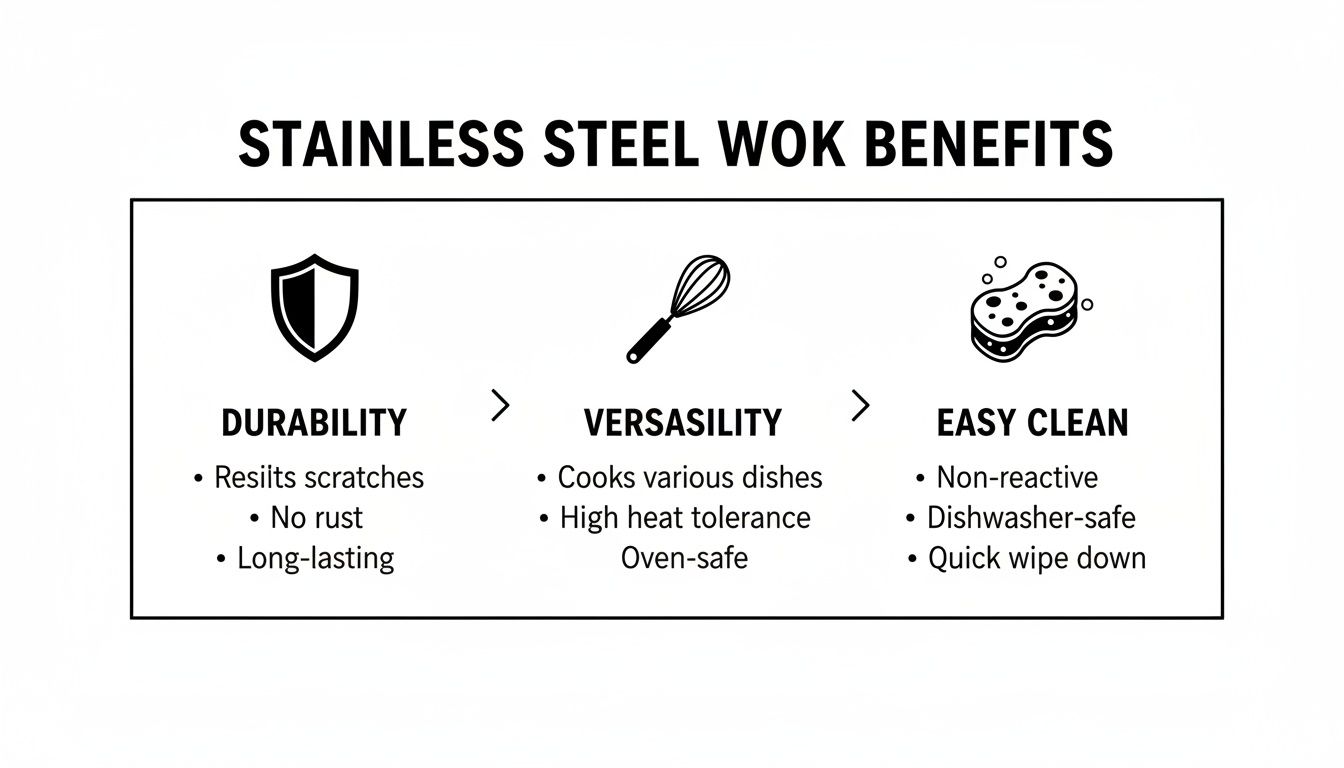
As you can see, stainless steel’s biggest wins are its durability and forgiving nature, making it a reliable workhorse for much more than just stir-frying.
Weight and Handling in the Kitchen
How a wok feels in your hands is a huge part of the experience. A carbon steel wok is relatively lightweight and agile. This is what makes that classic stir-fry "toss"—lifting and shaking the pan to flip the food—actually possible for most of us at home.
A cast iron wok, on the other hand, is an absolute beast. Its heavy-duty weight makes it incredibly stable on the burner, but you can forget about tossing ingredients with one hand. Moving it around, especially when it’s full of hot food or oil, requires some real muscle. If you're weighing these two, our guide on the carbon steel vs cast iron wok debate might help.
Stainless steel woks fall into a happy medium. They're heavier than carbon steel, giving them a solid, sturdy feel, but they are noticeably lighter than cast iron. Most home cooks will find them perfectly manageable.
Wok Material Performance at a Glance
Sometimes you just need to see it all laid out. This table cuts to the chase, comparing the core strengths and weaknesses of each material for the everyday kitchen.
| Attribute | Carbon Steel | Cast Iron | Stainless Steel |
|---|---|---|---|
| Heat Performance | Heats and cools in a flash. Perfect for precise temperature control. | Heats slowly, holds heat forever. Ideal for stable, high-temp cooking. | Heats evenly (if clad), moderately responsive. A great all-arounder. |
| Ideal Use Case | Authentic stir-frying where quick heat changes are everything. | Deep-frying and searing, where unwavering heat is king. | Steaming, braising, and acidic sauces where non-reactivity is crucial. |
| Maintenance Level | High. Needs dedicated seasoning and care to prevent rust. | High (traditional style). Requires seasoning and careful drying. | Low. No seasoning needed; often dishwasher safe and easy to clean. |
| Weight & Feel | Lightweight and nimble, easy to maneuver for tossing and flipping. | Very heavy and planted. Offers stability but zero agility. | Moderate weight. Feels sturdy but is still manageable for most cooks. |
At the end of the day, the right wok material is the one that fits how you cook. For the stir-fry purist chasing that authentic wok hei, nothing beats carbon steel. For the cook who prizes a flawless sear and crispy deep-fried foods, cast iron's thermal power is unmatched. And for the practical, do-it-all chef who wants versatility and easy cleanup, a quality clad stainless steel wok is the modern, reliable choice.
How to Choose the Right Wok for Your Cooking Style
Choosing the **best wok material** is less about technical specs and more about you. It’s about matching the tool to your cooking habits, your favorite dishes, and even the stove you own. Let’s get past the generic lists and dig into real-world situations to find the wok that’ll feel like an extension of your own hands.When you line up a material's natural strengths with your personal style, the wok stops being just another pan and becomes your go-to kitchen workhorse. This approach cuts through the noise and points you straight to the one that will serve you best for years to come.
For the Authentic Stir-Fry Purist
If your mission is to capture that smoky, blisteringly fast result of a great restaurant stir-fry, then carbon steel is the only way to go. You can’t get that classic tossing motion with a heavy pan, and carbon steel’s lightweight agility is what makes it possible.
Even more critical is its incredible heat responsiveness. It heats up in a flash and cools down just as quickly, giving you the precise temperature control needed to achieve true wok hei. You can kill the heat in an instant to keep garlic from burning, then crank it right back up for a powerful sear. For a serious stir-fry cook, that kind of control is everything.
For the Deep-Frying and Searing Fan
When your kitchen time is spent deep-frying crispy tempura or laying down a hard, even sear on a thick steak, cast iron is your champion. Its superpower is its massive thermal density—it grabs onto heat and refuses to let go. This means your oil temperature won't plummet the second you drop in a batch of cold food.
A cast iron wok ensures that every batch of fried chicken emerges just as golden and crisp as the last. This unwavering heat is the key to consistency, preventing the soggy results that come from a pan that cools down mid-cook.
This makes it the clear winner for any cooking method where holding a steady, high temperature is more important than making quick adjustments. For searing, braising, or deep-frying, cast iron's heat retention is simply unmatched.
For the Versatile Low-Maintenance Cook
If you see a wok as more of an all-purpose pan for steaming veggies, simmering curries, and making acidic sauces, then a clad stainless steel model is the most practical tool for the job. Its non-reactive surface means you can cook tomato-based or wine-infused dishes without worrying about a metallic aftertaste or stripping your pan's seasoning.
The convenience here is a massive advantage. Most stainless steel woks are dishwasher-safe and don't demand any special seasoning rituals. This makes them a perfect fit for busy home cooks who prize versatility and easy cleanup over the specialized performance of more traditional materials.
Matching the Wok to Your Stove
Don't forget about your cooktop! Your stove plays a huge role in what kind of wok will work best in your kitchen.
- Gas Stoves: You've got the most flexibility here. Gas flames work brilliantly with any wok material and are the perfect partner for a classic round-bottom carbon steel wok (just be sure to use a wok ring for stability). The flames can lick up the sides, heating the entire pan just like they do in a restaurant.
- Electric Coil & Glass Cooktops: A flat-bottom wok is a must. You need that direct contact for the heat to transfer properly. Carbon steel, cast iron, and stainless steel are all great options, but make sure the base is perfectly flat.
- Induction Cooktops: Your wok has to be made of a magnetic material. That means cast iron is a sure bet, as are most carbon steel and clad stainless steel woks. Always double-check for an "induction-ready" label before you buy. Aluminum or pure copper woks won't work on their own.
Got Questions About Wok Materials? We Have Answers
Let's wrap things up by tackling a few of the most common questions that pop up when you're trying to pick the right wok. Think of this as the final once-over to make sure you’ve got all the details sorted.
Is a Nonstick Wok a Good Choice for Beginners?
It's tempting, I get it. The promise of easy cleanup is a powerful one. But honestly, most nonstick woks are a bad idea for the kind of high-heat cooking a wok is made for.
That nonstick coating just can't handle the intense temperatures needed for a real stir-fry. It'll break down fast, can release fumes you don't want in your kitchen, and you’ll be left with a useless pan. A well-seasoned carbon steel wok is a much better long-term bet, giving you a natural, renewable nonstick surface that only gets better with time.
What Is the Difference Between a Flat-Bottom and Round-Bottom Wok?
The classic wok you see in professional kitchens has a round bottom, which is perfect for creating that ideal heat flow up the sides. The catch? It won’t sit flat on a Western-style stove without a special wok ring to keep it stable.
A flat-bottom wok is the modern answer for home cooks. It makes direct, stable contact with electric, glass, and induction cooktops. For almost every home kitchen out there, a flat-bottom wok is just the more practical and safer way to go.
How can you tell if your wok is well-seasoned? It should have a dark, almost satin-like patina, not a dry, gray look. When you're cooking, food should glide around easily with very little sticking. A great test is to see if droplets of water bead up and dance across the hot surface. If your food is consistently sticking, it's a sure sign your seasoning needs a little TLC.
At Cookware Review Hub, our whole deal is helping you find the perfect tools for your kitchen. Check out our expert reviews and guides to feel totally confident about your next cookware purchase. Find out more about the best kitchen gear at https://www.cookwarereviewhub.com.