Tired of guessing which nonstick pan to buy? I get it. The sheer number of options can make anyone's head spin. Let's cut right to the chase: For a fantastic all-around set that balances performance and safe materials, the Caraway Ceramic Cookware Set is our top pick. If you're after a single, ultra-durable skillet that can handle almost anything, the HexClad 12-Inch Hybrid Pan is the one to beat.
Now loading...
This guide is designed to get you past the marketing noise with real-world, practical advice to help you find the perfect pan for your kitchen.
Now loading...
Finding Your Perfect Nonstick Pan
Choosing the right nonstick cookware shouldn't feel like a chore. A great pan is supposed to make your life easier, delivering consistent results whether you’re flipping a delicate omelet or getting a nice sear on some scallops. The goal here is to match the pan to your cooking style, budget, and kitchen setup without giving up on quality.
We're going to break down the key details that separate a truly great pan from one that's just okay. We’ll look at everything from how different coatings hold up over time to the importance of even heating and how a handle feels in your hand. Knowing what to look for is the key to making a smart investment that will actually last.
Match the Pan to Your Cooking Style
Before you even look at a brand, think about what you cook most often. Are you constantly searing steaks and chops at high heat, or is your stove usually busy with low-and-slow simmers? Your answer will point you toward the right kind of nonstick surface and construction.
- For the Egg and Pancake Pro: If your main goal is flawlessly sliding eggs and pancakes out of the pan, you need a perfectly slick surface. A top-tier ceramic or a quality traditional nonstick will be your best friend.
- For the Everyday All-Rounder: If you tackle a bit of everything, you need a workhorse pan. A hybrid model like HexClad or a tough hard-anodized skillet gives you a great mix of nonstick convenience and searing power.
- For the Health-Conscious Cook: If you're trying to use as little oil as possible, look for the newer generations of ceramic coatings. They're known for their excellent food release with little to no fat required.
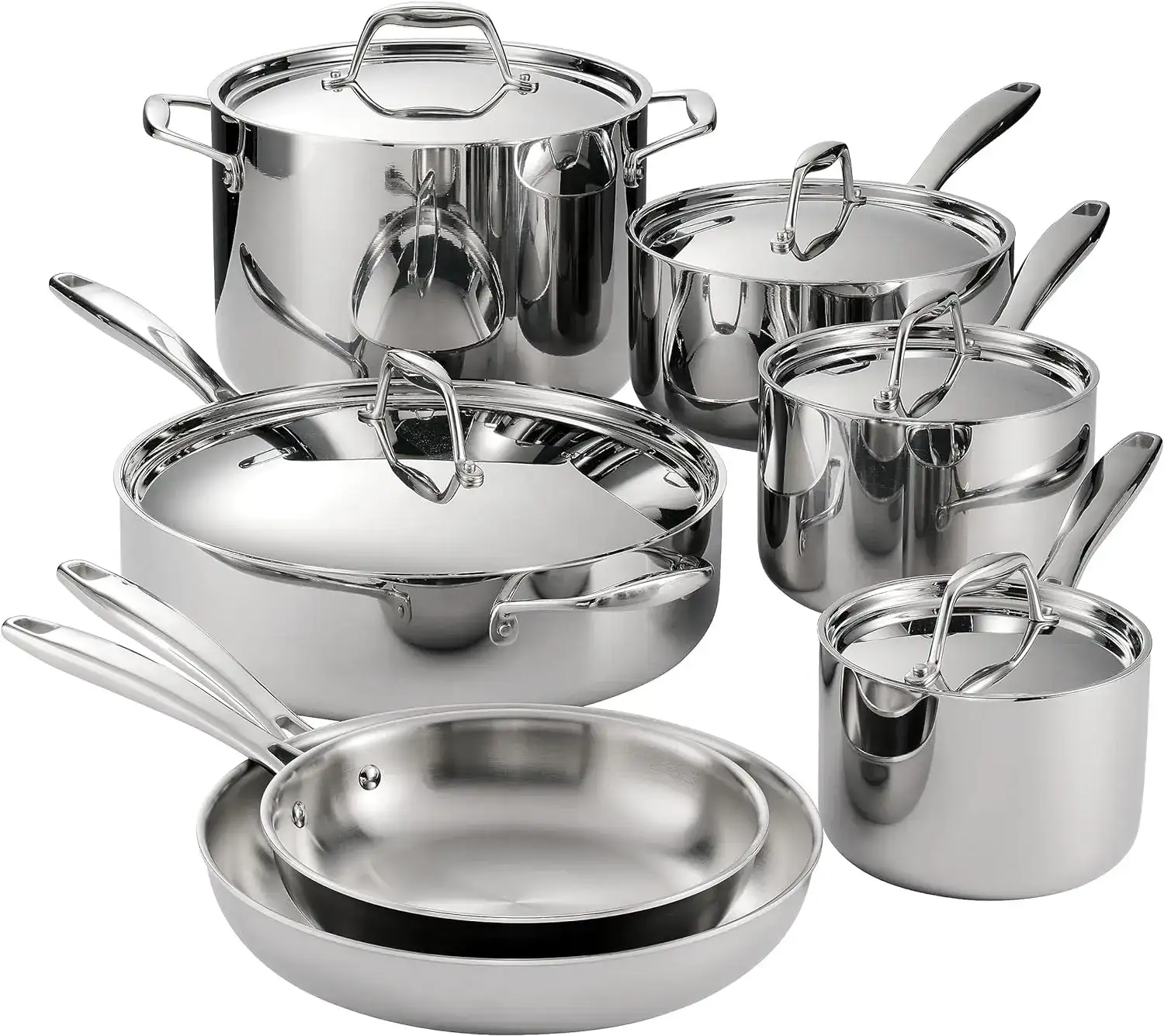 | Tramontina 80116/249DS Gourmet Stainless Steel Induction-Ready Tri-Ply Clad 12-Piece Cookware Set, NSF-Certified, Made in Brazil |
My Takeaway: A great nonstick pan isn't just about the coating. It's the whole package. A solid aluminum core is what gives you that fast, even heating, while a stainless steel base plate makes it work on induction cooktops and keeps it from warping.
A Quick Look at Our Top Picks
To make things simple, here’s a quick side-by-side of how our top contenders stack up on the most important features. Use this as a starting point before we jump into the full, detailed reviews.
| Feature | Caraway Ceramic Set | HexClad Hybrid Pan |
|---|---|---|
| Primary Material | Ceramic-Coated Aluminum | Stainless Steel & Ceramic Hybrid |
| Heat Tolerance | Up to 550°F | Up to 500°F |
| Metal Utensil Safe | No (Silicone/Wood Only) | Yes (With Caution) |
| Best For | Everyday, low-oil cooking | Searing and versatile use |
| Induction Compatible | Yes | Yes |
| Dishwasher Safe | No (Hand-Wash Recommended) | Yes |
Comparing Nonstick Materials and Coatings
The word "nonstick" gets thrown around a lot, but it actually covers a surprising range of materials and coatings. Each one has its own chemistry, its own strengths, and its own weaknesses. Getting to know the real differences is the key to picking a pan that actually fits your cooking style—and one that won't give up on you after a year.
We'll break down the most common types you'll find on the shelf, looking past the marketing hype to what really matters: durability and heat tolerance.
This quick decision guide can help you figure out which path to take based on what you cook most often.

As you can see, what you value most—whether it's getting a perfect high-heat sear, cooking with less oil, or just staying on budget—points you directly to the right material for your kitchen.
PTFE The Classic Nonstick
Polytetrafluoroethylene, or PTFE, is the granddaddy of nonstick. You probably know it by its most famous brand name: Teflon. This synthetic polymer is famous for its incredible food release, which is why it's the go-to for delicate foods like eggs, pancakes, and flaky fish.
Crucially, all modern PTFE coatings are completely PFOA-free, a major safety upgrade from the formulas used decades ago.
The main catch with PTFE is heat. It performs best over low to medium temperatures. Blasting it on high heat (anything over 500°F) can cause the coating to break down over time. It's also a softer material, so you have to baby it a bit—stick to silicone, nylon, or wood utensils to avoid scratches.
Ceramic A Modern Alternative
Ceramic nonstick coatings aren't made of the same stuff as pottery. They’re created using a mineral-based "sol-gel" process. The big selling point here is that they're totally free of PTFE and can usually handle higher temperatures, often up to 550°F. This makes them a solid choice for searing meats or stir-frying.
The trade-off? Longevity. In my experience, ceramic's nonstick magic tends to fade faster than a high-quality PTFE, especially if it's used daily or cleaned too aggressively. It might be incredibly slick out of the box, but you could see that performance drop off within a year or two.
Key Insight: The choice between PTFE and ceramic really boils down to longevity versus heat tolerance. PTFE typically offers a longer-lasting nonstick surface with proper care, while ceramic gives you the freedom to cook at higher temperatures but might wear out sooner.
Hard-Anodized Aluminum The Durable Core
This one's a bit different. Hard-anodized aluminum isn't a coating itself, but a special treatment applied to the pan's body. An electrochemical process transforms the surface of the aluminum, making it incredibly hard, non-porous, and even more durable than stainless steel.
Most of the time, manufacturers will then apply a layer of PTFE nonstick coating on top of this super-tough base. This combination is a real powerhouse, giving you a pan that heats evenly, resists scratches and warping, and offers fantastic food release. If you need a reliable workhorse skillet that can handle daily abuse, this is often your best bet.
You can learn more about our favorite options in our guide to the best hard-anodized cookware.
Hybrid Technology The Best of Both Worlds?
A newer kid on the block is hybrid cookware, which tries to blend the best attributes of stainless steel and nonstick. You've probably seen pans from brands like HexClad, which feature a laser-etched stainless steel pattern that sits slightly raised above a nonstick coating.
The idea is brilliant: the steel "peaks" protect the nonstick "valleys" from getting scratched by metal utensils while providing the searing power of stainless steel. This definitely makes for a more durable, metal-utensil-safe pan. Of course, the base material is still key; for pans with a steel structure, understanding different stainless steel grades helps in judging their overall quality. Just be aware that they aren't quite as slick as a traditional, fully-coated pan.
To help you sort through it all, here's a quick comparison of how these coatings stack up in the real world.
Nonstick Coating Performance Comparison
This table offers a quick snapshot to help you match a coating's performance profile to your specific cooking needs.
| Coating Type | Max Heat Tolerance | Scratch Resistance | Best For | Average Lifespan |
|---|---|---|---|---|
| PTFE (Teflon) | ~500°F | Low | Delicate foods like eggs and fish | 3–5 Years |
| Ceramic | ~550°F | Medium | Searing and high-heat cooking | 1–2 Years |
| Hard-Anodized | ~500°F | High | All-purpose cooking, daily use | 5+ Years |
| Hybrid | ~500°F | Very High | Searing, durability, metal utensils | 5+ Years |
Ultimately, choosing the right material comes down to being honest about your cooking habits. Once you know what you need, you can find the perfect balance between performance and durability.
Let's Dig Into the Top Cookware Brands

Choosing the right cookware means looking past the slick marketing and seeing how a pan actually performs in a real kitchen. This is where rolling up our sleeves and getting our hands dirty makes all the difference. We’re moving beyond spec sheets to see how the big names handle everyday cooking, from getting a perfect sear on a steak to simmering a delicate sauce without it catching.
Our reviews are all about the complete experience. We're looking at everything from how evenly a pan heats up and how comfortable the handle feels, to whether it can survive months of use and if it plays nice with your induction cooktop. By breaking down the real strengths and weaknesses of each brand, we want to give you a clear picture of what you’re getting before you click “buy.”
And it's clear people are looking for the good stuff. The global market for nonstick cookware was a whopping USD 19.6 billion in 2024 and is expected to climb to USD 27.4 billion by 2030. That growth just highlights how important it is to find a brand that actually lives up to its promises. You can dig into these market trends and consumer preferences to see the bigger picture.
HexClad: The Hybrid Powerhouse
HexClad has seriously shaken things up with its hybrid technology that mixes stainless steel and nonstick surfaces. That unique hexagonal pattern isn’t just for show; the raised steel grid acts like a bodyguard for the nonstick coating in the valleys, making these pans famously metal-utensil safe.
When we put the HexClad 12-Inch Hybrid Pan to the test, its searing power was obvious right away. Thanks to its aluminum core, it heats up fast and evenly, giving us a beautiful crust on chicken and steaks that most traditional nonstick pans just can't match. The sloped sides are also great for sautéing, letting steam escape so your veggies don't get soggy.
But this hybrid design does have a trade-off. While it’s incredibly durable, it’s not as flawlessly slick as a top-tier ceramic or traditional nonstick pan. We found that cooking eggs without a little butter or oil led to some sticking, especially on the steel bits. It just takes a small adjustment in how you cook—preheating the pan is crucial—but for anyone who wants serious searing power and durability in one pan, it’s a fantastic choice.
Performance Insight: HexClad is the ultimate do-it-all pan for cooks who put searing and durability first. It might not be the slickest surface for oil-free cooking, but its ability to handle metal utensils and high heat makes it a workhorse investment for any kitchen.
The handle is another major win—it's comfortable, stays cool, and feels perfectly balanced with the pan's weight. Clean-up is pretty simple, though not quite as effortless as a fully coated pan. All in all, HexClad is an excellent pick for someone looking to invest in one solid, versatile pan that can tackle almost anything.
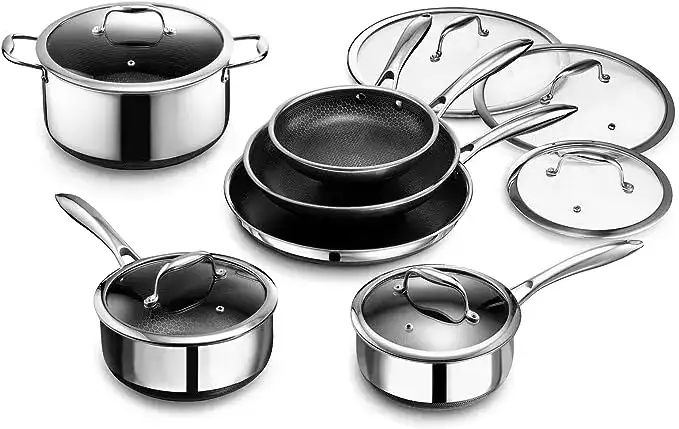 | HexClad 12 Piece Hybrid Stainless Steel Cookware Set - 6 Piece Frying Pan Set and 6 Piece Pot Set with Lids, Stay Cool Handles, Dishwasher Safe, Induction Ready, Metal Utensil Safe |
Caraway: The Ceramic Champion
Caraway has quickly become the poster child for stylish, non-toxic ceramic cookware. Their pans boast a mineral-based ceramic coating that’s free of PTFE, PFOA, and other chemicals you might be trying to avoid. The brand leans heavily into clean aesthetics and eco-friendly vibes, offering sets in a whole range of modern, muted colors.
Our time with the Caraway Cookware Set proved its nonstick performance is legit. Right out of the box, eggs, pancakes, and flaky fish slid right out with almost no oil, making it a dream for anyone cooking with health in mind. The aluminum core does its job, distributing heat evenly and getting rid of hot spots that cause food to burn.
A huge plus for Caraway is its ability to go into the oven up to 550°F, which is hotter than many traditional nonstick pans can handle. This makes it super versatile, letting you go from a stovetop sear straight to an oven finish. The stainless steel handles feel good in the hand and stay reasonably cool on the stove.
The main thing to keep in mind with Caraway, like most ceramic cookware, is long-term durability. The surface is incredibly slick at first, but that nonstick magic can fade over time if you're not careful. To keep it pristine, you absolutely have to avoid metal utensils, high heat, and abrasive scrubbers. Hand-washing is your best bet. If you’re willing to give it the care it needs, Caraway offers beautiful, high-performing cookware for everyday cooking.
Our Place: The Multi-Functional Minimalist
Our Place took the internet by storm with its Always Pan, a single piece designed to do the job of an 8-piece cookware set. This one pan wants to be your go-to for frying, sautéing, steaming, and just about everything else. It features a toxin-free ceramic coating and comes with a clever modular lid, a custom stainless steel steamer basket, and a nesting beechwood spatula.
The real genius of the Always Pan is its thoughtful design. The high sides make it deep enough for sauces or shallow frying, while its light weight makes it a breeze to handle. The built-in spatula rest is one of those small touches that makes you wonder why all pans don't have one. Its nonstick surface is super slick, letting food release with just a tiny bit of oil.
That said, the Always Pan has its limits. It’s not oven-safe, which is a dealbreaker for any dish that needs to be finished in the oven. And just like other ceramic pans, its nonstick coating needs gentle handling to keep it performing well over time. It’s a fantastic, versatile pan for daily stovetop cooking, but it probably won’t fully replace a dedicated skillet or Dutch oven for a more serious home cook.
A Quick Look at the Top Brands
To make your decision a little easier, here’s a simple breakdown of how these brands compare based on what matters most.
| Brand | Key Feature | Best For | Keep in Mind |
|---|---|---|---|
| HexClad | Hybrid Stainless/Nonstick | Searing & All-Purpose Use | Not 100% nonstick for eggs |
| Caraway | Non-Toxic Ceramic | Healthy, Low-Oil Cooking | Coating needs careful handling |
| Our Place | All-in-One Design | Stovetop Versatility | Not oven-safe, coating care |
Ultimately, the best brand for you really boils down to your cooking style and priorities. If you need a tough, versatile pan that can sear like stainless steel, HexClad is a top contender. If your focus is on non-toxic materials and effortless food release for daily meals, Caraway is an excellent choice. And for those looking for a single, stylish, multi-functional piece for a minimalist kitchen, the Always Pan delivers on its promise of convenience.
Our Top Picks for Every Cooking Need
After putting a small mountain of pans through their paces, we’ve found the clear winners. These are the ones that stand out for performance, durability, and just plain good value. Here, we'll get straight to the point and give you our specific recommendations.
Whether you’re setting up a new kitchen from scratch or just replacing that one trusty pan you’ve used to death, these are the top performers that earned our respect. Our goal is to help you find the perfect match for how you actually cook.
Best Overall Set: Caraway Cookware Set
If you’re looking for a complete kitchen refresh that looks as good as it cooks, the Caraway Cookware Set is our top pick. This set gives you that truly nonstick, slide-off-the-pan experience right out of the box. It’s perfect for anyone trying to cook with less oil.
The mineral-based ceramic coating is free of PTFE, and every piece is oven-safe up to a very respectable 550°F. But what really puts Caraway over the top is the thoughtful storage system. It comes with a magnetic pan rack and a canvas lid holder, which is a brilliant solution to the usual cabinet chaos. The ceramic surface does need a little TLC—hand-washing only and no metal utensils—but its fantastic food release makes it the best all-in-one package out there.
Best Everyday Skillet: HexClad 12-Inch Hybrid Pan
Need one do-it-all skillet that can handle almost anything? The HexClad 12-Inch Hybrid Pan is the undisputed champ. Its design is pretty clever, mixing a stainless steel grid with nonstick valleys. This gives you the best of both worlds: serious searing power and easy cleanup.
It’s the kind of pan where you can get a beautiful crust on a steak and then turn around and flip delicate crepes. The raised steel hexagons protect the nonstick coating, making it one of the few pans where using a metal utensil isn't a complete disaster. While it’s not as slick as a pure ceramic pan for totally oil-free cooking, a little bit of fat is all you need for perfect results. It's a true kitchen workhorse.
Key Differentiator: The HexClad pan is a game-changer for durability in the nonstick world. It successfully bridges the gap between the high-heat searing of stainless steel and the easy cleanup of nonstick, making it a uniquely versatile tool for anyone who takes their cooking seriously.
Most Durable Coating: Hard-Anodized Cookware
When you just want a pan that will last, cookware built with a hard-anodized aluminum base is the clear winner. This isn't a single brand, but a whole category that consistently outperforms the others in longevity. The process hardens the aluminum, creating a core that’s incredibly resistant to scratches, warping, and corrosion.
Most pans in this category are then coated with a high-quality, multi-layer PTFE nonstick surface. The result is cookware that can handle the daily grind for 5+ years while still giving you great heat distribution. For anyone who's tough on their pans, a quality hard-anodized skillet is the most reliable choice you can make.
Best Value Pan: A High-Quality Ceramic Skillet
You don’t have to break the bank to get great nonstick performance. For the best bang for your buck, a well-made ceramic skillet is a fantastic value. These pans offer an incredibly slick surface for a fraction of the cost of premium sets, making them perfect for budget-conscious buyers or as a dedicated egg pan.
The demand for affordable, quality cookware is a global trend. Europe, for example, holds over 30% of the nonstick market, driven by a taste for premium goods. Meanwhile, the Asia Pacific region is set to grow the fastest, with a projected CAGR of 8.6% through 2033, as rising incomes fuel demand for modern kitchen tools. You can read more about these global cookware market dynamics to see how consumer trends shape what's available.
While a value-focused ceramic pan might not last forever (think 1-2 years), its low price and outstanding initial performance make it a smart, economical choice for many homes.
 | COOKSMARK 10 Piece Hammered Copper Cookware Set with Nonstick Coating, Induction Pots and Pans Set Dishwasher Safe |
How to Make Your Nonstick Cookware Last

Buying a quality nonstick pan is just the first step. The real secret to keeping that slick, egg-sliding surface is knowing how to treat it right. With proper care, you can easily double the lifespan of your pan, making sure you get a great return on your investment.
Even the most durable pan won't survive bad habits. It's the little things you do every day—how you cook, clean, and store it—that make all the difference. Protecting that delicate nonstick coating from premature wear and tear is easier than you think.
Master Your Cooking Technique
The single biggest mistake people make? Too much heat. Nonstick coatings, especially traditional PTFE, are designed to work their magic over low to medium heat. Blasting your pan on high can degrade the coating, ruining its nonstick properties and even causing it to release fumes.
Another pan-killer is aerosol cooking spray. Those sprays contain propellants and other chemicals that don't just cook—they burn onto the surface, creating a sticky, gummy residue that’s nearly impossible to scrub off without taking the nonstick coating with it.
Expert Tip: Always give your pan a minute to preheat on low before adding a small pat of butter or a swirl of oil. This simple step helps create an ideal cooking surface, ensures even heating, and protects the coating from the shock of a sudden temperature change.
Choose the Right Tools for the Job
What you stir with matters. A lot. Even if a brand claims its pans are “metal-utensil safe,” playing it safe with softer materials is always the smarter move to prevent accidental scratches.
- Silicone: This is your best friend. It’s gentle on any cooking surface, handles high heat beautifully, and won't scratch a thing.
- Wood or Bamboo: These are also fantastic choices. They're naturally non-abrasive and perfectly safe for all nonstick coatings.
- Nylon: A solid, budget-friendly option, but be warned—it can melt if you leave it resting on the edge of a hot pan for too long.
Gentle Cleaning and Smart Storage
Harsh scrubbing is the fastest way to destroy a nonstick surface. Always, always let your pan cool down completely before you wash it to prevent warping from thermal shock. Then, just use a soft sponge or cloth with a little mild dish soap and warm water.
For stubborn, stuck-on bits, just simmer a little water in the pan for a few minutes. It’ll loosen right up. And while plenty of pans are marketed as dishwasher-safe, the high heat and harsh detergents will slowly but surely wear down the coating. Our guide on dishwasher-safe nonstick pans gets into why hand-washing is almost always the key to a longer life.
Storage is just as crucial. Stacking pans directly on top of one another is asking for scratches. If you have to stack, just slide a soft cloth, a paper towel, or a dedicated pan protector between each one. These small habits ensure your nonstick cookware performs flawlessly, meal after meal.
Frequently Asked Questions About Nonstick Pans
Stepping into the world of nonstick cookware can feel a bit overwhelming, especially with all the different materials and marketing claims floating around. Getting clear, honest answers is the key to feeling good about your purchase and your cooking. This section cuts right to the chase, tackling the most common questions we get, from safety concerns to knowing when it’s finally time to toss that old pan.
Think of this as your quick guide for using your pans safely and making them last. We'll slice through the marketing jargon and give you the practical info you need to get the most out of your kitchen tools.
When Should I Replace My Nonstick Pan?
The most obvious sign that your pan's time is up is visible damage. If you see deep scratches that cut through to the metal, or the coating is starting to flake or peel, its nonstick days are officially over. A compromised surface won't just fail to release food; it will also cook unevenly and turn cleanup into a real headache.
Performance is the other big giveaway. When your trusty skillet starts acting more like a "stick" pan and your morning eggs have to be chiseled out, that's a dead ringer the coating has worn down. With regular use and proper care, you can expect this to happen every 3 to 5 years for most quality PTFE pans.
Our Take: Don't wait until the pan is completely useless. The moment food consistently sticks even with oil, it's time to retire it. Pushing a worn-out pan just leads to frustration, burnt meals, and a lot of scrubbing.
Is Nonstick Cookware Safe to Use?
Absolutely. Modern nonstick cookware from reputable brands is considered perfectly safe for everyday home cooking. The big concern from years back revolved around a chemical called PFOA, which manufacturers completely phased out of nonstick coating production in 2013. Today’s pans are made without it, so that specific risk is off the table.
The main safety rule today is simple: don't overheat your pan. When a nonstick pan is heated empty to temperatures above 500°F (260°C), the PTFE coating can start to break down and release fumes. As long as you stick to low and medium heat and never leave an empty pan on a hot burner, you can cook without a worry. If you want to get into the nitty-gritty, you can learn more about safe materials in our guide to PFOA and PTFE-free cookware.
 | All-Clad Copper Core 5-Ply Stainless Steel Cookware Set 10 Piece Induction Oven Broiler Safe 600F Pots and Pans Silver |
Can I Use Metal Utensils on a Nonstick Pan?
Just don't. We strongly recommend you avoid using metal utensils on virtually all nonstick surfaces. Things like metal spatulas, whisks, and forks will easily gouge the coating, leaving permanent scratches that ruin the pan's look and, more importantly, its ability to release food.
Even pans from brands claiming to be "metal-utensil safe" (usually the hybrid ones) will last longer if you treat them gently. To really preserve the life and performance of your cookware, it’s always best to reach for the right tools.
- Silicone Utensils: These are your best friends. They're gentle on the surface and can handle high heat like a champ.
- Wooden or Bamboo Spoons: The classic, non-abrasive choice. Totally safe for all coatings.
- Nylon Tools: A solid, budget-friendly alternative. Just be careful not to let them rest on a hot pan edge, as they can melt.
What Is the Difference Between Ceramic and Teflon?
This is a common point of confusion. "Teflon" is simply a brand name for PTFE (polytetrafluoroethylene), a synthetic polymer famous for its incredible slipperiness. It creates that slick surface we all love for cooking delicate foods like eggs and fish with almost no oil.
Ceramic coatings, on the other hand, are made from a mineral-based sol-gel technology and are completely free of PTFE. One of ceramic's big selling points is its ability to handle higher temperatures, which can make it a better choice for getting a good sear. However, in our experience and long-term durability tests, a high-quality, multi-layered PTFE coating almost always holds onto its nonstick properties longer than its ceramic counterparts.
At Cookware Review Hub, we're dedicated to helping you make informed decisions for your kitchen. Find more expert advice and detailed reviews at https://www.cookwarereviewhub.com.