
When you're trying to find the best induction cookware, the brands that really stand out are the ones that nail the sweet spot between performance and price. Big names like All-Clad deliver that pro-level, restaurant-kitchen feel, while a brand like Tramontina gives you fantastic quality for a more mid-range budget. Then you have stylish options like Caraway for top-notch nonstick cooking. Ultimately, the right choice for you comes down to what you value most—your budget, your preferred cooking material, or your day-to-day cooking habits.
Now loading...
Your Quick Guide to Top Induction Cookware Brands
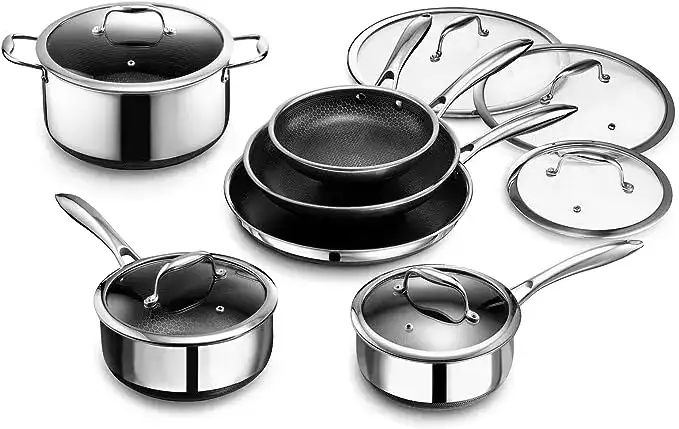 | HexClad 12 Piece Hybrid Stainless Steel Cookware Set - 6 Piece Frying Pan Set and 6 Piece Pot Set with Lids, Stay Cool Handles, Dishwasher Safe, Induction Ready, Metal Utensil Safe Now loading... |

Jumping into the world of induction cookware can feel like a lot to take in, but it doesn't have to be a headache. Just think of this guide as your personal roadmap. We’re going to cut through all the marketing fluff and get straight to the brands that consistently deliver on performance, durability, and just plain make cooking more enjoyable.
Before we get into the nitty-gritty of each brand, this section is your quick-start guide. It’s designed to help you zero in on the brands that are going to be the best fit for your kitchen and the way you cook.
Whether you're a serious home chef who geeks out over precise temperature control or you just want a reliable, easy-to-clean set of pans for weeknight dinners, there’s a perfect match out there. The market for induction-ready pots and pans has exploded in recent years, which is great news for all of us as we move toward smarter, more efficient ways to cook.
Top Induction Cookware Brands at a Glance
To give you a bird's-eye view, this table breaks down our favorite picks and what makes them tick. Use it as a quick cheat sheet to see how the best induction cookware brands stack up against each other based on what matters most—be it the material, the price tag, or that one killer feature.
| Brand | Primary Material | Price Range | Key Feature |
|---|---|---|---|
| All-Clad | Fully-Clad Stainless Steel | $$$$ | Professional-grade performance and heat control |
| Tramontina | Stainless Steel & Nonstick | $$ | Exceptional value for high-quality construction |
| Demeyere | 7-Ply Stainless Steel | $$$$ | Superior engineering for even heating |
| Caraway | Ceramic Nonstick | $$$ | Stylish design and non-toxic cooking surface |
| Le Creuset | Enameled Cast Iron | $$$$ | Unmatched heat retention and durability |
| Duxtop | Stainless Steel & Nonstick | $ | Budget-friendly without sacrificing function |
This variety shows just how healthy and competitive the market has become, which is a win for consumers. The global induction-compatible cookware market was valued at around $5.119 billion in 2025 and is only expected to keep growing. This boom is fueled by more and more homes switching to energy-efficient induction cooktops, which now make up over 80% of total sales volume.
Choosing the right cookware is about more than just a brand name; it’s about matching the tool to the task and to your own cooking rhythm. A fantastic pan is a cornerstone of a well-equipped kitchen.
Of course, a great set of induction pans is just the beginning. Building a truly functional kitchen means having a solid lineup of essential kitchen tools for all the prep work and cooking that happens around the stove. And if you want to dig deeper into what really separates a good brand from a great one, be sure to check out our guide on finding the top-rated cookware brands.
So, How Does Induction Cooking Actually Work?
 | JEETEE 11 Inch Nonstick Frying Pan, Stone Coating Cookware, Nonstick Omelette Pan with Heat-Resistant Handle, Induction Skillet for Eggs (Grey) |
Before we jump into the best brands, let's quickly cover what makes induction cooking so different. It’s a completely unique technology, and understanding the basics will make you a much smarter shopper.
Unlike a traditional stove that heats up a burner and then passes that heat into your pan, an induction cooktop is all about electromagnetism. Think of it less like a hotplate and more like a high-tech magic trick where the pan itself becomes the source of the heat.
Underneath that smooth glass surface is a coil of copper wire. When you turn on a "burner," an electric current flows through that coil, generating a magnetic field. It's just sitting there, waiting for the right partner to show up.
The Magnetic Dance That Creates Heat
This is where your cookware comes in. For the magic to happen, your pot or pan must be made of a ferromagnetic material—a fancy way of saying something a magnet sticks to, like cast iron or certain types of stainless steel.
When you place a compatible pan on the cooktop, that magnetic field gets to work. It creates tiny, swirling electrical currents (called eddy currents) directly inside the base of the pan.
Those little currents aren't just flowing freely; they're bumping into the natural electrical resistance of the metal. This friction is what generates intense heat, almost instantly. It's the same principle as rubbing your hands together to get warm, but on a much more powerful and precise scale.
This is the secret sauce of induction. The cooktop's surface doesn't get hot. The pan gets hot. This direct heating is incredibly efficient, with up to 90% of the energy going right into your food. Compare that to the roughly 74% for electric cooktops and a measly 40% for gas (where most of the heat escapes into your kitchen).
The whole process boils down to one simple rule: No magnetic pan, no electrical current, no heat. This is why induction is so responsive and safe—the burner itself doesn't generate heat until the right kind of pan completes the circuit.
The Easiest Test in Your Kitchen
So how do you know if your current pans will work? Or if that shiny new set at the store is compatible? Forget the user manual. All you need is a fridge magnet.
- Step 1: Grab any magnet. A simple souvenir magnet works perfectly.
- Step 2: Touch it to the bottom of the pot or pan.
- Step 3: Does it grab on tight?
If you feel a strong magnetic pull, you're good to go. That pan is ferromagnetic and will work beautifully on an induction cooktop. If the magnet doesn't stick at all, or the connection is super weak, it won’t work.
This dead-simple test is your best friend when shopping. It cuts through all the marketing jargon and tells you instantly whether a pan will perform. Now that you've got the basics down, you can confidently start exploring the best induction cookware brands.
Choosing the Right Material for Your Cookware
When it comes to induction cooking, the material your pan is made of isn't just a detail—it's everything. Since induction heats the pan directly using magnetism, the metal dictates how fast it heats up, how evenly it cooks, and how it feels in your hands. This isn't about finding one "best" material, but about matching the pan's personality to your cooking style.
Think of it like choosing between a sprinter and a marathon runner. Both are incredible athletes, but you wouldn't send one to do the other's job. In the same way, the pan you grab for a lightning-fast sear on a steak is very different from the one you'd use for a delicate, slow-simmering sauce. Understanding these differences is how you build a kitchen arsenal that actually works for you.
So, how do you know if a pan will even work? There's a super simple test. If a magnet sticks firmly to the bottom, you're good to go.

This quick check cuts through all the marketing noise. A strong magnetic pull is the only non-negotiable rule for induction cooking.
Induction Cookware Material Comparison
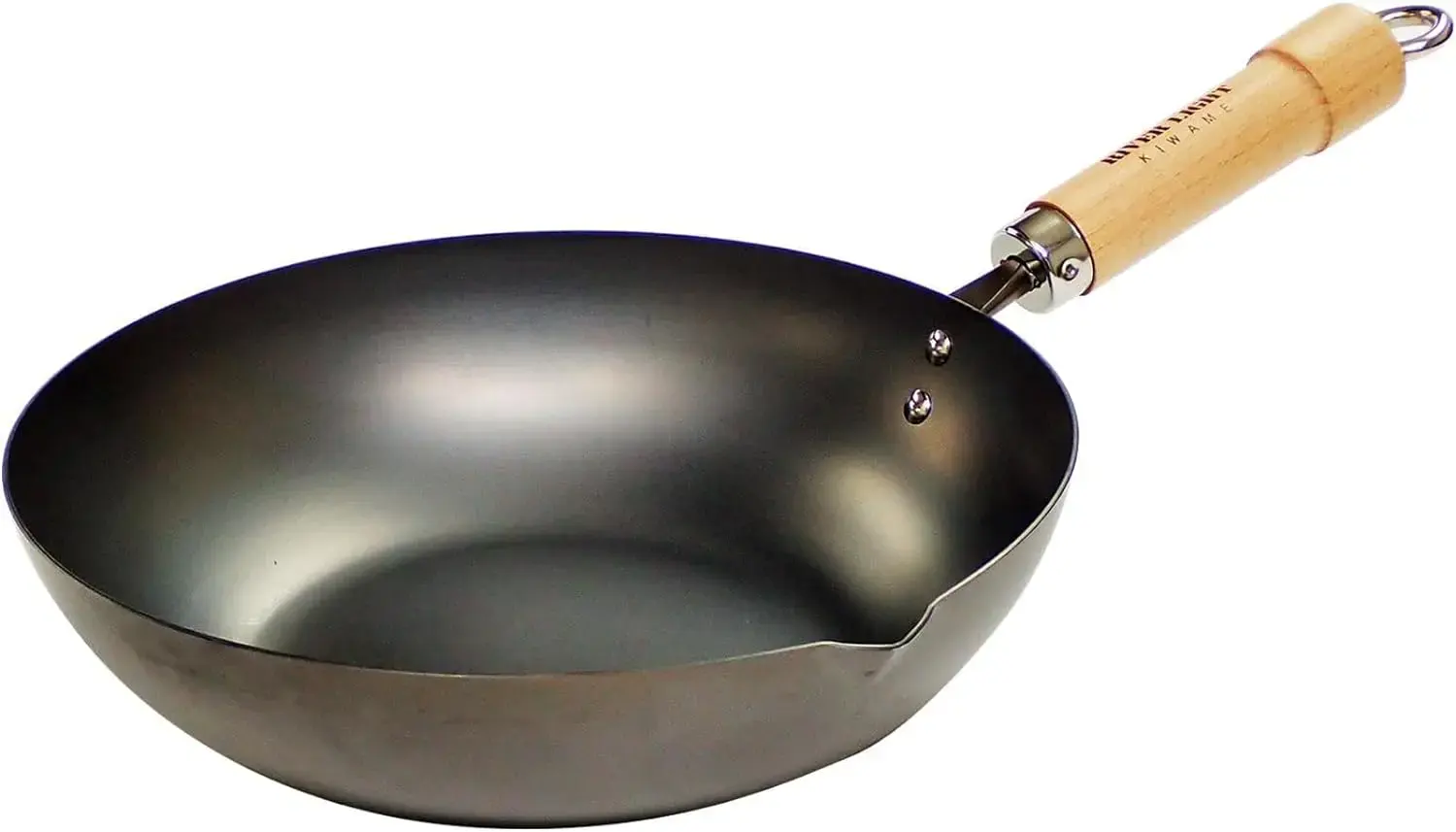 | (Riverlight) River Light Iron Frying Pan, Extreme Japan, 10.2 inches (26 cm), Induction Compatible, Made in Japan, Wok |
To get a better handle on the trade-offs, let's break down the most common induction-ready materials. Each one brings something different to the table, excelling in some areas while compromising in others.
| Material | Heating Speed & Evenness | Heat Retention | Durability & Maintenance | Best For |
|---|---|---|---|---|
| Fully-Clad Stainless Steel | Excellent. Fast and incredibly even due to the aluminum core. | Moderate | Very durable. Handles high heat and metal utensils. Low-maintenance. | Searing, sautéing, sauces—the ultimate everyday workhorse. |
| Cast Iron | Slow to heat up, but very even once hot. | Excellent | Extremely durable but requires seasoning to prevent rust. Heavy. | Searing, frying, and baking. Anything needing sustained, powerful heat. |
| Carbon Steel | Faster to heat than cast iron, with good evenness. | Very Good | Lighter than cast iron but also needs seasoning. Can warp if heated too quickly. | Searing, stir-frying, and high-heat cooking where responsiveness is valued. |
| Modern Nonstick | Fast and even, thanks to its aluminum base. | Poor | The coating is delicate and degrades over time. Avoid high heat and metal utensils. | Eggs, fish, pancakes, and other delicate foods that tend to stick. |
This table gives you a snapshot, but the real story is in how these materials feel and perform when you're actually cooking. Let's dig a little deeper.
Fully-Clad Stainless Steel: The All-Around Performer
There's a reason chefs and serious home cooks swear by fully-clad stainless steel. These pans are built like a high-performance sandwich: a core of super-conductive aluminum or copper is layered between durable, magnetic stainless steel. Crucially, this layering extends all the way up the sides, not just on the bottom disk.
That construction is its superpower. The inner core gets hot fast and spreads the energy evenly, banishing the hot spots that plague cheaper pans. Meanwhile, the steel exterior provides the magnetic muscle for induction and a tough, non-reactive cooking surface. You get precision, power, and control all in one.
Cast Iron: The Heat Retention Heavyweight
Cast iron is an absolute beast on an induction cooktop. Its high iron content makes it intensely magnetic, and its defining trait is its massive heat retention. Once a cast iron skillet gets hot, it stays hot, delivering a stable, scorching-hot surface perfect for creating an incredible crust on steaks, burgers, or cornbread.
The trade-off? It's slow to heat up and doesn't react quickly if you turn the burner down. It’s the freight train of cookware—it takes a while to get going, but once it's at speed, nothing stops it.
Proper seasoning is a must. This built-up layer of baked-on oil creates a natural, slick surface and protects the iron from rust. It's a bit of extra work, but a well-loved cast iron pan will literally outlive you. For a deeper dive, our complete cookware materials comparison has even more detail.
Carbon Steel: The Restaurant Kitchen Favorite
Think of carbon steel as cast iron's lighter, more athletic cousin. It's made of about 99% iron and 1% carbon, so it has that same fantastic heat retention and searing capability. But because it's thinner and less dense, it heats up much faster and is more responsive to temperature changes.
Just like cast iron, it needs to be seasoned to build up that beautiful nonstick patina. That blend of raw searing power and nimble performance is why you'll find carbon steel pans on the line in almost every professional kitchen. They're perfect for everything from searing fish to blistering vegetables in a stir-fry.
Modern Nonstick: The King of Convenience
For delicate foods like eggs or flaky fish, nothing beats the easy release of a good nonstick pan. Induction-ready versions typically have an aluminum body for quick heating and a bonded steel plate on the bottom for magnetic compatibility.
The coating is the key—and the weakness. Quality nonstick pans are PFOA-free and perfectly safe, but the surface is fragile. High heat is its enemy, and metal utensils are a definite no-go. The coating will inevitably wear out over time. They're brilliant for low- and medium-heat tasks but aren't the right tool for getting a hard sear.
In-Depth Reviews of the Best Induction Cookware Brands

Alright, you’ve got the science down and know why certain materials are induction superstars. Now for the fun part: let's meet the brands that are actually making the stuff. The truth is, there’s no single "best" brand for everyone. It's about finding the one that clicks with your wallet, your cooking habits, and what you value in the kitchen.
To make things easier, I've broken down my top picks into a few different tiers. We’ll look at the pro-level powerhouses you invest in for life, the value-packed workhorses that perform like champs, and the budget-friendly options that prove you don't need to spend a fortune. This way, you can get a straight-up look at what each brand is all about, what they do best, and where they really shine.
Induction cooking is blowing up, and that’s fantastic news for us. The global market for induction cookware hit $2.54 billion in 2023 and is only getting bigger as more people switch to this incredible technology. Brands are in a full-on race to create better materials, tougher nonstick surfaces, and smarter designs. You can dig into the numbers in this market trend report from Grand View Research.
Premium Powerhouses: The Investment Brands
 | All-Clad Copper Core 5-Ply Stainless Steel Cookware Set 10 Piece Induction Oven Broiler Safe 600F Pots and Pans Silver |
This is the top shelf—the cookware you buy once and hand down to your kids. These brands are synonymous with incredible craftsmanship and professional-grade performance. Yes, they cost more upfront, but for serious cooks, the precision, durability, and sheer joy of using them make the investment worth every penny.
All-Clad
Let's just say it: All-Clad is the gold standard for fully-clad stainless steel. Made right here in the USA, their pans are famous for their bonded construction, which sandwiches a highly conductive aluminum or copper core between layers of tough stainless steel.
- Key Product Lines: The D3® and D5® collections are legendary. D3 is their classic 3-ply construction that heats up fast and evenly. D5 adds two extra layers for even more sublime heat control.
- Performance: All-Clad pans are absolute workhorses. They respond instantly to temperature changes, which is critical whether you're searing scallops or holding a delicate sauce at the perfect simmer. Their magnetic steel exterior is a perfect match for induction.
- Best For: The passionate home cook who wants zero compromises and is ready to invest in professional-grade gear that will literally last a lifetime.
Demeyere
Hailing from Belgium, Demeyere approaches cookware like a team of engineers. They don't believe in a one-size-fits-all solution. Instead, they customize the construction of each pot and pan for its specific job. A skillet built for a hard sear will have a different makeup than a saucier designed for gentle heating.
Demeyere’s entire philosophy is that the materials should serve the cooking task. This bespoke approach results in some of the most technically advanced and highest-performing induction cookware you can buy.
Their Atlantis line, for example, boasts a 7-ply base that's incredibly efficient on induction hobs, while their Proline skillets are what many professional chefs consider the best searing pans in the world.
Mid-Range Workhorses: Excellent Value and Performance
This category is the sweet spot for most of us. These brands deliver outstanding performance and durability, often nipping at the heels of the premium guys, but at a price that won't make you gasp. They make smart compromises in just the right places to offer incredible value.
Tramontina
This Brazilian company has built a cult following for making cookware that punches way, way above its price tag. Their Tri-Ply Clad stainless steel line is constantly compared to All-Clad's D3, offering the same fully-clad construction for a fraction of the cost.
- What Makes Them Stand Out: You get all the perks of multi-layer construction—even heating, no hot spots, fantastic durability—without the sticker shock.
- Versatility: They have a huge lineup, from stainless steel sets and enameled cast iron Dutch ovens to induction-ready nonstick pans. You can easily outfit your whole kitchen.
- Best For: Anyone who craves the performance of fully-clad cookware but doesn't want to shell out for a premium brand name. It's arguably the best bang for your buck in the entire cookware market.
Caraway
If you prioritize non-toxic cooking surfaces and have an eye for design, Caraway is a fantastic choice. Their pans pair an aluminum core for even heating with a slick ceramic nonstick coating that's free of PFAS, PFOA, lead, and cadmium. A steel plate on the bottom makes them induction-ready.
The ceramic surface is incredibly slippery, perfect for fried eggs and flaky fish. Now, let's be real: no nonstick lasts forever. But if you treat Caraway right—no scorching heat, no metal utensils—its coating is impressively durable. Their beautiful color options and clever storage solutions don't hurt, either.
Budget-Friendly Champions: Reliable and Affordable
You absolutely do not need to spend a fortune to get great results on your induction cooktop. These brands are all about delivering solid, dependable performance for everyday cooking at a fantastic price. They might not be heirloom pieces, but they are a perfect entry point into the world of induction.
Duxtop
Duxtop is a brand that was practically born for induction, so you never have to second-guess compatibility. They focus on creating no-frills, functional cookware that just plain works.
- Construction: Most of their popular sets use an impact-bonded base. This means a thick aluminum disc is fused to the bottom of a stainless steel pan, creating a highly efficient "sandwich" for heat transfer on induction.
- Focus on Function: Duxtop gear is all about practicality. You get thoughtful touches like comfy handles, measurement markings etched inside the pots, and glass lids so you can see what's going on.
- Best For: First-time homeowners, students, or anyone looking for a reliable and affordable starter set for their new induction stove.
Le Creuset (Enameled Cast Iron)
Wait, isn't Le Creuset a premium brand? Yes, but their famous enameled cast iron pieces occupy a special place. The cast iron core is naturally ferromagnetic, making it a dream on induction cooktops. Its heavy mass provides unbeatable heat retention for things like braises, stews, and baking artisan bread.
The glossy enamel coating means you never have to season it, and cleanup is a breeze compared to raw cast iron. A Le Creuset Dutch oven is an investment, for sure, but it performs one specific job—low, slow, and steady heating—better than almost anything else out there.
How to Care for Your Induction Cookware
 | Blue Diamond Cookware Tri-Ply Stainless Steel Ceramic Nonstick, 6 Piece Cookware Pots and Pans Set, PFAS-Free, Multi Clad, Induction, Dishwasher Safe, Oven Safe, Silver |
https://www.youtube.com/embed/P4zW-C010oc
You've just invested in some excellent induction cookware, which is a fantastic upgrade for any kitchen. Now, let's talk about keeping it in top shape. Protecting that investment isn’t difficult, but a little know-how goes a long way in making sure your new pans perform beautifully for years to come.
Proper care isn't just about cleaning. It's about respecting the materials and understanding how they interact with your induction cooktop. A few simple habits will pay you back with consistent, efficient cooking and pans that look great, turning a smart purchase into a long-term kitchen partner.
Fundamental Care for All Induction Pans
No matter which material you've chosen, a few golden rules apply across the board. These basic habits are your first line of defense against the most common issues like warping and scratching.
- Avoid Extreme Temperature Shocks: This is a big one. Never, ever plunge a sizzling-hot pan into a sink of cold water. That rapid temperature change can cause the metal to contract and warp, leaving you with a wobbly base that won't make good contact with the cooktop. Always let your pans cool down a bit before washing.
- Match Pan Size to Burner Size: Induction hobs are most efficient when the pan's base is a close match to the magnetic ring on the cooktop. Using a tiny pan on a huge burner wastes energy, and plopping a massive pan on a small burner will create a hot spot right in the middle, leading to uneven cooking.
- What's That Buzzing Sound? A faint hum or buzz is totally normal—it's just the magnetic field doing its thing. If you hear a loud, angry buzzing, it often means the pan isn't sitting perfectly flat or you're using very lightweight cookware on a high-power setting. Make sure the pan is centered and has a solid, flat base to keep the noise to a minimum.
Material-Specific Maintenance Tips
Beyond the universal basics, each cookware material has its own personality and needs a slightly different approach. What keeps rugged cast iron happy will absolutely ruin a delicate nonstick coating.
Stainless Steel
Stainless steel is a true kitchen workhorse, but it can be prone to water spots and stubborn, stuck-on food. For everyday cleaning, warm, soapy water and a non-abrasive sponge are your best friends. If you run into tougher stains or that rainbow-like discoloration, don't panic! We cover specialized cleaning tricks in our guide on how to clean stainless steel pots.
Cast Iron and Carbon Steel
These pans are all about the seasoning—that beautiful, slick layer of baked-on oil that creates a natural nonstick surface and keeps rust at bay. For anyone using cast iron, mastering its care is essential; you can get the full rundown on seasoning cast iron skillets to ensure it lasts a lifetime. After washing, always dry these pans completely (a minute on a warm burner works wonders) and wipe a super-thin layer of cooking oil inside before storing.
Nonstick Coatings
Handle these with care. Nonstick surfaces are the most delicate of the bunch. Never use metal utensils—they will scratch and destroy the coating in a heartbeat. Stick with silicone, wood, or nylon tools. It’s also wise to avoid blasting them with super high heat, as extreme temperatures can cause the nonstick surface to break down over time.
Taking care of your cookware isn't just a chore; it’s about preserving the technology and craftsmanship you paid for. A few minutes of proper care after each use ensures your pans remain a reliable partner in the kitchen.
Got Questions About Induction Cookware? Let's Clear Things Up.
Switching to induction is a fantastic move, but it's totally normal to have a few questions. It’s a different beast than gas or electric, and figuring out what pans you need, what it'll cost, and how to care for everything can feel a little daunting at first.
Think of this as a quick chat over the counter. We'll tackle the most common questions we hear, so you can feel 100% confident you're picking the right gear and getting the most out of your new cooktop.
Can I Use My Old Pans on an Induction Cooktop?
This is the big one, the question everyone asks right out of the gate. The short answer is: maybe! It all comes down to one simple thing: your pan must be magnetic.
Induction works by creating a magnetic field that generates heat inside the pot itself. If the pan isn't magnetic (or "ferromagnetic," to be precise), the cooktop won't even know it's there. No magnetism, no heat.
The easiest way to check your current pans is with the good old magnet test. Just grab any magnet off your fridge and see if it sticks to the bottom of your pan.
- If it sticks like glue: You're in business! That pan is induction-ready.
- If it falls right off or the pull is super weak: That one won't work on an induction surface.
Most cast iron and many types of stainless steel are naturally magnetic, so they're usually a safe bet. Pans made of pure aluminum, copper, or glass won't work on their own, unless the manufacturer has bonded a special magnetic steel plate to the bottom just for this purpose. When you're shopping, keep an eye out for the induction symbol—it looks like a little coil of wire—on the box or bottom of the pan.
Is Induction Cookware More Expensive?
It's true that some of the top-of-the-line, fully-clad induction sets can come with a hefty price tag. But that's not the whole story anymore. The market has exploded, and now there are tons of fantastic, affordable options that perform beautifully without breaking the bank.
It's also worth thinking about the long game. Induction is incredibly efficient, transferring up to 90% of its energy directly to the pan. That efficiency can actually trim down your electricity bill over time, which helps balance out the initial cost of new cookware. Plus, investing in a quality set from the start means it will last for years, giving you far better value than having to replace cheap, flimsy pans every couple of years.
Does Induction Cookware Require Special Cleaning?
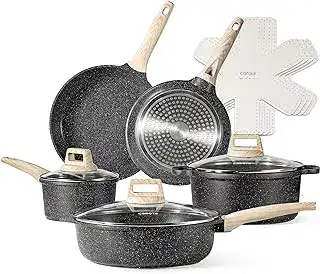 | CAROTE Nonstick Granite Cookware Sets, 10 Pcs Pots and Pans Set, Non Stick Stone Kitchen Cookware Set with Frying Pans(Granite, Induction Cookware) |
Nope! How you clean your pans depends entirely on what they're made of, not whether they work on an induction cooktop. You’ll care for a stainless steel induction pan exactly like any other stainless pan. That cast iron induction skillet? It still needs the same seasoning and care routine you're used to.
The real cleaning magic of induction comes from the cooktop itself. Because the glass surface doesn't get screaming hot like an electric burner, spills and boilovers rarely burn on. That caked-on, baked-on mess is a thing of the past. A quick wipe is usually all it takes to clean up, which makes your kitchen routine so much easier.
So while the pans don't need "special" treatment, the whole cooking and cleanup process is a whole lot simpler.
Should I Buy a Full Cookware Set?
Getting a big, shiny set can feel like a great deal, and sometimes it is. But for most home cooks, it's not always the smartest move. Sets are often padded with pieces you'll hardly ever touch, and they just end up hogging precious cabinet space.
A much better approach is to build your collection piece by piece. Start with the workhorses you know you'll use constantly:
- A versatile 10- or 12-inch skillet for everything from searing and frying to sautéing weeknight dinners.
- A 2- or 3-quart saucepan for sauces, heating liquids, and cooking grains.
- A big stockpot or Dutch oven for soups, stews, boiling pasta, and braising.
This method lets you put your money where it counts—into the high-quality pans you'll rely on every day. It also gives you the freedom to mix and match materials to suit your style. You might decide you love a heavy-duty cast iron skillet for getting the perfect sear on a steak, but prefer a nimble, fully-clad stainless saucepan for delicate sauce work. Building your collection this way ensures every single piece in your kitchen is one you truly love and use.


