When you're on the hunt for the best hard anodized cookware, you're really looking for that sweet spot: the perfect mix of toughness, even heating, and a nonstick surface that actually works. This material is a standout because it's built to be tougher than stainless steel but gives you the easy-breezy cleanup of nonstick, making it a seriously versatile and reliable workhorse for your daily cooking.
Now loading...
Why Hard Anodized Cookware Is a Kitchen Favorite
 | Chef Pomodoro Detroit Style Pizza Pan, 14 x 10-Inch, Hard Anodized Rectangular Aluminum Deep Dish Pizza Pan, Pre-Seasoned Bakeware Kitchenware Now loading... |
The best way to think about hard anodized cookware is to picture regular aluminum wearing a suit of armor. Through a special electrochemical process, the surface is hardened into a super-strong, non-porous layer that's incredibly scratch-resistant. This process essentially seals the aluminum core, so it never leaches into your food. That means you can cook acidic stuff like tomato sauce or lemon juice without a second thought.
This clever construction is why so many home cooks have fallen in love with it. You get a few key benefits all in one package:
- Superior Heat Conduction: The aluminum core is a champ at heating up fast and spreading that heat evenly. No more frustrating hot spots that burn one side of your chicken while the other is still raw.
- Exceptional Durability: That hardened surface isn't just for show. It resists scratches, dings, and corrosion way better than your average nonstick pan, promising a much longer lifespan.
- Reliable Nonstick Performance: Good-quality sets feature a PFOA-free nonstick coating that lets food slide right off, turning cleanup into a simple wipe-down.
Hard Anodized Cookware At a Glance
So, how does it really stack up against the other big players in the kitchen? Here’s a quick side-by-side to put things in perspective.
| Attribute | Hard Anodized | Stainless Steel | Traditional Nonstick |
|---|---|---|---|
| Durability | Excellent | Superior | Fair to Good |
| Heat Performance | Excellent | Good | Good |
| Non-Stick Quality | Very Good | Poor | Excellent |
| Safety | Excellent | Excellent | Good (PFOA-free) |
This comparison really highlights why hard anodized cookware has become such a popular middle-ground, offering the best of several worlds without major trade-offs.
And it's not just a feeling—the numbers back it up. The hard anodized cookware market is expected to jump from USD 1.5 billion in 2024 to USD 2.8 billion by 2033. This surge shows a real shift in what people want: kitchen tools that are safe, built to last, and perform day in and day out, especially as more of us get serious about cooking at home. You can dive deeper into these trends in this detailed report on the hard anodized cookware market. It's this killer combo of performance, safety, and durability that makes hard anodized sets a top contender for any modern kitchen.
Understanding How Hard Anodized Cookware Is Made
 | Calphalon Contemporary Hard-Anodized Aluminum Nonstick Cookware, Omelette Pan, 10-inch, Black |
Ever wondered how a soft, lightweight metal like aluminum gets beefed up into a kitchen workhorse that's even tougher than stainless steel? The secret isn't a coating or a layer slapped on top. It's a fascinating electrochemical process that gives the aluminum a permanent suit of armor, creating the durable cookware we know and love.
Think of raw aluminum like a simple block of wood—it's porous and not incredibly strong on its own. The hard-anodization process is like putting that wood through an intense, high-tech treatment that basically petrifies it, turning it into something dense, non-porous, and incredibly tough. It's a fundamental change to the metal itself.
The magic happens when the aluminum cookware is submerged in a special acid bath. A powerful electrical current is then zapped through it. This controlled jolt forces the surface of the aluminum to oxidize, creating an exceptionally hard, scratch-resistant layer of aluminum oxide. This new surface is literally part of the metal, which means it will never chip, peel, or flake off.
From Raw Metal to Resilient Pan
This incredible transformation is what makes finding the best hard anodized cookware so worthwhile. You end up with a pan that’s completely sealed and non-reactive.
The anodization process creates a protective barrier that is about 30% harder than stainless steel. This hardened layer ensures the underlying aluminum never comes into contact with your food, making it safe even for highly acidic ingredients like tomatoes or citrus.
What you're left with is a pan that brilliantly combines the best of both worlds: the fantastic, even heat conductivity of aluminum with a newfound toughness and safety.
This infographic breaks down how the manufacturing process leads directly to the benefits cooks are looking for.

As you can see, the process is the reason the final product is so durable, heats so evenly, and provides a superior base for nonstick coatings.
Why This Process Matters for Your Cooking
Knowing a bit of the science behind it helps you appreciate why this cookware performs the way it does. That non-porous surface created during anodization is the perfect canvas for modern, PFOA-free nonstick coatings. These coatings grab onto the hardened surface way better than they ever could on plain old aluminum.
Here’s a quick play-by-play of the steps:
- Preparation: The raw aluminum pan is cleaned and prepped, getting it ready for its transformation.
- Electrochemical Bath: It's dunked into a solution of sulfuric acid and chilled to near-freezing temperatures.
- Anodization: A low-voltage electrical current is passed through the bath, causing the surface to oxidize and harden up.
- Sealing and Coating: The pan is then sealed to lock in that durability before a high-quality nonstick coating is applied.
This journey from a simple aluminum shape to a finished pan is what guarantees you get a piece of cookware that resists scratches, distributes heat like a pro, and gives you a safe, reliable cooking surface for years. It’s a smart investment in both performance and peace of mind.
What to Look for When You’re Buying
Walking through the cookware aisle can feel a bit overwhelming, but a few key features separate the truly great hard-anodized cookware from the just-okay stuff. Think of this as your personal checklist for finding a set that not only cooks like a dream but is also built to last. By focusing on how it’s made, what it’s coated with, and the little design details, you’ll be able to make a smart choice.
The first thing to check out is the pan's core construction. The best hard-anodized cookware is always built around a heavy-gauge aluminum core. This isn't just about making the pan feel solid in your hand; a thicker core is the secret sauce for incredible, even heat distribution. It prevents those annoying hot spots that scorch your food in one place while leaving another part undercooked.
A well-made pan heats up evenly from the bottom all the way up the sides. That means you get precise temperature control whether you're searing scallops or simmering a delicate sauce.
High-Performance Nonstick Coatings
Next up, take a close look at the cooking surface. Modern hard-anodized pans almost always feature multi-layer, PFOA-free nonstick coatings. These advanced surfaces are designed to be tough and safe, giving you that effortless food release and quick cleanup without any nasty chemicals. Look for brands that are upfront about their coating technology.
You'll also want to look for a reinforced coating, often infused with tough stuff like titanium or ceramic particles. This adds an extra layer of defense against scratches from utensils—a must-have feature if you want your investment to last. To get a better handle on why this matters, check out our guide on PFOA and PTFE-free cookware.
A top-notch nonstick surface isn't just about convenience. It's a performance feature that lets you cook with less oil for healthier meals and makes cleanup almost laughably easy. This combo is a huge reason why this cookware is so popular.
It's no surprise that the global hard-anodized cookware market was valued at around USD 3.5 billion in 2023 and is expected to keep growing. That boom reflects a huge consumer demand for cookware that hits that sweet spot of durability, cooking efficiency, and non-toxic performance.
Ergonomics and Versatility
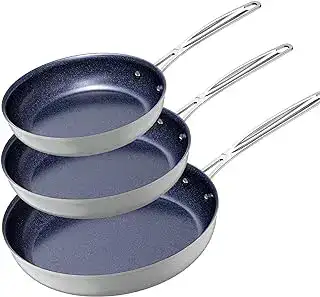
 | GreenPan Valencia Pro Hard Anodized Healthy Ceramic Nonstick 8" 9.5" and 11" Frying Pan Skillet Set, PFAS-Free, Induction, Dishwasher Safe, Ovens Safe, Gray |
Finally, don't forget the little things that make a big difference in your day-to-day cooking. Ergonomic, stay-cool handles are an absolute must for safe, comfortable cooking. Look for riveted stainless steel or silicone-wrapped handles that give you a confident grip, especially when you're moving a hot pan from the stove to the oven.
Speaking of versatility, always check the oven-safe temperature rating. A solid set should handle at least 400°F (204°C), which lets you finish a frittata or keep a dish warm without a second thought. And don't overlook the lids! Tempered glass lids are fantastic because you can keep an eye on your food without lifting the lid and letting all the heat and moisture escape. Just make sure they fit snugly to lock in all that flavor.
How Hard Anodized Stacks Up Against Other Cookware
Choosing new cookware can feel a bit like picking your starting lineup for a sports team. Every material has its superstars and unique talents. While hard-anodized cookware is a fantastic all-rounder, it's crucial to see how it performs against the other major players in the kitchen.
After all, you wouldn't use a delicate paring knife to chop through bone. In the same way, the best pan for a screaming-hot steak sear isn't always the right tool for gently cooking a piece of flaky fish.
Hard Anodized vs. Stainless Steel
There’s a reason professional kitchens are filled with stainless steel pans. They’re nearly indestructible, can withstand incredibly high temperatures for a perfect sear, and are masters at creating fond—those delicious browned bits that stick to the pan and become the foundation of an unforgettable sauce.
But let's be honest, stainless steel can be unforgiving. Its biggest weakness is its tendency to make food stick like glue without the right technique.
This is where hard anodized cookware finds its sweet spot. It offers a fantastic middle ground. While it might not produce the exact same aggressive sear as a high-end steel pan, its nonstick surface is far easier to work with for everyday meals. Think about pan-frying chicken; with stainless steel, you need to nail the temperature and oil amount perfectly. With hard anodized, you get beautiful, even browning with a simple release and a much faster cleanup. If you're interested in how steel and aluminum work together, our guide to tri-ply cookware is a great next stop.
Hard Anodized vs. Cast Iron
When you need pure, unadulterated searing power and heat retention, nothing touches cast iron. It’s the undisputed king for creating that deep, dark crust on a steak or baking cornbread with those perfectly crispy edges.
However, cast iron is a bit of a diva. It's incredibly heavy, demands consistent seasoning to maintain its surface, and can react poorly with acidic foods like tomatoes, sometimes lending a metallic taste.
Hard anodized cookware shines where cast iron stumbles. For your morning scramble, pancakes, or a delicate filet of sole, its nonstick surface gives you a flawless release that even a well-seasoned cast iron skillet can't always promise. Plus, it's so much lighter and doesn't require any special seasoning rituals, making it the clear winner for quick, hassle-free daily cooking.
Key Takeaway: Think of hard anodized cookware as the versatile daily driver of your kitchen. It handles a massive range of cooking tasks with incredible ease, striking a balance of performance and convenience that more specialized materials just can't match for everyday use.
Hard Anodized vs. Ceramic Nonstick
Ceramic nonstick pans often catch your eye with their slick surfaces and fun, vibrant colors. The problem? That nonstick coating is notoriously fragile. It tends to wear out and lose its slickness surprisingly fast, especially if you use it often or expose it to high heat.
Hard anodized cookware, on the other hand, is built like a tank. Its electrochemically hardened body is significantly more durable and resistant to scratches. While all nonstick surfaces need some care, hard anodized pans are engineered to stand up to much more daily wear and tear. A big part of appreciating this durability comes from knowing the common mistakes that can ruin non-stick pans.
Cookware Material Performance Showdown
To make things clearer, let’s put these materials head-to-head. This table breaks down how each one performs across the most important categories, from heat control to daily maintenance.
| Feature | Hard Anodized Aluminum | Stainless Steel | Cast Iron | Ceramic Nonstick |
|---|---|---|---|---|
| Heat Control | Excellent | Good | Fair | Good |
| Durability | Very Good | Excellent | Excellent | Fair |
| Nonstick | Very Good | Poor | Good (Seasoned) | Excellent (at first) |
| Maintenance | Easy | Easy | High | Moderate |
| Weight | Moderate | Moderate-Heavy | Very Heavy | Light |
As you can see, each material has its place. But for a reliable, all-around workhorse, hard anodized cookware carves out a powerful niche. It successfully blends the quick, even heating of aluminum with impressive durability and the user-friendly convenience of a nonstick surface.
Protecting Your Investment with Proper Care
| | Calphalon Contemporary Hard-Anodized Aluminum Nonstick Cookware, Omelette Pan, 10-inch, Black |
Think of great hard-anodized cookware as an investment in your kitchen. And like any good tool, a little bit of maintenance goes a very long way. Taking proper care of your pans is what guarantees they'll keep their nonstick magic and stay tough for years to come. The single biggest mistake you can make is treating them like they're indestructible cast iron or stainless steel.
That nonstick surface is a high-performance layer, and it needs a specific kind of care to really thrive. While the anodized body itself is incredibly durable, it's the cooking surface that deserves your attention. A few simple habits can easily double the lifespan of your set.
Hand Washing Is Non-Negotiable
I know, I know—some brands will claim their pans are "dishwasher-safe." Just ignore that. You should always hand wash your hard-anodized cookware. The combination of intense heat and harsh detergents in a dishwasher will systematically destroy the nonstick coating, making it lose its slickness way too soon.
A quick wash with some warm, soapy water and a soft sponge is all it ever needs. Stay far away from abrasive scrubbers like steel wool; they'll create tiny micro-scratches on the surface that add up over time. This principle of proper cleaning is key to maintaining all your kitchen gear. For example, knowing how to handle routine upkeep like descaling kitchen appliances just reinforces the value of good habits.
Pro Tip: Never, ever plunge a sizzling hot pan into cold water. That sudden temperature change—called thermal shock—can cause the metal to warp and can even crack or blister the nonstick coating. Just let it cool down on the stovetop first.
Smart Cooking and Storage Habits
Protecting your cookware doesn't stop at the sink. A few small adjustments at the stovetop and in your cabinets will preserve the integrity of your pans, keeping them looking and performing like they're brand new.
- Use Low to Medium Heat: Hard-anodized aluminum is a fantastic heat conductor. You almost never need to crank the heat to high. In fact, doing so can burn your food and damage the nonstick surface. Just let the pan do its job on a lower setting.
- Choose the Right Utensils: Metal utensils are the arch-nemesis of nonstick coatings. Always reach for tools made of wood, silicone, nylon, or bamboo to prevent scratches and give your pan a much longer life.
- Store with Care: Stacking pans directly on top of each other is a recipe for scratches and scuffs. The simple fix is to just place a paper towel or a soft cloth between each pan to create a protective buffer. If you want a more permanent solution, you can get dedicated polyester pot and pan protectors.
So, Is Hard Anodized Cookware Right for You?
Figuring out if hard-anodized cookware is the right fit for your kitchen really comes down to your cooking style. Think of it as the ultimate everyday workhorse. It’s that perfect blend of serious durability and the sheer convenience of a nonstick surface you can actually count on, day in and day out.
This is the kind of cookware that’s built for the long haul and designed for consistent, no-fuss performance.
So who is this cookware really for? It's a fantastic choice for the daily home cook, for health-conscious families looking to cut back on cooking oils, and for anyone who is just plain tired of replacing cheap, flimsy nonstick pans every year or two. The even heating and ridiculously easy cleanup make a thousand little kitchen tasks simpler.
Who Might Want to Look Elsewhere?
That said, it isn't the end-all-be-all for every single person. If you're a culinary professional or a serious home chef who lives for getting that deep, aggressive sear on a steak, you'll probably still reach for your trusty cast iron or stainless steel skillet.
Those materials can take on the kind of screaming-hot temperatures that hard-anodized nonstick surfaces just aren't built for. They also excel at creating that beautiful fond—the browned bits at the bottom of the pan—that’s the secret to incredible pan sauces.
The Final Takeaway: If what you value most is a durable, low-maintenance, and high-performing set for a huge range of meals—from delicate scrambled eggs to slow-simmered sauces—then hard-anodized cookware is an outstanding investment. It nails that tricky balance between true performance and practical, everyday usability, which is exactly why it's a favorite in so many kitchens.
A Few More Questions You Might Have
Even after getting the rundown on hard-anodized cookware, a few practical questions always seem to pop up. Let's tackle the most common ones people ask when they're trying to pick the right set for their kitchen.
Is Hard Anodized Cookware Actually Safe?
Yes, it’s incredibly safe, and for a couple of key reasons. The first is the anodization process itself. It creates a tough, non-reactive "suit of armor" around the aluminum core, completely sealing it off. This means the raw aluminum never, ever makes contact with your food.
On top of that, any reputable brand today uses high-quality, PFOA-free and BPA-free nonstick coatings. These surfaces go through rigorous testing and are considered perfectly safe for everyday cooking, as long as you stick to the manufacturer’s guidelines and don't blast them with extreme, runaway heat.
Can I Use It on an Induction Stovetop?
 | T-fal Ultimate Hard Anodized Nonstick Wok 14 Inch Cookware, Pots and Pans, Dishwasher Safe Black |
This is a big one, and the answer is a classic: it depends. By itself, hard-anodized cookware is made from aluminum, which isn't magnetic. A standard hard-anodized pan will not work on an induction cooktop.
But don't worry, manufacturers have figured this out. Many now make induction-ready versions by bonding a stainless steel plate to the bottom of the pan. The best way to know for sure is to check the product description for "induction compatible" or look for that little coil symbol on the box or the pan's base. You can also do a quick magnet test—if a magnet snaps firmly to the bottom, you're good to go.
What's the Real Difference Between Hard Anodized and Regular Nonstick?
The biggest difference is in the pan's bones—its core construction and durability. Think of it like this:
- Regular Nonstick: This is usually a thin, basic aluminum or steel pan with a nonstick coating sprayed on top. The pan's body is often softer and more likely to warp or scratch over time.
- Hard Anodized Nonstick: This cookware starts with a much beefier, electrochemically hardened aluminum body. It's built to resist scratches and dings from the get-go. The nonstick coating is then applied to this much stronger, more reliable foundation.
The key takeaway is that hard-anodized isn't just a coating; it's a fundamentally tougher, more durable piece of equipment. This translates to a much longer lifespan and better, more even cooking performance compared to your average nonstick pan.
At Cookware Review Hub, our goal is to help you cook smarter, not harder. For more deep dives and our top-rated picks, check out our comprehensive guides at https://www.cookwarereviewhub.com.
Article created using Outrank



No Responses