If you're after the best Dutch oven for sourdough bread, let's cut right to the chase: a 5.5 to 6-quart enameled cast iron pot with a heavy, tight-fitting lid is the gold standard. This workhorse gives you incredible heat retention and traps steam perfectly—the two things you absolutely need for a lofty loaf with that signature crisp, crackly crust. It’s the sweet spot of size, performance, and ease of use for almost any home baker.
Now loading...
Your Path to Bakery-Quality Sourdough at Home

Now loading...
Picture it: you pull a perfect sourdough loaf from your oven. The crust is a deep, caramelized brown, and it crackles as you slice into a light, airy crumb. This isn't some fantasy reserved for professional bakers. The secret weapon for making this happen consistently in your own kitchen is a Dutch oven. It effectively turns your standard home oven into a powerful, steam-injected baker’s oven.
This guide goes beyond the usual advice to give you a clear, detailed look at what really matters for baking sourdough. You’ll see how different materials, sizes, and even lid designs create the perfect environment for your dough to thrive.
Key Factors We Will Explore
We're going to break down the science and give you practical advice to help you pick the one Dutch oven that will elevate your bread. We'll be focusing on a few key decision-making factors:
- Material Performance: We’ll look at how enameled cast iron, bare cast iron, and even ceramic stack up when it comes to holding and distributing all that heat.
- Size and Shape: Why is a 5 to 6-quart pot the sweet spot? And does a round or oval shape actually change your final loaf? We'll get into it.
- Lid Design: This is critical. We’ll explain why a heavy, tight-fitting lid is non-negotiable for trapping steam and getting maximum oven spring.
- High-Heat Safety: Sourdough bakes hot. You need to know that every part of your pot, especially the handle, can safely withstand 450-500°F temperatures.
A Dutch oven works by creating a miniature, humid ecosystem for your dough. The steam released from the bread is trapped by the heavy lid, keeping the crust soft and allowing the loaf to expand fully before the crust hardens and sets.
By understanding these elements, you can confidently choose the best Dutch oven for sourdough that fits your baking style and budget. Think of it as an investment that pays you back in every amazing loaf you bake.
How a Dutch Oven Creates the Perfect Sourdough

Think of a Dutch oven not just as a pot, but as its own self-contained baking chamber. For sourdough, it’s a game-changer. It perfectly handles two critical elements that your home oven just can't manage on its own: steam and consistent, radiant heat. Once you get how it pulls this off, you'll see why finding the right one is so important.
The real magic happens in the first 20 minutes of baking. When your dough hits that blazing hot pot, it instantly releases a cloud of moisture. A heavy, tight-fitting lid traps all of it, creating an intensely steamy sauna right around your loaf.
This captured steam is the secret sauce behind an explosive "oven spring"—that rapid, glorious expansion of the dough as it bakes.
Maximizing Oven Spring with Trapped Steam
In that steamy environment, the surface of the dough stays moist and flexible for much longer. This gives the loaf the freedom to stretch and expand to its absolute maximum potential before the crust starts to form and harden.
Compare that to baking on an open stone or a sheet pan. In a dry oven, the crust sets almost immediately. It’s like putting a straightjacket on your dough, severely limiting its ability to rise and often resulting in a dense, disappointing loaf.
A good Dutch oven can turn a so-so sourdough attempt into a bakery-worthy loaf. Controlled tests show it delivers superior oven spring and crust development in over 90% of cases compared to open baking. A 5-quart round Dutch oven preheated to 450-500°F creates a perfect micro-environment that mimics a commercial steam-injected oven, supercharging the wild yeast for that light, airy crumb you're after. Pantry Mama has a great breakdown of how pot size influences these results.
The Power of Superior Heat Retention
Beyond steam, the pot itself plays a huge role. Heavy materials like cast iron are absolute champions of retaining and distributing heat. When you preheat a cast iron Dutch oven, it becomes a furnace of intense, even heat that radiates and surrounds the dough from every single angle.
This consistent heat delivery is what bakes the loaf uniformly, from the inside out. It's the reason sourdough from a Dutch oven gets that signature deep golden-brown, perfectly crisp bottom crust without ever burning. The intense heat blasting up from the base of the pot provides the initial thermal shock needed to kickstart a massive oven spring.
Here’s a simple look at the process:
- Initial Bake (Lid On): For the first 20-25 minutes, the lid stays on. This is the steam phase, keeping the crust soft and allowing for that big upward expansion.
- Final Bake (Lid Off): For the last 20-25 minutes, you take the lid off. The trapped moisture escapes, and the dry, direct heat of the oven gets to work developing a thick, crackly, and beautifully caramelized crust.
Ultimately, a Dutch oven simplifies a pretty complex baking process. It flawlessly executes the two-stage bake—steamy, then dry—that is absolutely essential for achieving the texture and look of professionally baked sourdough. It’s less about the pot itself and more about the perfect baking environment it creates, every single time.
Choosing the Right Dutch Oven Size for Your Loaf
Picking the right size Dutch oven is less about how it looks on your shelf and more about the physics of bread baking. The space inside that pot directly controls your loaf’s final shape and height. If the pot is too big, your dough has room to spread out sideways, leading to a wider, flatter loaf—a super common frustration for home bakers.
You want to create a snug environment that forces the dough to expand upwards as it bakes. This confinement is what gives you that glorious "oven spring," producing a taller, rounder, more professional-looking boule. Think of the Dutch oven's walls as a support system, guiding the dough's rise exactly where you want it to go.
Matching Quart Size to Your Recipe
So, how do you find that perfect fit? It all comes down to matching the pot’s capacity to the total amount of flour in your go-to recipe. Most sourdough recipes you'll find online call for around 500g of flour, which makes a dough ball weighing roughly 1000g.
For a loaf this size, a Dutch oven between 5 and 6 quarts is the sweet spot. This capacity gives the dough just enough room to expand fully without being so spacious that it flattens out. It’s the versatile choice that works for the vast majority of home baking needs.
When it comes to baking the perfect sourdough boule, the size of your Dutch oven can make or break that coveted oven spring. Baking experts note that the sweet spot is a 5.5 to 6-quart Dutch oven, which is ideal for standard recipes that use 7- to 8-inch proofing baskets. This size prevents flat loaves by providing just enough confinement for the dough to rise upward dramatically—sometimes achieving up to a 30-50% higher rise compared to larger pots in side-by-side tests. You can get more insights on matching pot size to loaf performance from baking specialists at Cultured Guru.
Sizing Up or Down for Different Needs
Of course, not everyone sticks to the standard recipe. Your ideal size might shift depending on your baking habits.
Here’s a simple guideline to help you decide:
- For Smaller Loaves (300-400g flour): A 3 to 4-quart Dutch oven will provide the tight quarters needed to prevent a small dough ball from spreading. This is perfect for individuals or smaller households.
- For Standard Loaves (500-600g flour): A 5 to 6-quart pot is your workhorse. It offers the best balance of space and support for the most common sourdough recipes.
- For Larger Loaves (700g-1000g flour): If you consistently bake big loaves for a large family, a 7 to 9-quart Dutch oven will be necessary to handle the larger dough volume.
If you're just starting your sourdough journey, a 5.5-quart model is the most forgiving and adaptable option out there. For more details on finding the right fit, check out our comprehensive guide on Dutch oven sizes for every kitchen task.
Round vs. Oval Shapes: What Is the Difference?
Beyond sheer capacity, the shape of your Dutch oven plays a big role in defining your loaf. The choice between round and oval really comes down to the kind of bread you prefer to bake.
Round Dutch Ovens
A round pot is the classic choice, perfectly suited for baking traditional round loaves, known as boules. Its symmetrical shape promotes an even rise, giving you a uniformly domed loaf every time. This is hands-down the most popular and versatile shape for sourdough beginners.
Oval Dutch Ovens
An oval pot, on the other hand, is designed for baking longer, oblong loaves called batards. The elongated shape supports the dough along its length, preventing it from sagging in the middle and helping it maintain its distinctive form during the bake. If you love making sourdough for sandwiches, an oval Dutch oven is a fantastic investment.
Ultimately, the best Dutch oven for your bread isn't just about the brand or material—it’s about matching the size and shape to your personal baking style. A pot that’s perfectly sized for your typical loaf will consistently deliver better oven spring and a more beautiful finished product.
A Detailed Comparison Of Dutch Oven Materials
When you're picking out a Dutch oven for sourdough, the material is hands-down the most important decision you'll make. It’s what governs everything from how your bread bakes to how much time you spend cleaning up afterward. The big three are enameled cast iron, bare cast iron, and ceramic, and each one brings something totally different to the table.
Let's dig into how these materials perform in the screaming-hot, steamy environment that a great loaf of sourdough demands. We'll look at the real-world differences that will shape your baking routine and whether you'll still love your pot a year from now.
Enameled Cast Iron: The All-Around Champion
For most home bakers, enameled cast iron hits the sweet spot. It gives you the incredible heat retention of classic cast iron but wraps it in a modern, easy-to-care-for package. Think of it as a heavy-duty cast iron pot that's been coated in a smooth, glassy layer of enamel.
That enamel coating is its biggest selling point. It completely does away with the need for seasoning—that whole ritual of oiling and baking that bare cast iron demands to create a non-stick surface. After you pull your loaf out, you can just wash the pot with regular soap and water and not give a second thought to rust. This is a massive win for frequent bakers who don't want a fussy cleanup.
The slick interior also means your dough is less likely to stick, especially if you're using parchment paper. And let's be honest, they just look good. Enameled pots come in a whole rainbow of colors that can really brighten up a kitchen.
The real magic of enameled cast iron is its versatility. It's a rockstar for sourdough's high-heat and steam needs, but it's just as happy simmering acidic tomato sauces or slow-cooking a stew—things that would strip the seasoning right off a bare cast iron pot.
But that enamel finish isn't bulletproof. It can chip if you drop it or get too aggressive with metal utensils. It’s also vulnerable to thermal shock, which is what happens when you make a drastic temperature change, like dunking a hot pot in cold water. Do that, and you risk cracking the enamel.
Bare Cast Iron: The Traditional Powerhouse
Bare cast iron is the old-school original, loved for its raw, almost indestructible nature and its ability to handle blistering heat. A well-seasoned cast iron Dutch oven builds up a beautiful, naturally non-stick patina over years of use and, if you treat it right, will outlive you. It can handle any temperature your home oven can throw at it without a hint of risk.
For sourdough, this is huge. You can preheat it with total confidence, getting it as hot as possible for that perfect oven spring. Many baking purists will tell you that bare cast iron creates a slightly better, darker crust because of the way it radiates heat.
The catch? It’s all about the upkeep. Bare cast iron needs to be seasoned properly and must be hand-washed and dried immediately to keep rust away. You can't let it soak, and it's definitely not dishwasher-safe. For some bakers, this maintenance is part of the charm, a ritual they enjoy. For others, it’s just a chore. If you want to go deeper on this topic, our complete guide comparing different cookware materials breaks down how they stack up for all kinds of cooking.
Here’s a quick decision tree to help you figure out which shape best fits the kind of bread you bake most often.
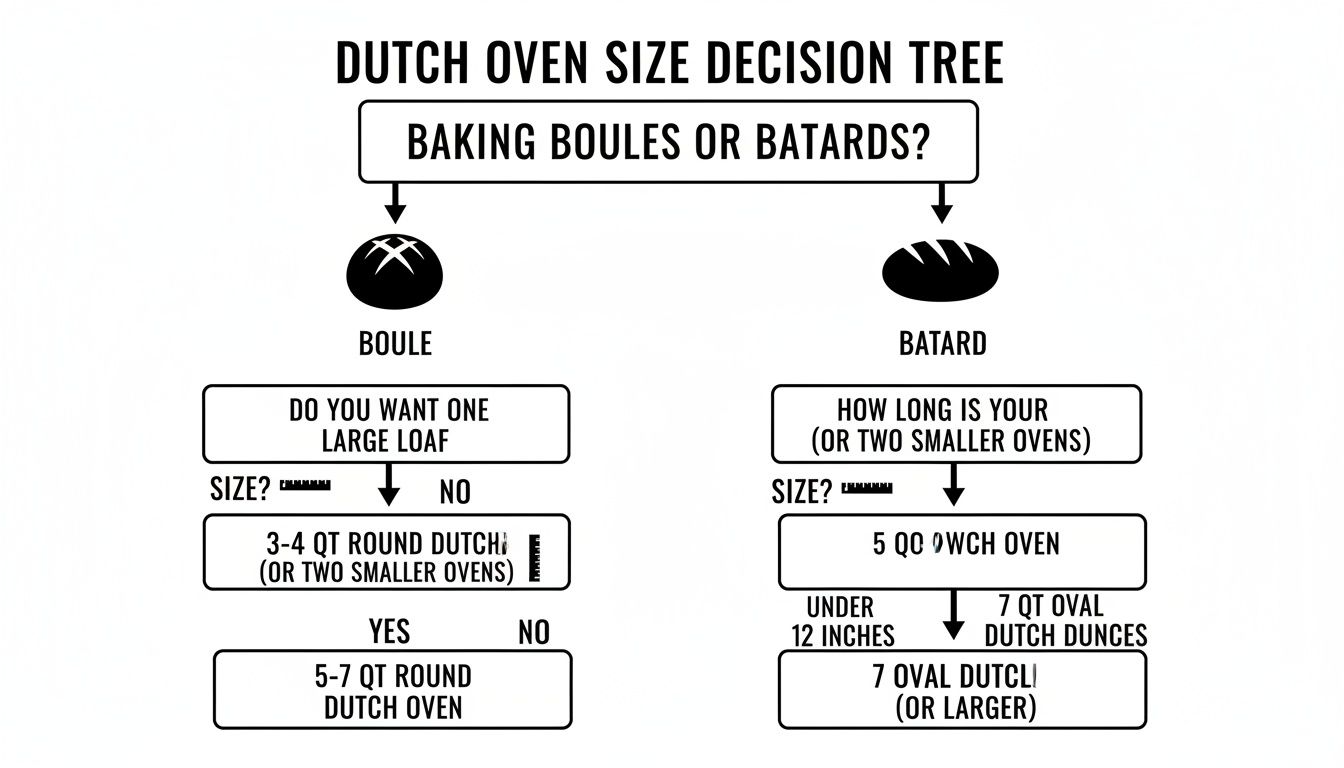
This visual guide makes it simple to choose between a classic round pot for boules or a longer oval pot for batards.
Sourdough Dutch Oven Material Comparison
To make the choice even clearer, let's put these materials head-to-head on the factors that matter most for sourdough.
| Feature | Enameled Cast Iron | Bare Cast Iron | Ceramic/Stoneware |
|---|---|---|---|
| Heat Retention | Excellent | Excellent | Good, but slower to heat |
| Maintenance | Low (soap & water safe) | High (requires seasoning) | Medium (hand-wash recommended) |
| Durability | Very durable, but enamel can chip | Extremely durable, almost indestructible | Fragile, can crack or shatter |
| Max Temperature | High, typically 500°F+ | Extremely high, no practical limit | Varies, often lower (check specs) |
| Non-Stick | Good, very low-stick surface | Excellent, once well-seasoned | Fair, depends on glaze |
| Versatility | Excellent, handles all foods | Good, but avoid acidic foods | Fair, best for lower temps |
Ultimately, enameled cast iron is the most balanced option for most people, but if you're a purist who doesn't mind the upkeep, bare cast iron is a fantastic choice.
Ceramic And Stoneware: The Niche Contender
Ceramic or stoneware pots are out there, and they do have their fans. Their biggest advantage is that they're much lighter than cast iron, which makes a real difference when you're moving a blazing-hot pot around. They heat up evenly, although they tend to take a bit longer to get up to temperature.
But for sourdough, the cons usually outweigh the pros. Ceramic is way more fragile than cast iron and can easily crack from thermal shock or an accidental drop. A lot of ceramic pots just aren't rated for the scorching 450-500°F temperatures you need for a good sourdough bake, so you absolutely have to check the manufacturer’s limits.
While they can be beautiful, ceramic Dutch ovens are generally a better fit for things like casseroles and stews. Their limitations in heat tolerance and durability make them a pretty specialized choice for a serious sourdough baker.
Top Dutch Oven Picks for Every Baker

Alright, we've talked materials, size, and the science of steam. Now it's time to name names. After sifting through a mountain of options, I've narrowed it down to the pots that truly deliver for sourdough—those with incredible heat retention, a rock-solid lid seal, and the guts to handle high temperatures bake after bake.
Instead of just a long, boring list, I’ve broken down my top choices into categories that match where you are in your baking journey. Whether you're a seasoned baker who wants the absolute best, a newcomer looking for serious value, or someone who needs a single pot to do it all, I've got a pick for you. These recommendations are all about connecting a specific feature to a real result, like a taller loaf or a shatteringly crisp crust.
Best Overall Performer: The Sourdough Specialist
If you're the kind of baker who refuses to compromise, then you need a Dutch oven built specifically for this job. This is the top tier—premium enameled cast iron, a perfectly sized 5.5-quart capacity, and a lid engineered to maximize steam circulation. These pots get screaming hot and stay that way.
The handles are usually wide and easy to grab, even with clumsy oven mitts, which is a big deal when you're wrestling a 500°F pot. The interior enamel is also tougher, built to resist the staining and thermal shock that sourdough baking puts it through. It's a serious investment, no doubt, but the flawless performance pays off with consistently gorgeous loaves, explosive oven spring, and a deeply caramelized crust every single time. This is the one you buy for life.
What really sets this category apart is the precision-milled lid. A perfectly fitted, heavy lid creates an almost hermetic seal, trapping every last wisp of steam as it escapes the dough. That creates a super-humid sauna for the first 20 minutes of baking—the secret to a lofty, open crumb and that crackling crust we all chase.
Best Budget Powerhouse: Maximum Performance for the Price
Here's the good news: you don’t have to drain your bank account to bake incredible sourdough. The best budget-friendly Dutch ovens give you the non-negotiables—heavy cast iron and a tight-fitting lid—without the fancy price tag. You'll often find these from direct-to-consumer brands or established names known for delivering value.
Most of these are in the 5 to 6-quart range and boast heat retention that can go toe-to-toe with their pricier cousins. The trade-offs usually come down to the little things. The enamel might not be quite as bulletproof over a decade of use, or you might need to swap out the standard lid knob for a metal one to make it truly high-heat safe.
But when it comes to pure baking results, these pots are absolute workhorses. They provide the steady, radiant heat and steam-trapping environment you need for a fantastic loaf. If you’re laser-focused on results and want the most bang for your buck, this category offers unbeatable value.
Versatile Value Pick: Excels at Bread and Beyond
For most of us, a Dutch oven has to pull double duty. This pick is for the home cook who needs a pot that can go from baking bread to simmering stews, braising short ribs, or making a big batch of soup. The best versatile option is typically an enameled cast iron pot between 6 and 7 quarts, giving you a bit more room for those other kitchen projects.
It still performs beautifully for sourdough, providing the heat and steam required for a great crust and crumb. The key here is its balanced design. It’s heavy enough for bread but not so massive that you dread pulling it out for a weeknight chili. Plus, the light-colored interior makes it easy to see what you're doing when searing meat—a small detail often missing in bread-focused pots.
While it might not have the hyper-specialized design of the top performer, its ability to bake a perfect boule on Sunday and slow-cook a pot roast on Tuesday makes it an incredibly smart buy. This is the one to get if you can only have one pot and you need it to do everything well.
Getting the Most Out of Your Dutch Oven
Having the right Dutch oven is a great start, but learning how to use it is where the magic really happens. A little bit of care will make your pot last a lifetime, and mastering a few key baking techniques will give you that bakery-quality loaf you're after, right from your very first bake.
How you care for your pot comes down to what it's made of. For enameled cast iron, cleanup is a breeze. Just let it cool down completely, then wash it with warm, soapy water. If you're working with bare cast iron, skip the soap—it can strip away that precious seasoning you've built up. Instead, scrape out any stuck-on bits, rinse it with hot water, and dry it immediately on the stovetop to keep rust away.
Mastering Your Sourdough Bake
The secret to a fantastic sourdough loaf boils down to a few critical steps. Follow this process, and you'll consistently pull a tall, beautifully crusted loaf from your oven.
- Get It Screaming Hot: Place your empty Dutch oven, lid and all, into a cold oven. Then, preheat everything together to 450-500°F (232-260°C). Give it a good 45 to 60 minutes to make sure the pot is completely saturated with heat. This intense heat is what gives your dough that explosive initial rise, or "oven spring."
- Load Your Dough Safely: Carefully pull that scorching-hot pot out of the oven. The easiest and safest way to get your dough inside is with a parchment paper sling. Just place your dough on a sheet of parchment, score the top, and use the paper's edges as handles to gently lower it into the pot.
- The Two-Stage Bake: Pop the lid back on and bake for 20-25 minutes. This traps all the steam released from the dough, creating a humid environment that lets the loaf expand to its full potential. After that, carefully take off the lid and bake for another 20-25 minutes. This second, uncovered phase is all about developing a deep, golden-brown crust that's crisp and crackly.
The number one enemy of any Dutch oven is thermal shock. Never, ever plunge a hot pot into cold water. This can cause ceramic to crack and enamel to chip right off. Always let your Dutch oven cool to room temperature before you even think about washing it.
Avoiding Common Baking Mistakes
To nail your bake every single time, keep an eye out for a couple of common issues. First, check the knob on your lid. Many of the standard phenolic (plastic-like) knobs are only rated up to about 400°F and can melt at higher temperatures. It's a good idea to swap it out for a metal one.
Also, remember that a Dutch oven gets the bottom of your loaf cooking fast. If you find your bottoms are getting a little too dark, you're not alone. You can find more tips on getting it just right in our guide on baking bread in cast iron.
If you're really serious about taking your skills to the next level, a dedicated baking masterclass can be a great way to hone your technique. With the right know-how and a little practice, your Dutch oven will quickly become your most trusted baking partner.
Sourdough Dutch Oven FAQs
Even after you've narrowed down your choices, a few questions always pop up. Let's tackle some of the most common ones I hear from bakers so you can feel confident with your new Dutch oven.
Can I Bake Sourdough in an Oval Dutch Oven?
You absolutely can. In fact, if you prefer baking longer loaves—what bakers call a batard—an oval Dutch oven is your best friend.
The shape gently supports the dough, encouraging that beautiful upward spring, just like a round pot does for a classic boule. All the core baking principles—intense, even heat and that critical trapped steam—work exactly the same.
What Is the Highest Temperature My Dutch Oven Can Handle?
Most quality cast iron Dutch ovens, whether they're bare or enameled, can take the heat. They're typically rated for 500°F (260°C) or even higher, which is more than enough for sourdough.
The real weak point is often the knob on the lid. Always double-check the manufacturer's specs. Those black phenolic (plastic-like) knobs usually have a lower heat limit and should be swapped out for a metal one if you plan on doing high-heat bread baking.
A quick trip to the hardware store for a stainless steel knob is a cheap and easy upgrade. It gives you peace of mind, ensuring every single part of your pot can handle the intense temperatures needed for that perfect, crackly crust.
Do I Need to Use Parchment Paper for Sourdough?
It's not strictly necessary, especially if your pot is well-seasoned or has a good enamel coating, but I almost always recommend it.
Parchment paper makes life so much easier for two reasons:
- Safety and Handling: It acts as a sling, letting you lower your delicate, proofed dough into a screaming-hot Dutch oven safely and without deflating it.
- Sticking Insurance: It’s a foolproof way to guarantee your beautiful loaf won’t stick to the bottom. This makes cleanup a breeze.
Are There Good Alternatives to a Dutch Oven?
While the Dutch oven is the gold standard for many home bakers, you can definitely get fantastic results with other tools.
Things like a heavy, oven-safe stockpot with a tight lid, a purpose-built bread cloche, or a specialized baker like the Challenger Bread Pan work wonders. The non-negotiable part is finding a vessel that can be safely preheated to a blistering temperature and can trap steam like a sauna for the first half of the bake.
At Cookware Review Hub, we're here to help you find the right tools for all your kitchen adventures. Check out our other guides to make every meal a success. https://www.cookwarereviewhub.com