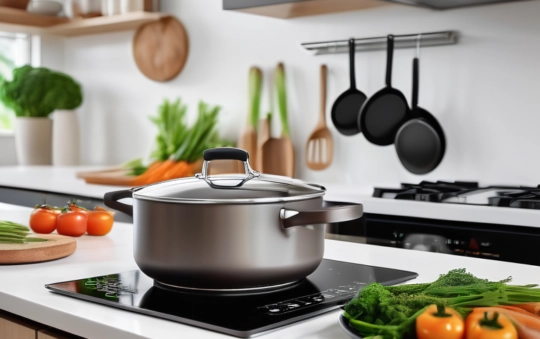
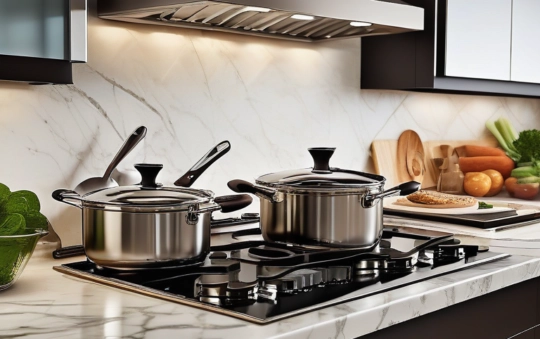
Any pot or pan with a magnetic base is your golden ticket for induction cooking. If you've got cast iron, magnetic stainless steel, or enameled cast iron, you're already in great shape. These materials are perfect partners for an induction cooktop's electromagnetic field, letting them heat up incredibly fast and efficiently.
Now loading...
Your Quick Guide to Induction-Ready Cookware
 | COOKSMARK 10 Piece Hammered Copper Cookware Set with Nonstick Coating, Induction Pots and Pans Set Dishwasher Safe Now loading... |
Jumping into the world of induction cooking can feel like learning a new language, but the main idea is actually pretty straightforward. Unlike traditional gas or electric stoves that heat up a burner, an induction cooktop creates a magnetic field. When you pop a compatible pan on top, this field makes the pan itself the source of heat.
Think of it as a magnetic dance. The cooktop leads, but only a magnetic partner—your pan—can join in. This direct connection is exactly why induction is famous for its speed and pinpoint temperature control. Materials like aluminum, glass, or copper just can't get on the dance floor because they don't have the magnetic properties needed to complete the circuit.
Why Material Matters
Choosing the right material is hands-down the most important decision you'll make when shopping for induction cookware. It's the material that decides how quickly your pan heats up, how evenly it spreads that heat, and how well it holds onto it for a perfect sear or a gentle simmer.
This move toward smarter cooking isn't just a niche trend; it's a major shift happening in home kitchens everywhere. The global induction cookware market was valued at a whopping USD 2.54 billion in 2023 and is set to grow even more, showing just how much people are leaning into energy-efficient cooking. If you're curious about the numbers, you can read the full research on induction cookware growth.
The easiest way to check if a pan will work is the good old magnet test. If a regular fridge magnet sticks firmly to the bottom of the pan, you're good to go. It's that simple.
Induction Cookware Materials at a Glance
To make your decision a little easier, I've put together a quick comparison of the most popular induction-friendly materials, laying out their strengths and weaknesses.
Table: Induction Cookware Materials at a Glance
| Material | Best For | Pros | Cons |
|---|---|---|---|
| Magnetic Stainless Steel | All-purpose cooking, from searing to simmering. | Durable, non-reactive, easy to clean. | Can have hot spots if not multi-clad. |
| Cast Iron | Searing, frying, and slow cooking. | Excellent heat retention, naturally nonstick when seasoned. | Heavy, slow to heat, requires maintenance. |
| Enameled Cast Iron | Braising, stewing, and baking. | Great heat retention, easy to clean, no seasoning needed. | Heavy, expensive, enamel can chip. |
| Carbon Steel | High-heat searing, stir-frying, and sautéing. | Heats quickly, lightweight, very durable. | Requires seasoning, can rust if not cared for. |
This table should give you a solid starting point for figuring out what fits your cooking style best. For a more tailored look at items that might suit your kitchen, feel free to explore a dedicated collection of kitchen and cooking essentials.
How Induction Cooking Actually Works
Ever wondered what’s happening inside that sleek, flat induction cooktop of yours? It’s not magic, but it is a pretty cool bit of science that turns your kitchen into a high-efficiency cooking zone. Forget the dense physics textbook explanation; it’s easier to think of it as a magnetic dance between your stovetop and your pan.
Unlike traditional gas or electric stoves that have to heat a burner first and then slowly transfer that heat to your pot, induction is much more direct. The cooktop itself never gets screaming hot. Instead, it generates a powerful electromagnetic field just beneath its glass surface.
This is where your cookware choice becomes absolutely critical. When you place an induction-compatible pan—one with a magnetic base—onto the cooktop, it enters this magnetic field and completes an electrical circuit.
This whole process is called electromagnetic induction. It creates tiny, swirling electrical currents (known as eddy currents) that flow directly within the base of your pan. The pan’s own electrical resistance fights against these currents, and that friction is what generates instant, powerful heat.
In short, the pan becomes the heat source, not the stovetop.
The Key Is Ferromagnetism
 | Caraway Nonstick Ceramic Cookware Set (12 Piece) Pots, Pans, 3 Lids and Kitchen Storage - Non Toxic, PTFE & PFOA Free - Oven Safe & Compatible with All Stovetops (Gas, Electric & Induction) - Cream |
So, what makes a pan "compatible"? It all boils down to a property called ferromagnetism.
That’s just a fancy way of saying the material contains iron or has a layer with strong magnetic properties. This is exactly why materials like cast iron and certain grades of stainless steel are the champs of the induction world.
On the other hand, materials like all-copper, aluminum, or glass just aren’t magnetic. Placing them on an induction cooktop is like trying to charge your phone with the wrong cable—nothing happens. The magnetic circuit can’t be completed, which means no electrical current, and therefore, no heat.
This infographic breaks down how the cooktop, pan, and heat all work together.

As you can see, the magnetic coil under the glass energizes the pan directly. Your cookware literally becomes the heating element, which is the secret to its incredible efficiency.
Why This Method Is a Game-Changer
Once you grasp this core principle, it’s easy to see why induction cooking runs circles around older methods. This direct-heating process is not only ridiculously efficient but also incredibly precise.
- Speed and Power: Because all the energy is pumped straight into the pan, water can boil up to 50% faster than on a gas or electric stove. There's zero time wasted waiting for a burner to warm up.
- Energy Efficiency: With traditional stoves, a ton of heat just escapes into the air around the pot. Induction cooking, however, transfers about 80-90% of its energy directly into the cookware. Gas and electric? They hover around 40-70%. That means less wasted energy and a much cooler kitchen.
- Unmatched Safety: The glass surface of the cooktop stays relatively cool. It only gets warm from the heat of the pan sitting on it, which dramatically slashes the risk of accidental burns. Plus, the moment you lift the pan, the burner automatically shuts off.
The real beauty of induction is its responsiveness. When you adjust the temperature, the change is instant. There’s no lag time waiting for a coil to cool down. You get the same immediate control chefs love about gas flames, but with digital precision.
This lightning-fast control lets you go from a rolling boil to a gentle simmer in a split second, saving countless sauces from breaking and pots from boiling over. It’s this triple threat of speed, safety, and precise control that makes understanding the "how" so important—it directly explains why induction is simply a superior way to cook.
Comparing Induction Cookware Materials

Picking the right cookware material isn't about finding one "best" option. It's more like matching the pan's personality to your own cooking style. Each material brings something different to the table, offering a unique blend of heating speed, heat retention, and maintenance.
Let’s walk through the top contenders so you can find the perfect partner for your kitchen adventures.
Stainless Steel: The All-Around Workhorse
There’s a reason magnetic stainless steel is one of the most popular choices for induction cooking. It’s tough, it’s non-reactive (so it won’t give your tomato sauce a metallic tang), and it’s pretty easy to clean up.
But where it really shines is in multi-clad construction. Think of these pans as a high-performance sandwich: a core of super-conductive aluminum or copper is pressed between layers of durable stainless steel. The outer layer is magnetic to work with the cooktop, while that inner core zips heat across the entire pan, killing the hot spots you get with cheaper, single-layer pans.
Key Takeaway: Multi-clad stainless steel gives you the best of both worlds—the durability of steel and the fantastic heat conduction of aluminum or copper. This makes it an amazing all-purpose choice for just about anything, from searing a steak to simmering a delicate sauce.
Cast Iron: The Searing and Heat Retention Champion
If you're after a pan that holds heat like nobody's business, cast iron is your answer. Once this heavyweight gets hot, it stays hot. This is exactly what you want for getting a deep, crusty sear on steaks, burgers, or anything else you want to brown beautifully.
But cast iron plays by its own set of rules. It heats up slowly and demands regular seasoning—the process of baking on thin layers of oil to create a natural nonstick surface. It's also heavy and can scratch a glass cooktop if you drag it, so always lift, don't slide.
Enameled Cast Iron: Beauty Meets Brawn
Enameled cast iron delivers the same incredible heat retention as its traditional sibling but with a huge perk: no seasoning required. The smooth enamel coating is a non-reactive barrier, making it a breeze to clean and perfectly safe for simmering acidic dishes like chili for hours.
This makes it the undisputed king of Dutch ovens, perfect for braises, stews, and even baking crusty artisan bread. The main trade-offs are its hefty weight and higher price tag. The enamel can also chip if you're too rough with it, so a little bit of care goes a long way.
Carbon Steel: A Chef's Secret Weapon
 | Blue Diamond Cookware Tri-Ply Stainless Steel Ceramic Nonstick, 6 Piece Cookware Pots and Pans Set, PFAS-Free, Multi Clad, Induction, Dishwasher Safe, Oven Safe, Silver |
Think of carbon steel as cast iron’s lighter, quicker cousin. Made of about 99% iron and 1% carbon, it gets screaming hot for a perfect sear just like cast iron, but it heats up and cools down much faster. That responsiveness gives you way more control, which is why it’s a fixture in pro kitchens.
Like cast iron, you’ll need to season carbon steel pans to build up their nonstick properties and keep rust at bay. But once you’ve got a good seasoning established, they are slick, durable, and a fantastic lightweight alternative for anyone who finds cast iron too cumbersome.
Modern Nonstick: Convenience and Control
Today’s induction-ready nonstick pans have come a long way. They’re usually built with a magnetic steel base fused to an aluminum body for fast, even heating. A high-quality, PFOA-free nonstick coating is then applied for that effortless food release and cleanup we all love.
These pans are your best friend for delicate foods like eggs, pancakes, and flaky fish. Their main weakness is durability; the coating will eventually wear down and doesn't play well with high heat or metal utensils. Think of them as a tool of convenience, not a "forever" pan like cast iron.
What About Copper?
Pure copper is a rockstar heat conductor, but it’s not magnetic, so it won’t work on an induction cooktop by itself. To get around this, manufacturers bond a magnetic steel plate to the bottom. Understanding the characteristics of a copper frying pan helps explain why this modification is so critical.
This hybrid approach gives you the beautiful responsiveness of copper with full induction compatibility. If you're curious about these stunning and high-performing pans, our complete guide to copper induction cookware has all the details.
Detailed Material Performance on Induction Stovetops
To help you visualize how these materials stack up, here’s a quick rundown of their performance on an induction cooktop.
| Material | Heat Response Speed | Heat Retention | Durability | Maintenance Level |
|---|---|---|---|---|
| Stainless Steel (Clad) | Very Good | Good | Excellent | Low to Medium |
| Cast Iron | Slow | Excellent | Excellent | High |
| Enameled Cast Iron | Slow | Excellent | Very Good | Medium |
| Carbon Steel | Excellent | Good | Excellent | High |
| Nonstick (Induction) | Excellent | Poor to Fair | Fair to Good | Low |
Each material has its own strengths. The best choice really comes down to what you cook most often and how you like to cook it.
Should You Buy a Set or Individual Pans

It’s the ultimate cookware dilemma: do you spring for a complete, matching set, or do you build your collection piece by piece? Honestly, there’s no single right answer here. The best path for you really boils down to your cooking style, your budget, and how much cabinet space you're working with. Both strategies have some serious perks.
Buying a set can feel like a fantastic shortcut, especially if you're setting up a new kitchen from scratch or finally ditching your old, mismatched pans. But on the flip side, curating your own collection lets you create a toolkit that's perfectly tailored to the way you actually cook. Let's dig into the pros and cons of each approach.
The Case for Buying a Cookware Set
Let's be real: buying a cookware set is almost always the most budget-friendly way to get started. When you buy everything together, the price-per-pan is significantly lower than picking them out one by one. You can often snag a quality 10-piece set for what you might pay for just three or four high-end individual pans. That’s instant value.
Beyond the savings, there’s the simple appeal of a cohesive look. Every piece matches, which brings a tidy, organized aesthetic to your kitchen. It also just makes shopping easier—one decision, and you’re equipped with nearly everything you need to start cooking right away.
A decent set will typically cover your bases with:
- A large stockpot for pasta, big batches of soup, or stews.
- One or two saucepans of different sizes for sauces, reheating leftovers, and cooking grains.
- A versatile skillet or sauté pan for everything from frying and searing to one-pan dinners.
This lineup handles the vast majority of everyday kitchen tasks, making it a brilliant starting point for most home cooks.
The Freedom of Buying Individual Pans
While sets are all about convenience, buying pans individually gives you total control and allows for specialization. This à la carte approach means you can mix and match materials based on what they do best. You aren't stuck with one type of pan for every single task.
For example, you could assemble a true powerhouse collection for your induction cooktop:
- A cast iron skillet because nothing beats its searing power.
- A multi-clad stainless steel sauté pan for its incredible heat control and versatility.
- A high-quality nonstick skillet reserved specifically for delicate foods like eggs and fish.
- An enameled cast iron Dutch oven for those perfect slow-cooked braises and hearty stews.
This strategy ensures you have the absolute best tool for each specific job. Over time, you can also add specialty pieces that most sets don't include, like a wok or a griddle. Building your collection slowly also helps spread the cost out, making it more manageable to invest in truly top-tier pieces without a huge upfront hit to your wallet.
The piece-by-piece approach is all about intentionality. Every pan in your kitchen has a specific purpose, chosen to make a certain type of cooking better. Your toolkit becomes optimized for performance, not just for matching handles.
If you want to see how a high-end brand thinks about its collections, check out our guide on Miele induction cookware. It’s a great example of premium, purpose-driven design.
Ultimately, the choice is yours. A set is a practical and economical decision, perfect for outfitting a new kitchen or for cooks who want a solid, all-purpose foundation. But if you’re a passionate cook who geeks out on having the perfect tool for every technique, thoughtfully building your own collection is easily the most rewarding way to go.
Keeping Your Induction Cookware Performing Its Best

You've just made a serious investment in your kitchen, and a little TLC will go a long way in protecting it. Proper maintenance isn’t just about keeping your pans looking brand new; it's about making sure they deliver consistent, reliable performance every time you fire up that cooktop.
Each material has its own quirks and needs. Once you learn the right techniques—from seasoning cast iron to gently cleaning nonstick coatings—you'll dramatically extend the life of your pans and keep them in peak condition for years.
Mastering Cast Iron and Carbon Steel Seasoning
For cast iron and carbon steel, seasoning is everything. It’s the secret sauce. The process involves baking thin layers of oil onto the pan’s surface, creating a durable, naturally nonstick finish that genuinely gets better the more you cook with it.
To build and maintain that coveted cooking surface:
- Clean After Use: Once you're done cooking, wash the pan with hot water and a gentle brush. Try to avoid harsh soaps, as they can strip away all your hard work.
- Dry Thoroughly: Immediately towel-dry the pan completely to prevent rust from forming. I like to place it back on the cooktop over low heat for a minute just to be sure every last drop of moisture has evaporated.
- Apply a Thin Oil Layer: While the pan is still warm, rub a very thin coat of a neutral oil (like grapeseed or canola) all over the surface with a paper towel, then wipe away any excess.
This simple ritual protects the pan and builds that beautiful, slick surface chefs rave about.
Keeping Stainless Steel Gleaming
 | Country Kitchen Nonstick Induction Cookware Sets - 11 Piece Nonstick Cast Aluminum Pots and Pans with BAKELITE Handles - Induction Pots and Pans with Glass Lids (Navy) |
Stainless steel is the workhorse of most kitchens, but it can develop stubborn stuck-on food or that weird, rainbow-like discoloration over time. The key is cleaning it effectively without scratching up the surface.
For tough food residue, please, step away from the steel wool. Instead, try deglazing the pan with a bit of water while it's still warm, or just let it soak with warm, soapy water. For discoloration or stubborn spots, a paste made from Bar Keepers Friend and water works like magic to restore its original shine.
One of the biggest enemies of any induction pan is thermal shock. Never, ever plunge a screaming hot pan into cold water. This sudden temperature change can cause the flat bottom to warp, completely ruining its contact with the cooktop and leading to massive hot spots.
Preserving Your Nonstick Surfaces
Nonstick pans require the most delicate touch of all. Their coatings are fragile and can be easily damaged by high heat and the wrong tools, which can quickly make them useless.
Follow these simple rules to protect your nonstick investment:
- Avoid High Heat: Extreme temperatures can break down nonstick coatings and even release fumes. Stick to low or medium heat settings.
- Use the Right Tools: Always reach for wood, silicone, or plastic utensils. Metal spatulas and whisks will scratch and destroy the surface in a heartbeat.
- Hand Wash Gently: Skip the dishwasher. The intense heat and harsh detergents are brutal on nonstick surfaces. A gentle wash with a soft sponge is all it needs.
By following these material-specific tips and steering clear of common mistakes like thermal shock and abrasive cleaners, you can make sure your cookware performs beautifully every single time.
Your Smart Shopper's Checklist
Alright, you're almost ready to head to the store or start browsing online. Before you do, let's run through one last checklist. Think of this as your secret weapon for spotting top-notch, induction-ready pans and sidestepping the ones that will leave you with a cold stovetop.
Armed with a little know-how, you can walk in with the confidence of a seasoned pro. We'll cover the simple, one-second magnet test, the key details that signal a quality pan, and how to pick the perfect cookware for your kitchen.
The One-Second Magnet Test
This is it. Before you even glance at the price tag, do this foolproof test. It’s the single easiest and most reliable way to know if a pot or pan will work on your induction cooktop, whether you're in a store or just checking the pans you already own.
Grab a simple refrigerator magnet and try to stick it to the very bottom of the cookware.
- If the magnet clamps on tight: You're golden. The pan is induction-ready. That strong pull means it has the ferromagnetic base your cooktop needs to work its magic.
- If the magnet is weak or falls right off: Leave it on the shelf. This pan doesn't have the right stuff and simply will not heat up on an induction surface.
This little trick cuts straight through any confusing packaging symbols or marketing fluff. A strong magnetic pull is the only proof you need.
What to Look for in a Quality Pan
Beyond the magnet test, a few construction details separate the good pans from the great ones. A well-made pan heats more evenly, lasts for years, and is just plain more enjoyable to use.
A pan’s base is everything in induction cooking. You're looking for a thick, heavy, and perfectly flat bottom. A flat base guarantees maximum contact with the cooktop’s magnetic field, which means faster, more efficient heating and no frustrating hot spots.
Here are a few other markers of quality to keep an eye out for:
- Solid Construction: The pan should feel substantial and balanced in your hand, never flimsy. For multi-ply cookware, see how different layers boost performance in this guide to 5-ply stainless steel cookware.
- Comfortable Handles: Check for handles that are securely riveted or welded to the pan body. They should feel good to grip—even with an oven mitt—and ideally be made from a material that stays cool on the stovetop.
- Well-Fitting Lids: Lids should sit snugly to trap heat and moisture. A tempered glass lid is a fantastic bonus, as it lets you keep an eye on your food without letting all the heat escape.
Matching Cookware to Your Needs
Ultimately, the "best" cookware is a personal choice. Your ideal set depends on your budget, what you love to cook, and even how much cabinet space you're working with.
Specific Recommendations for Different Scenarios
| Your Situation | Recommended Cookware | Why It Works |
|---|---|---|
| On a Tight Budget | A single cast iron skillet | This is the ultimate workhorse. A well-seasoned cast iron pan is incredibly versatile and affordable, handling everything from searing steaks to baking cornbread. |
| Outfitting a Gourmet Kitchen | Multi-clad stainless steel set | You get superior heat control, incredible durability, and professional-level performance for everything from delicate sauces to a perfect, crusty sear. |
| Living in a Small Apartment | A 10-inch nonstick skillet and a 3-quart saucepan | This mighty duo covers most daily cooking tasks—from morning eggs to weeknight pasta—without gobbling up precious cabinet space. |
By using the magnet test, checking for solid construction, and thinking about your own cooking style, you’ll be able to choose the perfect cookware for your induction kitchen with total confidence.
Common Questions About Induction Cookware
Once you get the hang of how induction cooking works, you might still have a few questions floating around. That's totally normal when you're switching to a new way of cooking in your kitchen.
To help you get comfortable, we've rounded up some of the most common questions people ask about induction cookware. The goal here is to give you clear, simple answers so you can fire up that cooktop with total confidence.
Can I Use My Old Cookware on an Induction Cooktop?
This is the big one, and the answer is refreshingly simple: only if it's magnetic. Induction technology absolutely needs that magnetic connection to create heat. The easiest way to know for sure is with the magnet test we talked about earlier.
Just grab a fridge magnet and see if it sticks to the bottom of your pot or pan.
- If it sticks securely, you're in business. Your cookware is ready for induction.
- If it doesn’t stick at all, it won't work. Materials like all-aluminum, copper, or glass just aren't magnetic.
- If the stick is weak, you'll probably get pretty poor performance, with frustratingly slow or patchy heating.
Will Induction Cookware Scratch My Glass Stovetop?
Any heavy pan has the potential to scratch a glass-ceramic surface if you drag it, especially if there are little salt crystals or crumbs underneath. This is a common concern with heavier materials like cast iron.
The best defense is simple: always lift your cookware instead of sliding it. Keeping both the cooktop and the bottom of your pans clean and free of debris is the easiest way to prevent accidental damage.
Ever hear a buzzing or humming sound, especially on high power? That's completely normal with induction cooking. The noise comes from the high-frequency vibrations of the electromagnetic field interacting with the layers in your pan. Heavy, solid pans like cast iron are often much quieter than lighter, multi-layered ones.
Is Induction Cooking Better Than Gas?
 | Hestan - CopperBond Collection - 100% Pure Copper 10-Piece Ultimate Cookware Set, Induction Cooktop Compatible |
This really comes down to what you care about most in the kitchen. When it comes to speed, energy efficiency, and safety, induction is the undisputed champ. It boils water much faster, gives you incredibly precise temperature control, and the cooktop surface stays much cooler to the touch.
That said, a lot of chefs and home cooks really love the visual feedback of an open flame and the ability to char things directly over it. The "better" option is truly a matter of personal cooking style and what you prioritize in your kitchen.
What Happens if I Use the Wrong Pan?
Don't sweat it—you won't break anything. If you place a non-magnetic pan on an induction burner and turn it on, nothing will happen. It's as simple as that.
Most modern induction cooktops are smart enough to detect whether a compatible pan is present. If they don't find one, they simply won't activate the magnetic field. You'll usually see an error code or a blinking light before the burner shuts off automatically.
At Cookware Review Hub, we're dedicated to helping you make smarter choices in the kitchen. For more expert reviews and buying guides, explore our resources at https://www.cookwarereviewhub.com.