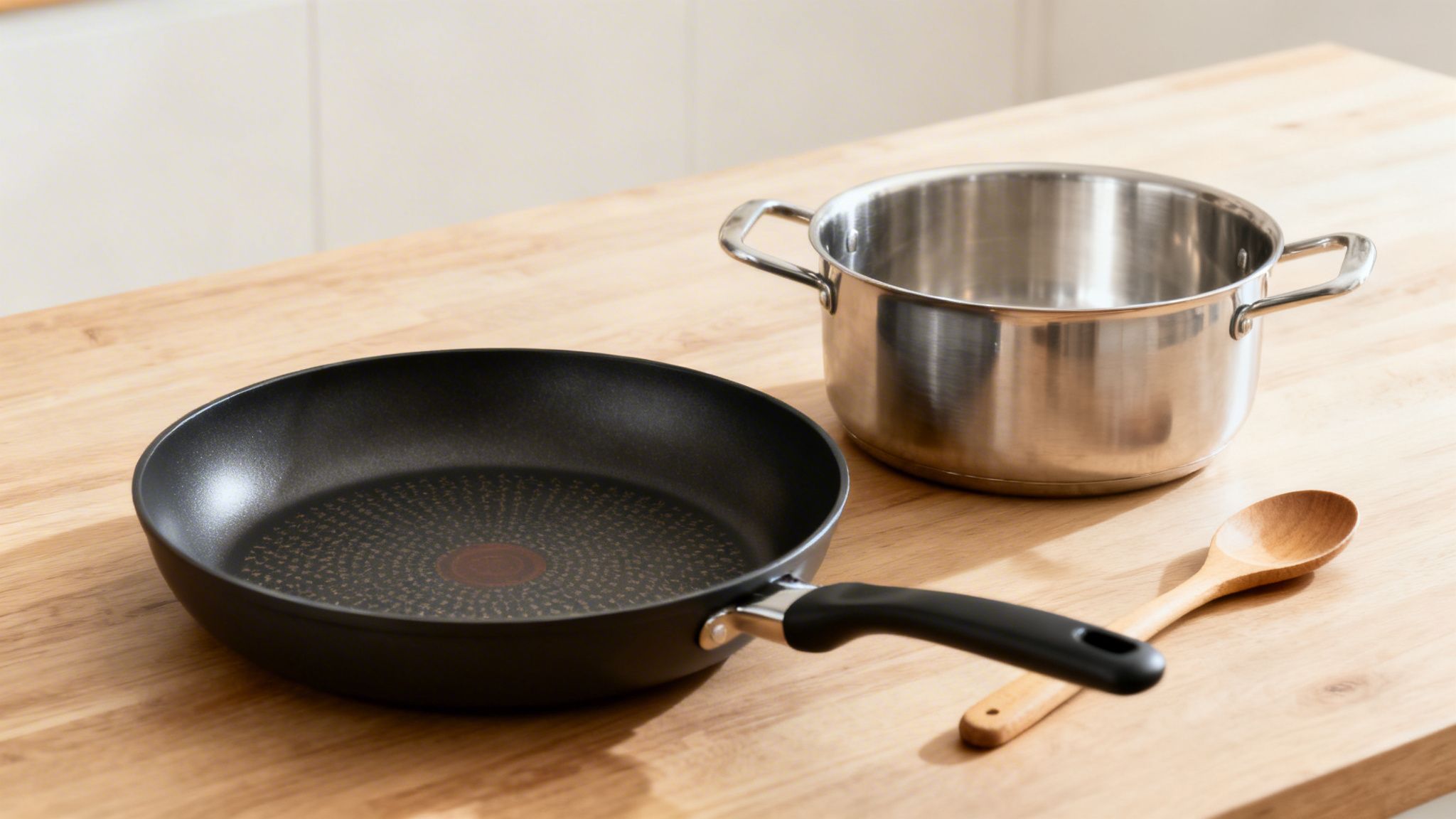
If you're just starting out, the best thing you can do is keep it simple. You really only need two core pieces to get going: a 10-inch nonstick skillet for foolproof eggs and a 3-quart stainless steel saucepan for just about everything else. Forget those huge, expensive sets for now. Focus on these two workhorses to build your skills without cluttering your kitchen.
Now loading...
Your First Steps In The Kitchen: A Simple Start
Now loading...
Stepping into a kitchen supply store can be completely overwhelming. The endless aisles of gleaming pots and pans all promise perfect results, and it's enough to make any new cook want to run for the nearest takeout menu.
But here’s the good news: you don't need a massive, 12-piece set to start cooking great food.
In fact, the most common mistake beginners make is buying way too much, way too soon. You end up with a cabinet full of specialized pans you'll rarely touch, which is a waste of both money and precious kitchen space. The smarter approach is to think like a chef building a toolkit—start with a few versatile, high-quality pieces you’ll use every single day.
Building Your Foundation
The goal here is to set yourself up for success from day one. By starting with just one or two pans, you can get a real handle on basic techniques like sautéing, simmering, and searing without getting confused. It makes learning to cook feel manageable and, most importantly, fun.
A reliable nonstick pan takes the fear out of cooking delicate foods, while a sturdy saucepan can handle everything from pasta and rice to soups and sauces. Believe it or not, these two items will cover over 80% of the recipes you'll likely want to try. Once your skills and curiosity grow, you can thoughtfully add more specialized pieces to your collection.
Starting simple is the secret to building lasting kitchen confidence. Master the essentials first, and you'll naturally learn which tools you need next.
To make that first choice even easier, it helps to understand the basic materials. Each one has its own personality and strengths, and knowing the difference will point you toward the right tool for the job.
This quick overview breaks down the most popular options, giving you a simple cheat sheet for your first shopping trip.
Beginner Cookware Materials At a Glance
| Material | Best For | Beginner Friendliness | Average Price |
|---|---|---|---|
| Nonstick | Eggs, pancakes, delicate fish | Easiest (very forgiving) | $ |
| Stainless Steel | Searing, sauces, all-purpose | Moderate (requires preheating) | $$ |
| Cast Iron | Searing, frying, baking | Harder (needs seasoning) | $ |
| Carbon Steel | Stir-frying, high-heat searing | Harder (needs seasoning) | $$ |
Think of this table as your starting point. Nonstick is your best friend for no-fuss cooking, while stainless steel is the versatile all-rounder you'll grow with. Cast iron and carbon steel are fantastic, but they do require a bit more care to get the hang of.
Decoding Cookware Materials: The Core Four
Think of your cookware like a team of all-stars. You wouldn't put your best slugger in goal, right? It’s the same in the kitchen. Understanding the unique talents of the four core cookware materials—stainless steel, nonstick, cast iron, and carbon steel—is the secret to picking the right tool for the job. This knowledge is what turns a beginner into a cook who feels truly in control.
Let's break down each material so you can build your kitchen's dream team.
Stainless Steel: The Dependable Workhorse
If you could only have one type of cookware, stainless steel would be it. It’s the ultimate all-rounder, loved for its incredible durability, even heating, and non-reactive surface. That last part is key—it means you can simmer a big pot of tomato sauce or a wine-based pan sauce for hours without it picking up a metallic taste. This do-it-all nature is why it’s the cornerstone of both pro kitchens and home setups.
For anyone just starting out, stainless steel is the undisputed MVP, and the market numbers back it up. In 2025, stainless steel cookware claimed a massive 34.12% share of the global market, beating out materials like aluminum and ceramic. This isn't just hype; it's because stainless steel can handle screaming hot temperatures without warping, works on any cooktop including induction (now found in 67% of U.S. households), and can genuinely last a lifetime. You can get more details from this global cookware market analysis.
You'll often hear the term "cladding" when shopping for stainless steel. This just means a core of a super-conductive metal like aluminum is sandwiched between layers of tough stainless steel. It’s the perfect marriage: you get the fast, even heating of aluminum with the strength and clean surface of steel.
Best For:
- Searing steaks and chicken to get that perfect, golden-brown crust (that’s the Maillard reaction in action).
- Building flavorful pan sauces right after searing by deglazing the pan.
- Simmering acidic sauces, soups, and chilis without any weird aftertaste.
Nonstick: The Forgiving Specialist
For a new cook, a nonstick pan is a huge confidence booster. Its slick surface is built for one thing: to release food without a fight. This makes it your best friend for delicate foods that love to stick, like scrambled eggs, pancakes, and flaky fish fillets.
The secret to a long-lasting nonstick pan is treating it with a little TLC. Always steer clear of metal utensils that can scratch the coating, and avoid super high heat, which can cause the surface to break down over time. A quick hand-wash is always the best way to keep it in prime condition.
Think of a nonstick pan as a specialist tool. It's unbeatable for its specific job, but it's not designed to be an all-purpose workhorse like stainless steel.
Cast Iron: The Heat Powerhouse
There's a reason cast iron is a legend in the kitchen. This dense, heavy pan is an absolute beast when it comes to heat retention. Once a cast iron skillet gets hot, it stays hot. That steady, intense heat is what creates a deep, crusty sear on a steak and gives cornbread its signature crispy edges.
The trade-off for that incredible performance is a bit of maintenance. Cast iron needs to be "seasoned"—a simple process of baking on thin layers of oil to create a natural, slick cooking surface. This seasoning layer gets better with every use, and a well-cared-for skillet can be passed down for generations. It might sound like a lot of work, but the process is surprisingly simple and completely worth it for the results you'll get.
Best For:
- Getting a deep, flavorful sear on steaks, chops, and burgers.
- Frying chicken to crispy, golden-brown perfection.
- Baking skillet cornbread, giant cookies, and even pizzas.
Carbon Steel: The Lighter Cousin
Carbon steel is what you get if cast iron and stainless steel had a baby. It has cast iron's ability to get ripping hot and develop a fantastic seasoned surface, but it's much lighter and reacts to temperature changes more quickly. This agility is why it’s a staple in restaurant kitchens, where chefs are constantly flipping and tossing food.
Just like cast iron, carbon steel pans need seasoning to unlock their true potential. They shine in high-heat cooking methods where you need to move the pan around a lot, like making a stir-fry or searing scallops. As you start to expand your kitchen toolkit, a carbon steel pan is a phenomenal addition. For a deeper dive into how these materials stack up against each other, our detailed cookware materials comparison offers more insight.
By understanding these four core players, you’re no longer just buying a pan; you’re choosing the right tool for the job. This is the first major step toward finding the perfect cookware for your kitchen and cooking with confidence.
Cookware Sets Vs. Buying Individual Pieces
You’ve got a handle on the materials, and now you’ve hit the classic kitchen crossroads every new cook faces: should you buy a complete cookware set or build your collection piece by piece?
It’s a bit like deciding between a pre-packaged meal kit and shopping at the farmer’s market. One gives you convenience and a coordinated look right out of the box. The other offers total control over quality and lets you pick exactly what you need.
Each path has its perks, and the right choice really boils down to your cooking style, budget, and how much cabinet space you're working with. Let's walk through both approaches so you can figure out what fits you best.
The Case for Cookware Sets
Buying a cookware set is like getting a starter toolkit in one go. Everything matches, it’s almost always cheaper per piece than buying individually, and you’re instantly equipped with a range of pans for different jobs. This can be a huge relief if you’re setting up a kitchen from scratch and just want to get cooking without overthinking every single purchase.
But that convenience comes with a trade-off. Many sets are padded with pieces you might rarely, if ever, use. Think about that tiny 1-quart saucepan or an extra-large skillet that’s just too big for your typical Tuesday night dinner. You might also get stuck with a nonstick stockpot when a more durable stainless steel version would have been a better long-term investment.
A cookware set buys you convenience and immediate capability, but you trade some control over the quality and type of each individual piece.
The Power of Buying A La Carte
The other route is to purchase your cookware one piece at a time. This “a la carte” method lets you be super strategic and intentional with every pan you bring into your kitchen. You can splurge on a high-performance nonstick skillet for perfect eggs while saving money on a simple, no-frills stockpot just for boiling pasta.
This approach ensures that every pan in your cabinet is one you genuinely need and will actually use. It lets you mix and match materials based on what they do best—a cast iron skillet for searing, a stainless sauté pan for sauces, and maybe a carbon steel wok for stir-fries down the line. It might take longer to build your collection and could cost more overall, but you end up with a curated toolkit that’s perfectly suited to how you cook.
This decision tree can help you visualize which path might be better for you based on what you value most in the kitchen.
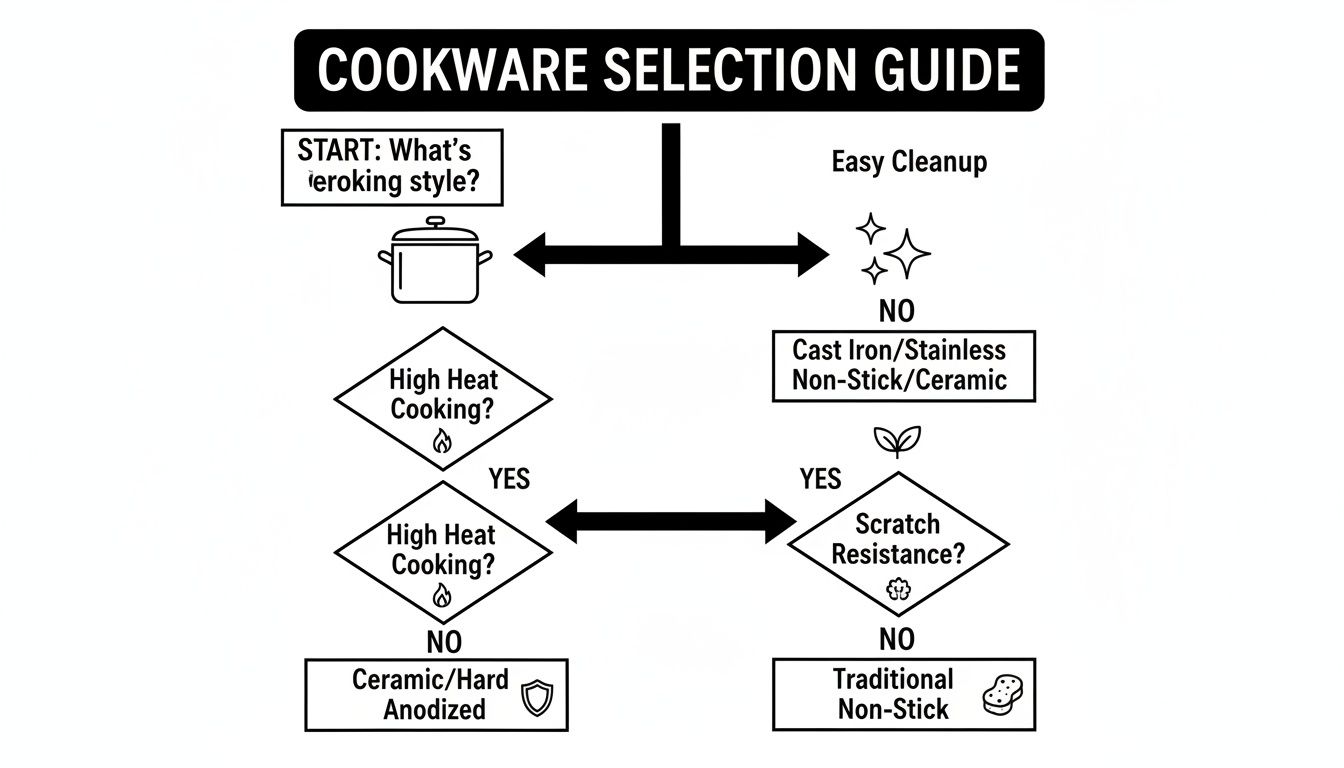
As the flowchart shows, if your main priority is easy cleanup for everyday cooking, the path often leads toward nonstick or ceramic options—something to keep in mind for your first few key pieces.
Making the Right Decision for You
So, which path is better? Honestly, there’s no single right answer. But you can get to your right answer by asking yourself three simple questions:
How much do I cook now? If you’re a true beginner who only cooks occasionally, a small, high-quality set can be a great starting point. But if you already have some experience and know you love making certain dishes, buying individual pieces is probably the smarter move.
What’s my budget? Sets often give you a better upfront value, packing more pieces in for your money. Buying individually lets you spread the cost out over time, so you can invest in one great pan every few months instead of all at once.
How much storage space do I have? A 12-piece set can quickly swallow up the cabinet space in a small kitchen. Buying only the essentials ensures you won't waste precious real estate on pans you don’t actually need.
If you are leaning towards a set, our guide to the best cookware set can help you find one that's packed with useful pieces, not fluff.
Ultimately, choosing between a set and individual pieces is about balancing convenience with customization. Both are valid ways to build a great kitchen, but the most functional kitchens are always built with a little bit of intention.
The 4 Essential Pans Every Beginner Needs
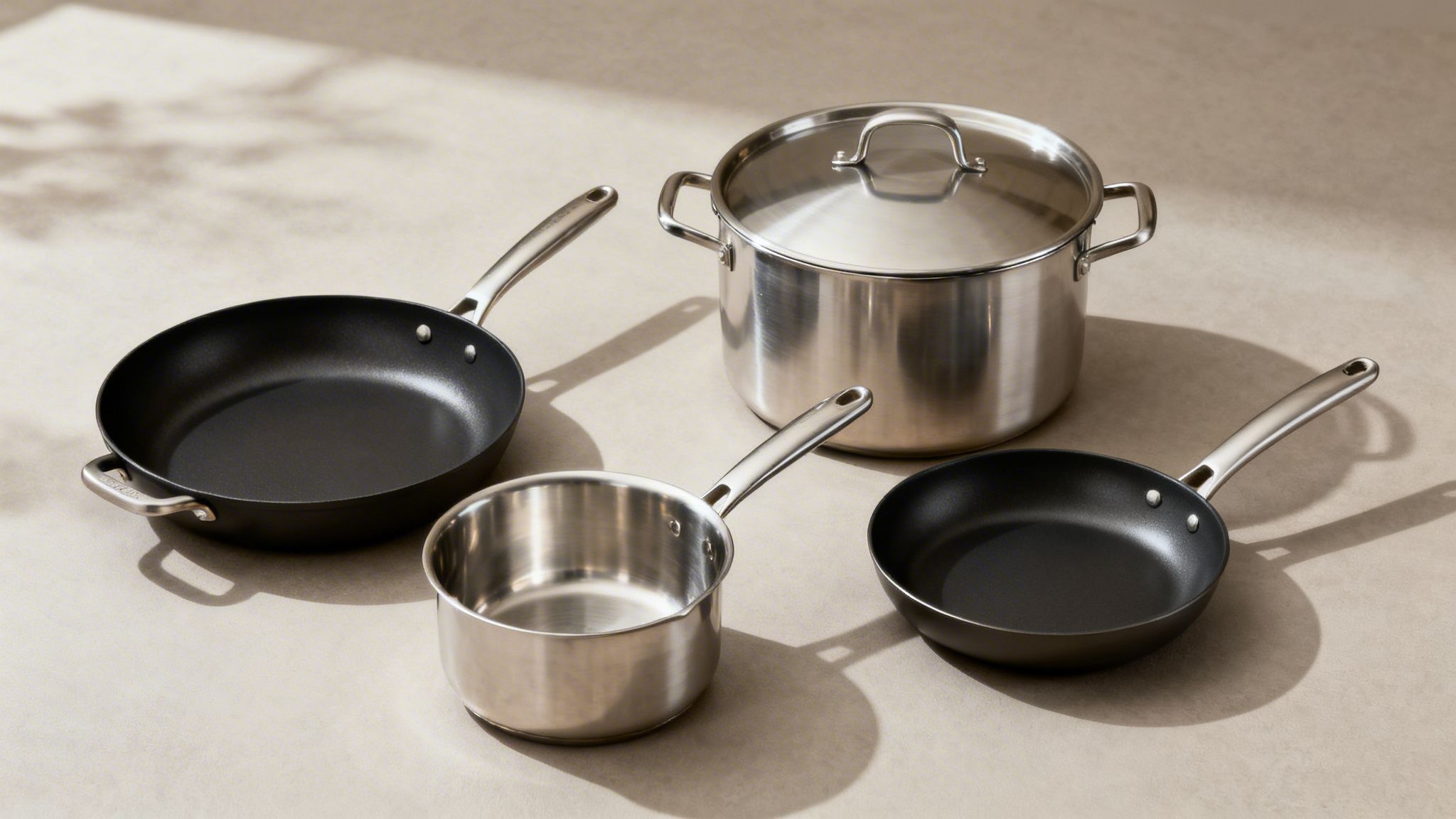
If you’ve decided to build your kitchen piece by piece instead of buying a massive set, you're already cooking with gas. Going "a la carte" means every single pan you own has a purpose, saving you from cluttered cabinets and wasted cash. The real question is, where on earth do you start?
With just four foundational pieces, you can confidently tackle pretty much any recipe you find. These are the versatile, everyday workhorses that will form the backbone of your kitchen. By starting with these essentials, you’ll have a powerful, minimalist setup that will serve you well for years to come.
The Do-It-All Nonstick Skillet
First up, you need a 10-inch nonstick skillet. Think of this as your daily driver, especially for breakfast and delicate foods. Its slick surface is a safety net for new cooks, making it incredibly forgiving for anything that loves to stick. Perfect, slide-out omelets, fluffy pancakes, and beautifully seared fish are all made simple with a good nonstick pan.
There's a reason nonstick is a beginner's best friend—it holds a massive 54.0% market share for a reason. It makes cleanup a breeze and cuts down on the amount of oil you need, which is a huge confidence booster when you're just finding your footing in the kitchen.
When you're shopping, look for one with a comfy, heat-resistant handle and a sturdy, flat base that won’t warp over time. A 10-inch size is the sweet spot—not too big, not too small—for cooking a meal for one or two people. For more help picking the perfect size, check out our guide on what size skillet you need.
The Versatile Stainless Steel Saucepan
Next on the list is a 3-quart stainless steel saucepan. This is, without a doubt, one of the most versatile pots you'll ever own. Its job is to handle anything liquid, from simmering a marinara sauce and cooking grains like rice or quinoa to melting butter or whipping up a small batch of soup.
Why stainless steel? It heats up evenly, it's tough as nails, and it won't react with acidic ingredients like tomatoes or lemon juice. This ensures your food tastes exactly like it's supposed to. Look for one with a heavy, well-fitting lid to trap heat and moisture, and if you can find one with measurement markings inside? That's a fantastic bonus.
A great saucepan is the unsung hero of the kitchen. You'll find yourself reaching for it for more tasks than you can imagine, from boiling a few eggs to crafting a delicate sauce.
The Large and In-Charge Stockpot
Every kitchen needs a big pot for big jobs, and an 8-quart stockpot is the perfect size. This is your go-to for boiling a pound of pasta without it all clumping together, simmering a hearty chili for a crowd, or making homemade chicken stock from scratch.
While you can find stockpots in all sorts of materials, stainless steel is again a fantastic and affordable choice here. Its main job is boiling water and simmering large volumes, so you don't need to splurge on a high-end, multi-clad version. Just focus on finding one that feels solid and has two sturdy loop handles that make it safe and easy to carry from the stove to the sink, even when it’s full.
The Multitasking Sauté Pan
Finally, let's round out your core four with a 3 to 4-quart sauté pan. At first glance, it might just look like a skillet with tall, straight sides—and that’s exactly what makes it so incredibly useful. Those vertical sides are designed to contain liquids and stop food from sloshing out, making it perfect for jobs a regular skillet can't handle as gracefully.
Use it for braising chicken thighs, creating one-pan pasta dishes swimming in a rich sauce, or shallow-frying. Its wide, flat bottom gives you plenty of surface area for searing multiple pieces of meat at once without overcrowding the pan. A good sauté pan with a tight-fitting lid truly bridges the gap between a skillet and a saucepan, solidifying its spot as a kitchen MVP.
How to Care for Your Cookware So It Lasts
Buying good cookware is just the first step. Learning how to take care of it is what makes that investment truly pay off for years to come. Don’t worry, proper maintenance isn't complicated, but it does mean knowing a few simple rules of the road.
Think of it like owning a car. You wouldn't just skip an oil change and expect the engine to keep humming along smoothly, right? In the same way, each type of cookware has some basic needs. Meeting them will prevent damage and stretch its lifespan from just a year or two into a decade or more.
The Golden Rules of Pan Care
No matter what material you're using, a few universal truths apply. Sticking to these will help you dodge the most common rookie mistakes and protect your new pans from unnecessary abuse.
Avoid Extreme Temperature Changes: Whatever you do, never plunge a scorching hot pan into a sink of cold water. That sudden jolt, known as thermal shock, is the fastest way to warp a pan, leaving you with a wobbly, uneven cooking surface. Always let your cookware cool down for a few minutes before you wash it.
Use the Right Utensils: Metal spatulas and spoons are the mortal enemy of nonstick and ceramic coatings. You'll want to stick with wood, silicone, or nylon tools whenever you stir or serve from these pans. This one habit prevents the tiny scratches that eventually ruin the surface.
Gentle Cleaning Is Best: I know, I know—many pans are labeled "dishwasher safe." But trust me on this: hand-washing is almost always the better move. The harsh detergents and high heat in a dishwasher can slowly eat away at nonstick coatings and dull the finish on your beautiful stainless steel.
A simple rule of thumb: If you want your cookware to last, treat it with a little respect. A few minutes of proper cleaning is a small price to pay for years of reliable cooking.
Demystifying Cast Iron Seasoning
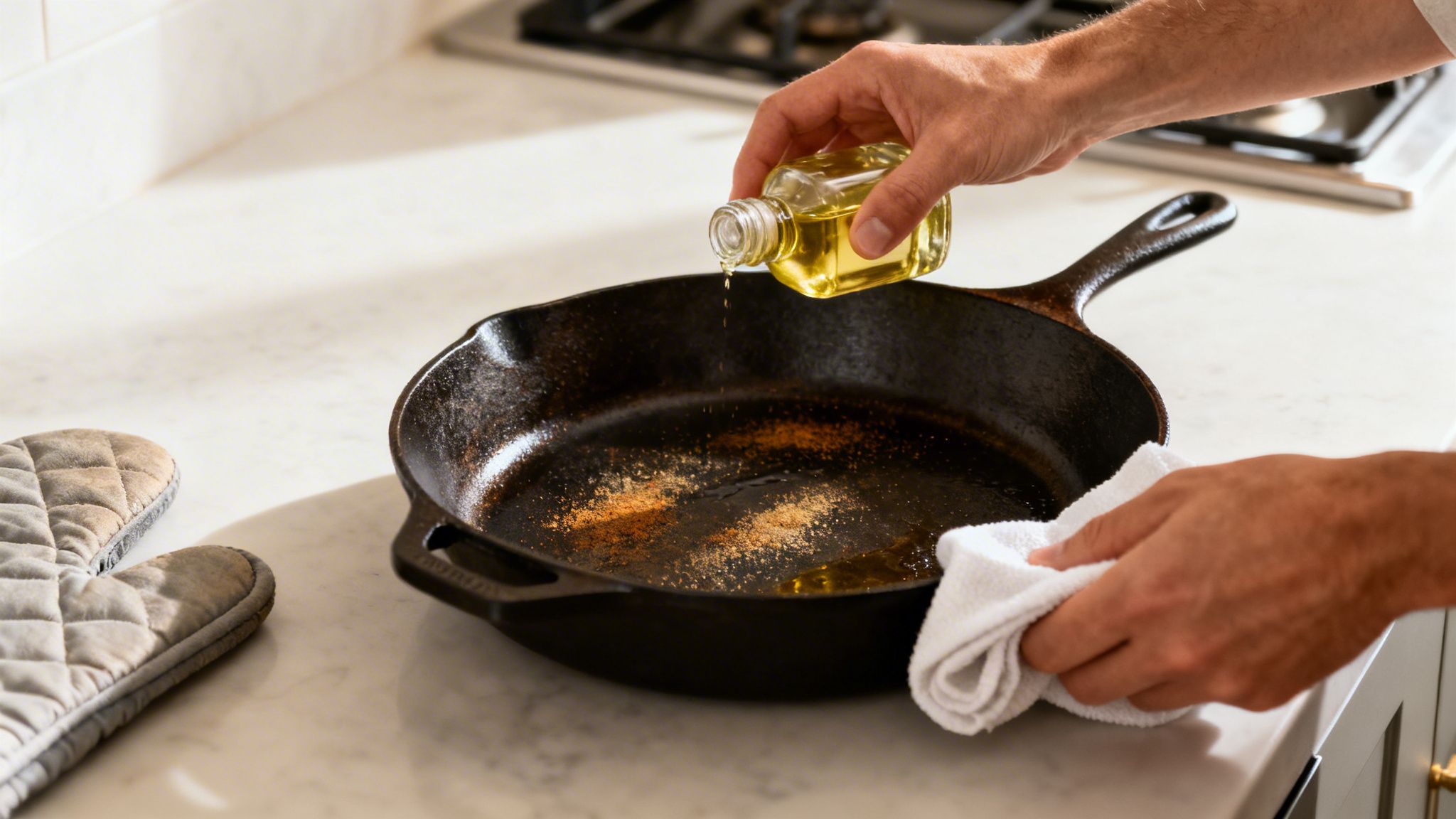
For a lot of new cooks, the whole idea of caring for cast iron feels like some kind of mysterious, ancient ritual. It’s not! In reality, "seasoning" is just a fancy word for a layer of baked-on oil that creates a natural, rust-proof, and surprisingly nonstick surface. It's what gives old cast iron that signature, slick black patina.
Most new cast iron skillets you buy today come "pre-seasoned," but you’ll still need to maintain that layer as you use it. Here’s a simple routine to clean and re-season your pan to keep it in prime condition.
Cleaning Your Cast Iron Pan:
- Scrub After Cooking: While the pan is still warm, use a stiff brush or a pan scraper to get any stuck-on food bits off. Hot water is your friend here. Try to avoid soap if you can, as it can sometimes weaken the seasoning you’ve worked to build up.
- Dry It Completely: This is the most important step, period. Immediately dry the pan inside and out with a towel. To be extra sure, you can pop it back on the stove over low heat for a minute to evaporate every last drop of moisture. This is your best defense against rust.
- Apply a Thin Coat of Oil: While the pan is still warm, pour in about a half-teaspoon of a neutral oil (plain old vegetable or canola oil is perfect). Use a paper towel to rub a very thin layer all over the interior cooking surface.
- Wipe It Out: Now, grab a clean paper towel and wipe out the excess oil. You're aiming for a finish that looks dry and matte, not a slick, greasy puddle. You want a micro-thin layer of protection.
Doing this simple process after each use will build up a gorgeous, durable seasoning that only gets better the more you cook. Mastering these steps is a huge part of finding the best cookware for beginners and making sure your investment lasts a lifetime.
Got Questions? We’ve Got Answers.
Even after you've got a handle on materials and what pieces to buy, a few last-minute questions always seem to pop up. It’s totally normal. Buying your first set of pots and pans feels like a big deal, and getting these last few details sorted is the final step to buying with total confidence.
Let’s tackle some of the most common questions that trip up new cooks.
Is Expensive Cookware Really Worth It for a Beginner?
This is the big one, isn't it? The short answer: not really. When you’re just starting out, your energy is much better spent mastering the basics—like how to manage the heat on your stove—than it is on owning pro-level gear. An expensive pan won't magically make you a better cook, but a reliable one will absolutely make you want to cook more.
Mid-range brands are the sweet spot. They offer great performance and will last you for years without the eye-watering price tag of the super-premium stuff. A smart starting point is a durable, budget-friendly stainless steel pan and one solid nonstick skillet. As your skills grow, you can upgrade piece by piece, buying exactly what you need for the kind of cooking you love to do.
Key Takeaway: Focus on learning the craft first. A solid, affordable pan is the perfect partner for that journey. You can always splurge on the fancy stuff later when you know exactly what you want and why.
Why Does My Food Always Stick to My Stainless Steel Pan?
Oh, the frustration is real. You watch chefs on TV gliding food around a shiny stainless pan, but your chicken breast seems to fuse itself to the bottom. I promise, you're not alone. This incredibly common headache almost always boils down to two simple culprits: improper preheating or not using enough fat.
You have to heat stainless steel properly to get that temporarily nonstick surface. Here's the trick:
- Put the dry pan on the stove over medium heat for a minute or two.
- Test it by flicking a single drop of water into the pan. If it just sizzles and evaporates, it’s not ready. If it beads up and dances around the pan like a little ball of mercury, you've nailed it.
- Now add your oil or butter. Let it heat up for about 30 seconds until it shimmers.
- Finally, add your food.
And just as important: resist the urge to move proteins like chicken or fish too soon! Let them sit for a minute to form a good sear. Once that crust develops, they’ll release from the pan all on their own.
How Do I Know if a Pan Works on an Induction Cooktop?
Induction cooktops are amazing for their speed and precision, but they only play nice with cookware that has a magnetic base. Fortunately, there's a super simple test for this.
Just grab a regular refrigerator magnet and see if it sticks to the bottom of the pan.
- If the magnet sticks firmly, you’re good to go—it's induction-compatible.
- If it doesn't stick at all or the pull is super weak, it won’t work on your induction stove.
Most stainless steel, cast iron, and carbon steel cookware is magnetic. Pans made purely from aluminum, copper, or glass won't work unless the manufacturer has bonded a special magnetic steel plate to the bottom. To be 100% sure, always look for the "induction compatible" symbol (it looks like a little coil of wire) on the box.
What Are the Signs I Need to Replace My Nonstick Pan?
Unlike that cast iron skillet that could outlive us all, nonstick pans are consumables. They just don't last forever. With good care, a decent nonstick pan should give you between two and five years of service. Here are the three dead giveaways that it's time to say goodbye:
- Deep, Visible Scratches: If you can see deep gouges or the coating is actively flaking off, its nonstick magic is gone. Time for a new one.
- Major Discoloration: Dark, sticky stains that you can't scrub off are often a sign the coating has broken down from too much heat.
- Food Starts Sticking: This is the most telling sign of all. When your morning eggs no longer slide around effortlessly, even with a little butter, the nonstick surface has simply worn out.
To keep your new cookware in top shape and avoid causing damage, using the right cleaning tools is a must. Check out the best cloths for cleaning, which covers microfiber and cotton options that will keep your pots and pans looking new without creating scratches.
At Cookware Review Hub, we're here to help you build a kitchen you love to cook in. Dive into our in-depth reviews and guides to find the perfect tools for your culinary adventures. Learn more at https://www.cookwarereviewhub.com.