If you're looking for the absolute best cast iron pans, our top picks hit that sweet spot between performance and value. The Lodge Classic 12-Inch Skillet is the undisputed workhorse of bare cast iron, while the Le Creuset Signature Skillet is the gold standard for enameled pans, offering incredible versatility with easier maintenance. These two pans really do represent the best of both worlds.
Now loading...
Why Cast Iron Is a Timeless Kitchen Essential
Now loading...
In a world overflowing with trendy cookware, cast iron just keeps holding its own—and for good reason. Its appeal isn't just about nostalgia; it delivers real, tangible results that other materials just can't replicate. The secret sauce is its incredible ability to hold and evenly distribute heat.
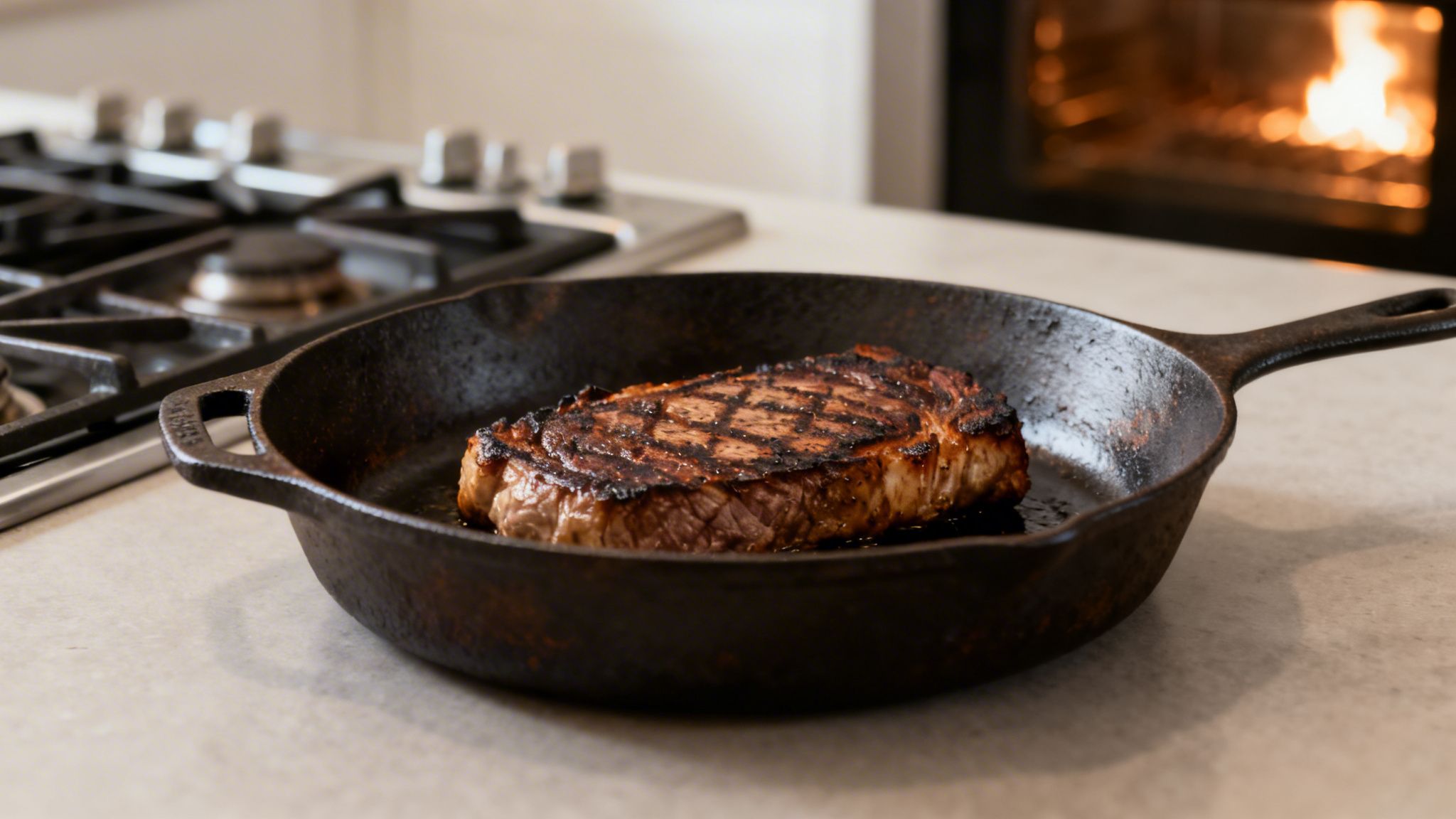
Unlike that flimsy aluminum pan that creates frustrating hot spots, a properly preheated cast iron skillet gives you a consistent, searing-hot surface. That’s the non-negotiable key to getting a deep, gorgeous crust on a steak, unbelievably crispy fried chicken, or that perfect golden-brown cornbread.
The Durability Factor
Honestly, one of the best arguments for buying cast iron is its almost ridiculous durability. A well-cared-for skillet doesn't just last for years; it lasts for generations. It actually gets better with age as the layers of seasoning build up.
This makes it an incredibly sustainable and smart buy, especially compared to non-stick pans you have to toss out every couple of years.
The market backs this up. The global cast iron cookware market hit a value of USD 2.821 billion in 2024 and is expected to climb to USD 3.838 billion by 2032. This isn't just a niche trend; it shows a real shift by home cooks—whether on Amazon or at Costco—toward tools that are built to last and perform.
Versatility from Stovetop to Campfire
The sheer toughness of cast iron makes it a true kitchen multi-tool. A single skillet can go from the stovetop straight into the oven, under the broiler, and even onto a grill or an open campfire.
You can sear a pork chop on the stove and finish it in the oven without ever dirtying another pan. It’s that simple.
A lot of people think cast iron is high-maintenance, but that's a common myth. The learning curve is surprisingly short, and the reward is a naturally non-stick surface that improves every time you use it—all without the synthetic coatings found on most modern pans.
If you want to go deeper into the specific upsides and downsides, you might want to check out our complete breakdown of cast iron cookware pros and cons.
Quick Picks: The Best Cast Iron Pans at a Glance
To get you started, here's a quick look at our top selections. This table summarizes our favorite pans for both bare and enameled styles, chosen for their outstanding performance, value, and feedback from countless home cooks.
| Category | Top Pick | Best For | Key Feature |
|---|---|---|---|
| Best Bare Cast Iron | Lodge Classic 12-Inch Skillet | High-heat searing and everyday use | Unbeatable value and rugged durability |
| Best Enameled Cast Iron | Le Creuset Signature Skillet | Acidic foods and easy cleanup | Superior enamel coating and heat control |
These two pans are fantastic starting points, whether you’re buying your first piece of cast iron or adding a new go-to to your collection.
Bare vs. Enameled Cast Iron: What's the Right Call?
Deciding between bare and enameled cast iron isn't about which one is "better" across the board. It’s about picking the right tool for the job. Both will give you that legendary cast iron heat retention, but their surfaces couldn’t be more different, leading to two very distinct cooking experiences. Figuring out these differences is the key to matching a pan to your style in the kitchen.
Think of a traditional, bare cast iron pan as a living piece of gear. Its surface is slightly porous, and over time, it soaks up layers of cooking fats that polymerize into a natural, non-stick coating we call seasoning. This patina builds up and gets better every time you use it, especially when you’re frying bacon or putting a hard sear on a steak.
Enameled cast iron is a different beast entirely. It’s sealed with a slick, non-porous layer of glass-like enamel. This gives you a surface that's ready to go right out of the box, doesn't need to be seasoned, and is a whole lot easier to clean. You get all the heat benefits of cast iron without the classic maintenance routine.
The Case for Bare Cast Iron
When it comes to high-heat cooking, nothing beats bare cast iron. Period. Its seasoned surface can handle ripping hot temperatures that would wreck other pans, making it the absolute best choice for getting that deep, flavorful crust on steaks, burgers, or pork chops.
On top of that, the seasoning itself actually adds to the flavor of your food. Every layer contributes a subtle depth you just can't get from an inert surface. It’s the secret ingredient behind why cornbread and fried chicken always seem to taste better when they come out of a well-loved, old-school skillet.
The real magic of bare cast iron is its ability to build a superior, naturally non-stick surface through polymerization. This is what lets you sear at insane temperatures without food welding itself to the pan, creating a better crust and an easier release than any synthetic coating can offer.
But this surface does have an Achilles' heel. The seasoning is vulnerable to acidic ingredients like tomatoes, wine, or lemon juice. Simmering a tomato sauce for hours can strip that hard-earned seasoning, potentially damage the pan's finish, and leave your food with a faint metallic taste.
The Advantages of Enameled Cast Iron
And that’s exactly where enameled cast iron steps in and saves the day. Its non-reactive surface is completely immune to acids, making it the perfect vessel for braising, simmering sauces, or deglazing a pan with wine. You can let a bolognese or a coq au vin bubble away for hours without a single worry about wrecking your pan or messing with the flavor.
That smooth, enameled interior also comes with a few other practical perks:
- Easier Cleanup: Gunk and food bits don’t cling to the slick enamel, so cleaning is usually just a quick wash with soap and water. No special care is needed.
- No Seasoning Required: These pans are good to go from day one and never need to be seasoned or re-seasoned.
- Better Visual Cues: The light-colored interior (on most models) makes it much easier to see what’s going on in the pan. You can monitor browning and spot the "fond"—those crucial caramelized bits at the bottom—which is key for building flavor in sauces and braises.
The trade-off? Enameled surfaces are more delicate. They can chip if you drop them or bang them around, and you have to be careful with metal utensils that might scratch the finish. They also just can't achieve the same rugged, non-stick sear as a perfectly seasoned bare skillet when the heat is cranked all the way up.
Comparing The Top Cast Iron Skillets
Let's move from theory to what really matters in the kitchen. This is where we pit the top contenders against each other to see how they handle real-world cooking. Picking the best cast iron pan isn't about brand loyalty; it's about how a skillet performs when you're searing a steak, how its handle feels when it's full of hot food, and whether that "pre-seasoned" surface actually holds up. We're diving deep into the performance of market leaders like Lodge, Victoria, Staub, and Le Creuset to reveal the subtle but crucial differences.
The skillet is, without a doubt, the star of the cast iron family. Its sheer utility has made it a powerhouse in the cookware market, with global projections estimating the skillet segment will hit a massive USD 1.009 billion by 2032. The entire cast iron market reached USD 2.602 billion in 2024, with skillets and Dutch ovens seeing a remarkable 20% sales surge in the last year alone—a sure sign they're becoming a staple in more and more home kitchens. In North America, where the market was valued at USD 0.907 billion, home cooks especially love skillets for their oven-safe versatility, which opens up a world of recipes.
Lodge Classic The Unbeatable Value Champion
When you think of cast iron, you probably picture a Lodge skillet. For decades, this American-made brand has been the go-to for its rugged durability and almost unbelievable value. The Lodge Classic 12-inch skillet is often the first cast iron pan people buy, and for good reason—it’s a true workhorse.
Its cooking surface comes pre-seasoned, but you'll notice it has a distinctly pebbly texture. This doesn't get in the way of searing meats or frying up potatoes, but it can be a challenge for delicate foods like eggs until you've built up a few more layers of your own seasoning. Heat distribution is solid, though it can develop hot spots if you don't preheat it properly.
Performance Highlights:
- Searing: Excellent. It puts a deep, even crust on steaks and burgers without any fuss.
- Handle Comfort: It’s functional, but the short, looped handle gets screaming hot and absolutely requires a good silicone grip or an oven mitt.
- Out-of-the-Box Seasoning: It’s serviceable, but plan on doing a few rounds of your own seasoning to smooth out the surface and get better non-stick performance.
Lodge is the benchmark for affordable quality. It’s heavy, it's tough, and it will last a lifetime with just a little care, making it the best cast iron pan for anyone on a budget or just starting their collection.
Victoria The Ergonomic Innovator
Coming from Colombia, Victoria brings some thoughtful refinements to the classic skillet design. Their pans feature longer, more curved handles and generous pour spouts—small details that make a huge difference in daily use. That longer handle provides better leverage, making a heavy pan feel more balanced and way easier to maneuver.
Like Lodge, Victoria pans have a textured surface, though some folks find it a bit smoother right out of the box. The pre-seasoning, done with flaxseed oil, is top-notch and holds up exceptionally well from the very first cook.
The most significant differentiator for Victoria is its user-focused design. The longer handle and wider pour spouts aren't just cosmetic; they directly address common complaints about traditional skillet ergonomics, making it a more comfortable pan to handle, especially when full.
This chart gives you a quick visual summary of how bare and enameled cast iron stack up for different cooking jobs.
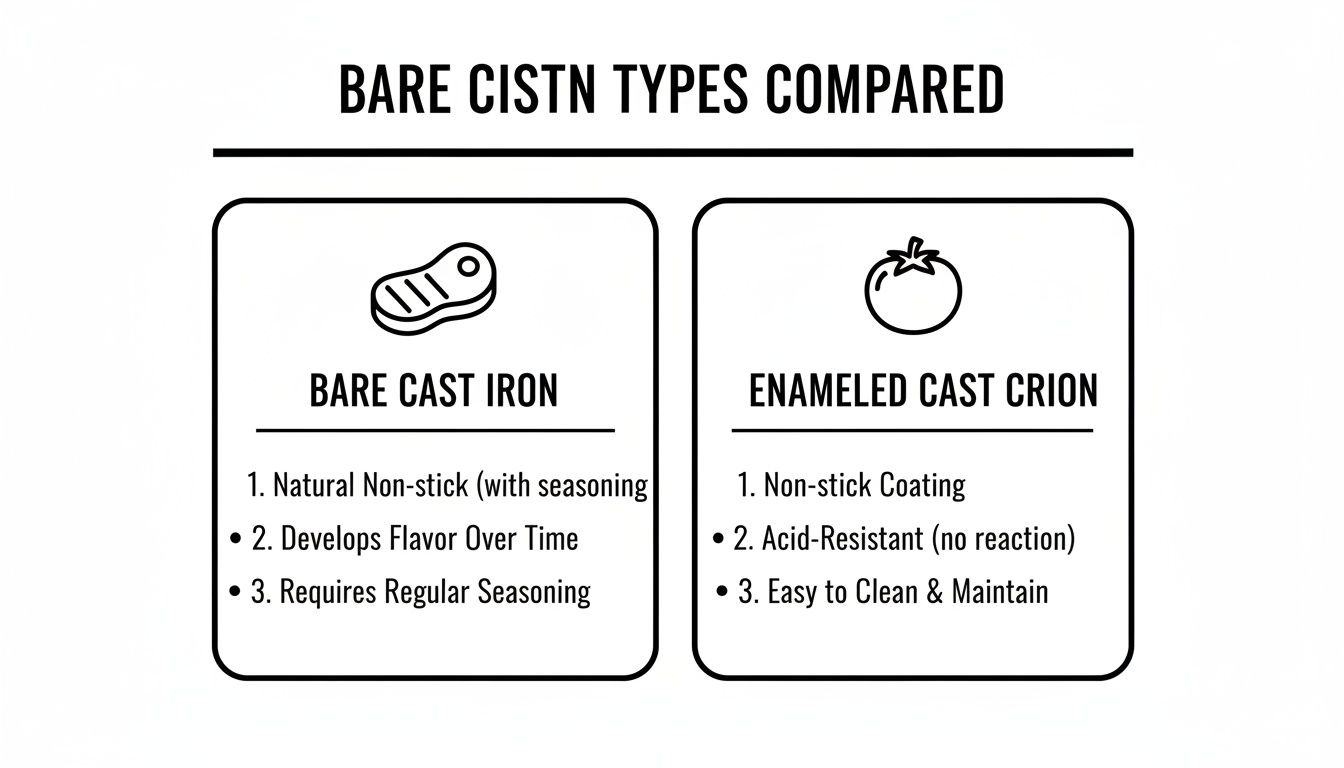
It’s pretty clear: bare cast iron is the undisputed king for high-heat searing, while enameled wins out when you're working with acidic ingredients or just want an easier cleanup.
Staub and Le Creuset The Enameled Elite
Stepping into the premium category, we find the European powerhouses, Staub and Le Creuset. Both specialize in enameled cast iron, which offers a completely different experience. Their skillets have a black satin enamel interior that mimics the performance of bare cast iron but without ever needing to be seasoned.
Staub's Strengths:
Staub skillets are known for their slightly coarser interior enamel. This texture actually helps promote better browning and searing over time as oils polymerize into the microscopic pores. The brand's signature matte black finish is also great at hiding stains and minor scratches, so it keeps looking good for years.
Le Creuset's Edge:
Le Creuset, on the other hand, has an exceptionally smooth black enamel that's a bit easier to clean right from the start. Its heat distribution is flawless, and let's be honest, the brand's vibrant color options are a huge draw for anyone who values kitchen aesthetics. While both are heavy, Le Creuset often feels a touch more balanced.
These pans are perfect for dishes that start on the stovetop and finish in the oven. Their non-reactive surfaces mean you can deglaze with wine or simmer a tomato pan sauce without a second thought. If you're looking for a versatile set to round out your kitchen, you might be interested in our guide on Cuisinel cast iron skillet sets.
The main trade-off? The price tag. These are investment pieces, costing a whole lot more than their bare cast iron cousins. They also can't achieve that same bulletproof, non-stick patina that a well-seasoned bare pan can for those ultra-high-heat jobs.
Head-to-Head The Best Cast Iron Pans Compared
To help make your decision a little easier, this table breaks down the key differences between our top picks. It focuses on the practical stuff that will matter most in your kitchen day in and day out.
| Pan Model | Type | Size (Inches) | Cooking Surface | Heat Retention | Price Range |
|---|---|---|---|---|---|
| Lodge Classic | Bare | 12 | Pebbled, pre-seasoned | Excellent | $ |
| Victoria | Bare | 12 | Textured, flaxseed oil pre-seasoned | Excellent | $$ |
| Staub | Enameled | 11 | Matte black enamel | Superior | $$$$ |
| Le Creuset | Enameled | 11.75 | Smooth black enamel | Superior | $$$$ |
At the end of the day, the best cast iron pan for you boils down to your cooking style and your budget. Lodge delivers unbeatable rugged value, Victoria provides smart design improvements, and Staub and Le Creuset offer premium, low-maintenance performance for a price.
Selecting the Right Cast Iron Pan Size
Choosing the right size for your cast iron pan is less about the inches and more about what you actually cook. It’s easy to get bogged down in numbers, but the real question is how a pan fits your household and cooking style. Pick the wrong size, and you’ll end up with a skillet that collects dust instead of seasoning.
The goal is to find a pan you'll reach for constantly, not just on special occasions. When you connect pan dimensions to tangible, everyday meals, you can make a much more practical decision. This ensures your investment becomes a true kitchen workhorse rather than another cumbersome piece you have to lug out of a cabinet.
The Everyday Workhorses: 10 and 12-Inch Skillets
For most home cooks, the decision boils down to the 10-inch versus the 12-inch skillet. These two sizes cover the vast majority of cooking needs, hitting the sweet spot for versatility and performance.
A 10-inch pan is the perfect all-rounder for individuals or couples. It comfortably handles two chicken breasts, a couple of pork chops, or a generous frittata for two. It’s also just easier to manage—weighing less and taking up less precious real estate on the stovetop.
On the other hand, the 12-inch skillet is the undisputed family champion. If you're cooking for three or more, or if you love to batch-cook for leftovers, this is your pan. It gives you enough surface area to properly sear four chicken thighs or several burger patties without crowding, which is the secret to achieving that perfect crust.
Think of it this way: a 10-inch skillet is for your weeknight dinner for two. A 12-inch skillet is what you pull out for Sunday morning bacon and eggs for the whole family, ensuring everything cooks evenly without just steaming in its own juices.
Finding the Right Fit for Your Needs
To really picture the difference, let’s look at some common cooking scenarios:
- Pancakes: You can fit one large or two to three small pancakes in a 10-inch pan. A 12-inch pan lets you cook three or four at once, which makes a big difference when everyone's hungry for breakfast.
- Searing Steak: A 10-inch skillet is brilliant for a single large ribeye. For two big New York strips, you’ll want the extra breathing room of a 12-inch pan to guarantee a perfect, dry-heat sear.
- Cornbread: A 10-inch pan yields about eight standard wedges, perfect for a family meal. A 12-inch skillet produces a larger, thicker cornbread that’s ideal for a bigger gathering.
The Supporting Cast: 8-Inch and Smaller Pans
While they might not be your primary skillet, smaller cast iron pans are incredibly useful and absolutely worth considering as you build out your collection.
An 8-inch skillet is the perfect size for whipping up side dishes, frying a couple of eggs, or melting butter. It heats up in a flash and is super lightweight, making it great for small, fast jobs. It’s also my go-to for toasting spices or making a personal-sized dessert like a skillet cookie.
Even smaller pans, like the 6-inch and the tiny 3.5-inch versions, have their own niche roles. They're fantastic for serving individual portions of dip, baking a single biscuit, or cooking one perfect egg for a breakfast sandwich. They aren't essential, but they sure add a layer of convenience and fun to your cooking. Investing in the best cast iron pans means building a versatile toolkit for any meal you can dream up.
Mastering Cast Iron Seasoning and Care

Owning one of the best cast iron pans is only the first step; knowing how to care for it is what really counts. Proper seasoning and maintenance are what turn a good pan into an heirloom, creating that coveted naturally non-stick surface that only gets better with every meal you cook. This process, called polymerization, is much simpler than it sounds and is the secret to unlocking your pan's true potential.
Seasoning is just a fancy word for baking a thin layer of oil onto the iron. When you heat the pan to a high temperature, the oil molecules bond to the metal and to each other, creating a hard, plastic-like coating. This is what gives cast iron its signature black patina and slick surface, making it perfect for everything from frying eggs to searing a steak.
The Initial Seasoning Process
Even if your new pan says it's "pre-seasoned," it's always a good idea to add your own layers. The factory seasoning is usually just a starting point, often done with basic vegetable oils. Building a solid seasoning base yourself from day one is an investment that will pay off for years.
The process is surprisingly straightforward:
- Wash and Dry Completely: Give your new pan a quick wash with warm, soapy water to get rid of any factory residue. Then, dry it thoroughly—and I mean completely. Even a tiny bit of moisture can lead to rust. A minute or two on a low burner is the best way to make sure it's bone-dry.
- Apply a Super Thin Layer of Oil: Use a paper towel or lint-free cloth to rub a very thin coat of a high-smoke-point oil (like grapeseed, canola, or avocado oil) over the entire pan. Don't forget the outside and the handle.
- Wipe It All Off: This is the most important step. Grab a clean paper towel and wipe the oil off like you never meant to put it on in the first place. You want to leave behind only a microscopic layer. Too much oil will leave you with a sticky, gummy mess instead of a slick surface.
- Bake It Upside Down: Place the pan upside down on the top rack of your oven and set the temperature to 450-500°F. Baking it upside down stops any excess oil from pooling in the bottom.
- Heat for One Hour: Let the pan bake for a full hour. It will probably get a little smoky, so make sure your kitchen is well-ventilated. After an hour, turn the oven off but leave the pan inside to cool down completely on its own.
Doing this two or three times will build an excellent foundation. For an even more detailed guide, check out our post on how to season cast iron skillets.
Daily Cleaning and Maintenance
Forget all the myths you've heard about cast iron being a hassle to clean. The rules are simple and are all about protecting that seasoning you worked so hard to build.
The biggest misconception about cast iron is that you can never, ever use soap. While you shouldn't let it soak for hours, a little bit of mild dish soap is perfectly fine for a well-seasoned pan. The seasoning is a tough, polymerized layer—not a delicate film that soap will instantly strip away.
For most daily cleaning, a quick routine is all it takes. While the pan is still warm, scrape out any leftover food with a wooden spatula or a pan scraper. Rinse it under hot water, using a stiff brush or sponge to get rid of any stubborn bits.
Dry it immediately and put it back on a low burner for a minute to evaporate every last drop of moisture. To finish, while it's still warm, wipe a half-teaspoon of oil onto the cooking surface. This quick "maintenance seasoning" keeps it protected and ready to go for your next meal.
This kind of care isn't just for skillets; it's crucial for any cast-iron gear you own. Learning how to clean grill grates, especially cast-iron ones, follows the same principles. Proper care ensures all your iron cookware will last a lifetime.
Got Questions About Your Cast Iron? We've Got Answers.
Even after you've picked out the perfect cast-iron pan, a few questions are bound to pop up once you start using it every day. Getting solid, straight-up answers is the key to feeling confident and making that new pan your go-to piece of cookware. This section tackles the most common things we hear from home cooks just like you.
We'll cover everything from whether it's safe for your glass stovetop to the dreaded "what do I do about rust?" panic. Think of this as the final piece of the puzzle, clearing up any last little doubts you might have.
Can I Actually Use Cast Iron on My Glass Cooktop?
Yes, you absolutely can, but there’s one golden rule: always lift, never slide. Cast iron is totally safe for glass and ceramic cooktops, you just have to be a bit careful.
These pans are heavy, and the bottoms can have a slightly rough texture, which is a recipe for scratching that delicate glass surface if you drag it. Modern pans from brands like Lodge or Victoria tend to have smoother bottoms than old-school vintage skillets, but the risk is still there. Just get in the habit of placing the pan down gently and lifting it straight up when it's time to move. On a related note, cast iron is a dream come true for induction cooktops thanks to its magnetic properties—it heats up incredibly fast and efficiently.
What's the Best Oil for Seasoning?
Honestly, the "best" oil is the one you'll actually use, but some definitely work better than others. You're looking for an oil with a high smoke point that will polymerize well, which is just a fancy way of saying it turns into a hard, slick, non-stick coating. Lard or bacon grease are the old-school classics, and they still work great, but a few modern oils are fantastic choices.
Here are the top contenders:
- Grapeseed Oil: This is my personal all-around favorite. It has a high smoke point, no strong smell, and builds a really durable, slick finish. Plus, it's easy to find.
- Canola or Avocado Oil: Both are affordable, always at the grocery store, and do a solid job of building up a reliable layer of seasoning. They're perfect for both that first big seasoning project and for quick daily touch-ups.
- Flaxseed Oil: You'll hear a lot about this one online. It creates an incredibly hard seasoning layer, maybe the hardest of all. The downside? It's pricey and can be brittle, sometimes flaking off if you don't apply it in ridiculously thin coats.
At the end of the day, consistency beats perfection. Cooking in your pan regularly and wiping it down with a little oil is what truly builds that amazing, non-stick surface over time—not one single, perfect seasoning session.
Help! How Do I Fix a Rusty Cast Iron Pan?
First, don't panic! Seeing rust on your beloved skillet is a bummer, but it's a super easy fix. Seriously, restoring a rusty pan is a simple and surprisingly satisfying job that will have it looking good as new.
Get some steel wool, hot water, and a bit of dish soap, and just scrub all the rust away. You want to get right down to the bare, gray metal. Once every speck of rust is gone, rinse it well and dry it completely. The best trick for getting it bone-dry is to pop it on a low burner for a minute or two until every last drop of moisture has evaporated.
Think of restoring a pan as a hard reset. You're just taking it back to a blank slate. Once you've got that clean, bare metal, you're simply starting the seasoning process over from scratch. No permanent damage done, just a fresh start.
From there, you just re-season it. Rub a super thin layer of your chosen oil all over the pan—top, bottom, handle, everywhere. Bake it upside down in a 450-500°F oven for one hour. Let it cool down completely inside the oven. For a really solid new base, repeat this whole process two or three more times. You'll build up a beautiful, protective new coating that's ready for anything.
At Cookware Review Hub, our mission is to provide you with the most reliable, in-depth cookware guides to help you make confident choices in the kitchen. Explore our full library of reviews and comparisons at https://www.cookwarereviewhub.com.